We detached this subthread from https://news.ycombinator.com/item?id=21661852 and marked it off-topic.
For me it is just a natural sign that I shouldn’t go on forever on the computer. A way to bring the outside night/day cycle onto my machine, you could say.
You're projecting way too much my man. What about the people with 70$ monitors using flux while coding at night to avoid fucking up their sleep cycle ?
> The best way to interpret this evidence is that blue light will not make you sleep less or experience insomnia more.
Type "blue light circadian rhythm study" on google and you basically only find studies supporting that blue light has a negative impact. I got a pair of anti blue light glasses recently and I'm 100% confident they indeed do reduce eye strain and ease falling asleep.
But the moment you actually evaluate the studies, you'll find that almost all
* don't research blue light specifically, but light at all
* use unrealistic settings, like 4 to 8 hours bedtime reading (really)
* don't properly control for other known sleep affecting factors - and have small sample groups so they can't rely on the law of large numbers to solve that issue
* only measure melatonin, not actual sleep.
If you filter those out, the result ist basically zero quality studies.
I'm aware that many people swear that this works, but there really is not much scientific support for the theory.
Just for comparison: Full sunlight has up to 30000lux of blue light alone, while a very bright phone screen, set to all white, manages to output at most 300lux of blue light. There may be a real effect here, but it has to be weak, else people in scandinavia would have severe problems with their circadian rhythms.
Well yeah that's the whole point, blue light during the day is perfectly fine, that's how your body knows it's time to get shit done, sitting in front a screen after sunset during X hours _will_ fuck up your rhythm and blocking blue light will moderately mitigate the issue.
> else people in scandinavia would have severe problems with their circadian rhythms.
They do, just like you do when we switch to winter time. It's not a "problem" though, it's just our body's natural response. The problem arise when you shift your rhythm so bad that it impact your life / work schedules.
> If you filter those out, the result ist basically zero quality studies.
It's 100% a fact that blue light is the light which impact the production of melatonin the most, and that melatonin directly regulate your circadian rhythm.
My point is that it is not reasonable to assume a strong physical reaction if the artifical light is so much weaker.
Note I'm not denying that there isn't a small effect! But it is probably dwarved in comparison to a change in eating habits, anti stress methods like meditation, sports and so on.
> It's 100% a fact that blue light is the light which impact the production of melatonin the most, and that melatonin directly regulate your circadian rhythm.
Then why don't most studies study effects on the actual circadian rhythm? My guess is because the results there are less clear with actual sleep (i.e. they actually studied both but only published the "good" results - a sad side effect of publication bias).
BTW the same is true for light therapy for prevention of winter depression: There probably is an effect, but it is so weak that rigorous meta analysises don't show real evidence.
My overall point is: There seldom are strong effects with most treatments of this kind. If there were, we already would have found out in pre science times. People are doing artifical lighting for thousands of years (think campfires, not LED lights).
I'm not quite sure why you think I should provide data - I'm not the person postulating the effect of blue light. But anyway. You can find examples of the sun's illuminance all over the net, for example Wikipedia has a list here: https://en.wikipedia.org/wiki/Illuminance
Illuminance usually only covers the VIS part of the EM spectrum, so all of about 380-700nm. So 1/4 to 1/3 of that is the cold light part.
The radiation emmited from a heat source can be determined using Planck's law. A campfire is about 1400K. Here you can see that the higher the temperature, the more the maximum radion shifts into smaller wavelengths: https://www.spektrum.de/lexika/images/geo/f4f1653_w.jpg
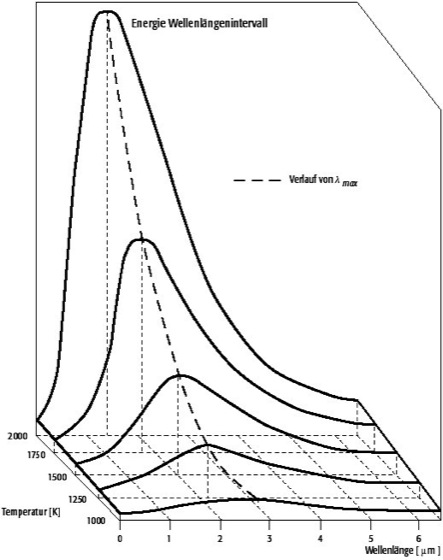
So obviously the sun with about 6000k has way more UV and blue light parts, but a campfire is still hot enough that the absolute amount of blue light emitted trumps every phone screen. Yes, probably more than 95% will be IR, but than again the overall luminocity of a campfire is about 10kW.
For light therapy and winter depression I refer you to the excellent chochrane review: https://www.cochrane.org/CD011269/DEPRESSN_light-therapy-pre...
As to my criticisms regarding most studies about the effects of light: You can look them up yourself, most of them apply to the studies linked at f.lux's research links: https://justgetflux.com/research.html
For example the top two studies there:
"Exposure to Room Light before Bedtime Suppresses Melatonin Onset and Shortens Melatonin Duration in Humans" used 8h room light and didn't check for blue light at all. Neither did they look at actual sleep patterns.
"The human circadian system adapts to prior photic history" : 6.5h of exposure, no blue light specifically, only melatonin, no actual sleep measurments.
Again: I'm not the person making claims here. I would be delighted to see some proper studies showing the effects of blue light.
On your campfire rant, first, luminosity is an astronomy measure, what matters for humans is the perceived light (lumens); nobody stares at a campfire directly and the little light bounced from the surroundings has very little blue; on the other hand, you literally stare non-stop for hours at the blue light from your phone, which makes the amount it emits a lot more relevant.
Also please don't get personal. My campfire illustration was not a rant, it was an illustration of humans using light after sunset. It is a fact that they did so for millenia. It is also a fact that a 1300K hot fire emits blue light and even UV light.
And luminosity (lux) is just luminous flux (lumens) per square meter. Astronomers use that because luminosity is the measure used to compare different light sources. If comparing e.g. a ceiling light and a phone screen one uses luminosity because that makes both light sources easier to compare. It is also the measure most research on light effects work with. You could of course multiply the 1000lux of a bright phone display with its surface area in square meters if you prefer to calculate in lumens.
[1] https://www.aop.org.uk/ot/industry/high-street/2017/05/26/bo...
[2] https://ec.europa.eu/health/sites/health/files/scientific_co...
[3] https://www.cochranelibrary.com/cdsr/doi/10.1002/14651858.CD...?
The circadian system is loosely coupled to sleep, but it affects many other parts of the body. So if your rhythms are more than 2-3 hours out of sync you will definitely have more trouble sleeping, but this is not the only effect, which is why we work with people studying other topics also.
But overall, yes, I think we'll learn that regular room lighting has at least as big an effect as screens, and that's because in terms of "hours" people spend a lot of them in general illumination, but often only check their phone a few times, or watch a dark movie, which isn't very bright. It's only some of us that code all night in front of a bright screen.
Treating sleep-maintenance insomnia is often done by increasing light levels at night to move rhythms later, and seasonality often requires different patterns of light based on the time of year. This is one of the reasons we have been asking people not to copy what we said in 2009 - some people need more light at night during the winter, not less, and timing needs vary greatly.
Our core audience for f.lux is younger people, and on average they need less light at night - the normal distribution of chronotypes has a very long tail in the direction of night owls, and their timing tends to be most at odds with society's requirements for wake times.
So I would say the product as it is today tends to be a better fit for the night owl half of the distrubution, and not extreme early types. But our main area of study is to generalize these schedules and lighting changes to be "right" for nearly everyone. It is rather difficult work, and you have to study the effects over years.
Not the cancer thing, but the blue light effects. Well actually it talks a little about cancer as well :p
Some studies suggest a link between exposure to light at night, such as working the night shift, to some types of cancer, diabetes, heart disease, and obesity. That's not proof that nighttime light exposure causes these conditions; nor is it clear why it could be bad for us. But we do know that exposure to light suppresses the secretion of melatonin, a hormone that influences circadian rhythms, and there's some experimental evidence (it's very preliminary) that lower melatonin levels might explain the association with cancer.
Quoting something as questionable as "For instance, cancer progresses much faster in summer than in winter" as a fact, without even a citation while signaling expertise is not exactly great.
You do know there are lots of toggles and shortcuts to tweak or disable flux when doing something color sensitive, right? There's even an explicit `Movie Mode` that does the best it can (not much tbh) without noticeably affecting color reproduction for the average viewer.
I disable flux when watching movies, playing games, or editing (color) images. It's not that hard.
That said, I don't run it as a substitute for medical advice. I run it because monitors are fucking bright and I enjoy working at night with dimmer lights that match my environment. I'd use an eink monitor at night if they were affordable, large enough, and software supported them better.
I don't know you, you make a very successful app that people really swear by. I have no qualms about people using f.lux, if you want to take your $4,600 laptop and $1,400 phone, on which people spent decades perfecting color reproduction, and you're paying $13/mo for Netflix to watch shows with multi-million dollar budgets and dedicated colorists, and you start watching Orange is the New Black and you make it yellow, that's your prerogative. So you don't need my opinions, so don't downvote just because you like f.lux and hate opinions.
Why did you have to say anything about cancer at all?
What's your personal line for, "I'm not sure" versus "This is actionable evidence for change in behavior?"
There is no clinically controlled evidence showing that interventional blue light, the kind that would be emitted from an LED, causes significant change in sleep quality with measures like minutes spent sleeping or an insomnia scoring system. I found this by searching "blue light" and "sleep" in clinicaltrials.gov. There are 4 or 5 studies on the matter, all negative results. The best way to interpret this evidence is that blue light will not make you sleep less or experience insomnia more.
Indeed, if you consulted a doctor, you might learn that waking up too early is the most common sleep disturbance in adults. This interferes with their daily lives, by causing them to feel drowsy in the middle of the day. That's why blue light is typically investigated as an intervention: to get people to fall asleep and wake up later. It just doesn't turn out to work for that. Its absence is not causing people to fall asleep earlier either.