So basically one would need a lot of overcapacity to be able to produce and store enough power during the summer to last over the winter. But in places like California sure go full solar as it actually works all year around.
You realize this is like the US saying "lets give money to Mexico to build all of our solar power there (it is closer to the equator and thus would provide more even output throughout the year and would make more econimical sense) and just rely on them selling it to us forever at a nice price as they are a friendly country at this very moment". Or even better would be the countries further south and build a sea cable on international waters so anyone with a sub can go and cut it to fuck with you,
From a national security perspective relying on such a vital resource as electricity on someone else is just plain stupid. I realize most countries are in such a relationship with oil/gas countries at the very moment but I think the goal should be to lessen this kind of relationships not increase them.
I thought batteries just weren't there yet. Especially if you take wear cycles into account.
How much lithium is there, actually?
Imagine if the developed world invested in nuclear to the extent that France did in the 60s and 70s - how many trillions of tons of CO2 would NOT have been emitted into the atmosphere? You can talk about Republican denialism, but it is anti-nuke lobby that will be held responsible for climate change.
>by the time it is operational solar+storage will be even more economical than it is today.
Will it? Will the sun shine at night? when it's cloudy? No? Then it doesn't matter how cheap solar and wind are. You're not going to use either as a cornerstone of modern energy generation. So if not solar and wind, then what else is left? Germany knows - they are signing multi-decade deals for natural gas and coal-based power (from Russia and neighbors), as they are shutting down their nuclear plants.
I think OPs point is essentially that, even if nuclear would have helped in the 70s, it is now too late.
As for the intermittent issues of power. I think there's a lot to gain from long distance transportation combined with reliable output like hydro, existing nuclear, and perhaps later tidal.
No country will do it with nuclear in the future, because nuclear won't be competitive.
If we have a week of that weather Mad Max will be a become a documentary.
This is the solution, but currently only operating at a small scale. This is something that can be scaled up insanely quickly for a fraction the cost of alternatives. The success of this relatively small installation has already resulted in many more battery projects coming online this year.
This being my day job, it would add $8k to the electricity bill of the two child household in Australia if we used your solution to store the wind and solar power.
I ask because a 40C day sounds like a problem due to AC usage, but would probably come with pretty effective solar, and decent wind near the sea.
I get that. But it's worth going through the exercise how bad well-intentioned policies can be. It's worth to consider that anti-nuke activism is much worse than Conservative denialism.
And if nuclear is too late now, then there's nothing we can do to replace carbon-based power.
>I think there's a lot to gain from long distance transportation combined with reliable output like hydro, existing nuclear, and perhaps later tidal.
Oh come on. Hydro is great if you can get it. Places that can get hydro, already get hydro. Most places can't get hydro. Ditto for geothermal.
So what's the solution to replacing carbon emitting power sources? I want someone to explain that to me. Because all I hear is how solar and wind one day will be cheap and prices are falling every day - even though price is not the problem with solar and wind. Variability is. We need power when the wind isn't blowing and the sun isn't shining, and power requirements keep growing. People want electric cars and trains, those need huge amount of energy. I hear how batteries will save the day, except that we are not anywhere close to having battery technology capable of storing city-sized power requirements for a few minutes, much less hours or days. It may not even be physically possible to create a battery like that. So what's left? Coal and Gas - and this is exactly what EVERY nation is doing if they are not investing in (or divesting from) nuclear.
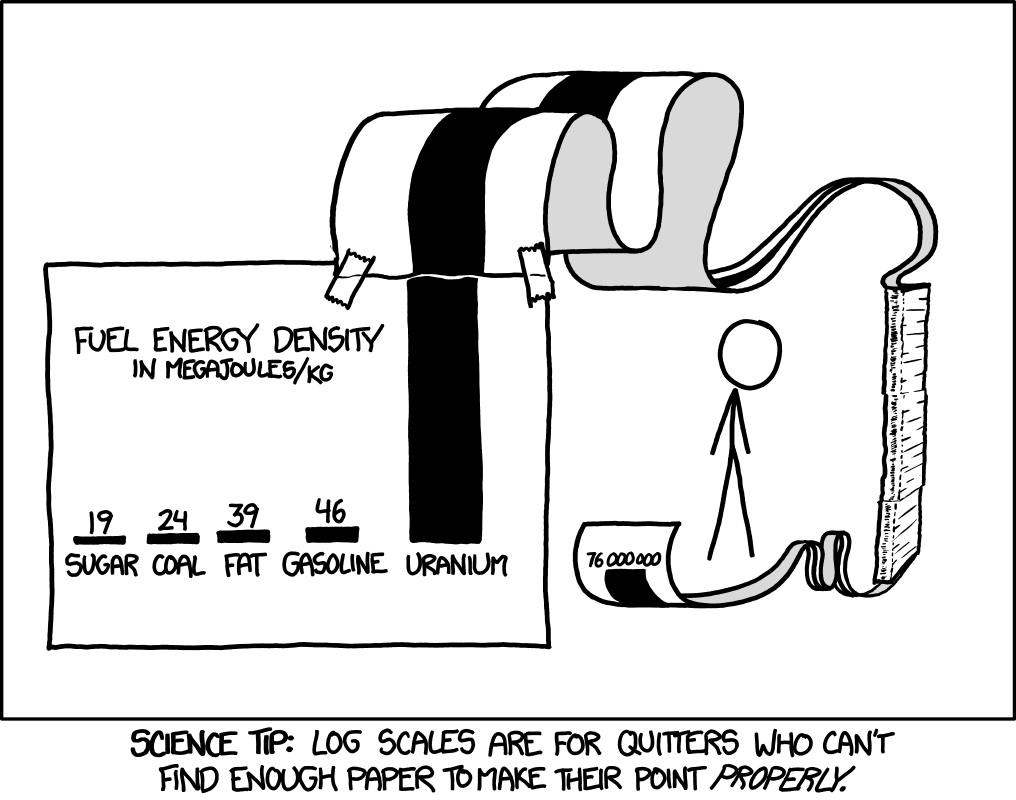
One should add wind and solar, both at around 0.5MJ/h per m2.
$/MWh is the only real metric that matters.
Edit: http://solarcellcentral.com/images/avg_cost_of_energy.jpg

Given this statement and the chart that shows solar and wind already being the cheapest energy sources this must mean we can just switch to solar and wind ... right?
Except we know we can't. We know that the variablity of solar and wind makes those impossible replacements for coal and gas. I guess price isn't the only metric that matters.
This is why the most important number is $/MWh for "solar/wind + storage". Storage has to be included in the equation. At current prices that puts "solar/wind + storage" about equal with natural gas, but those prices are dropping rapidly.
Installation times are also very significant factors in reaching emission reduction targets. Waiting 10+ years for nuclear to come online just isn't viable. Solar+storage can be operational at the same scale as a nuclear plant within 2-3 years.
It makes absolutely no sense to start building nuclear now. Even if you could guarantee 10 year build time at a fixed cost today (which you can't), by the time it is operational solar+storage will be even more economical than it is today. The cost curves are simply too favorable for any private market to favor nuclear over solar currently. Everyone in this thread keeps talking about the technology, but it's purely about the economics. Solar+storage at grid-scale will be cheaper than basically all other forms of power generation within 5 years based on current cost curves. Within 10 years the cost of new solar+battery will be cheaper than the operational cost of nuclear, not even accounting for the billions in construction costs over decades.
If the billions spent on nuclear plants now was instantly diverted to solar, we'd have way more clean energy in the grid on a way shorter timeline. That's the reality today. It's time to stop arguing and stop wasting money. Nuclear is dead.