With money, you always create debt and loan together. And yes, both can "move around" like a currency, just like electrons and holes (missing electrons) can move around in a solid, or electrons and positrons can move around in free space.
"Primary" money - I don't know if there is an economic term - is strictly conserved. It's almost sacrosanct in our society, nobody would ever just create money. Even when they talk about printing money, it's always through loans (ultimately from the central banks), and never by actually throwing on the press. Also, destruction of money is extremely rare - mostly it is devaluation of assets, but rarely somebody burning cash etc..
But speaking of the official classifications, money is not conserved or constant, can be destroyed or created and change its relationship to other categories. Ex: https://3.bp.blogspot.com/-Dd1sW5ny2F0/Tb1e6oteMuI/AAAAAAAAB... Where M0 is cash, and M1 are funds directly available for payment and so forth.
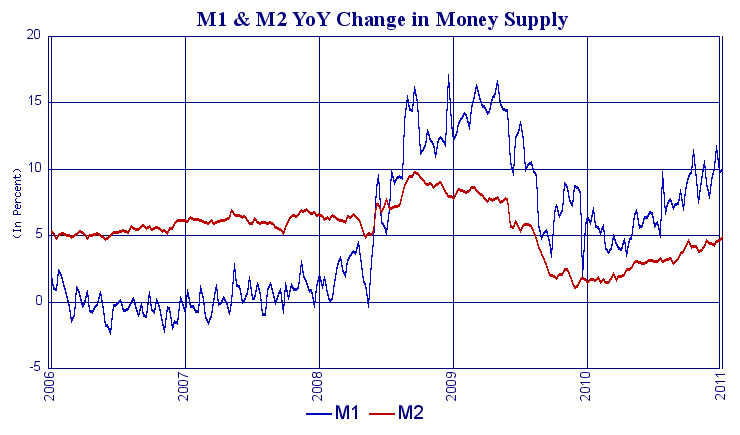
Central banks may call in and destroy, convert, or give out cash to banks with and without changing loans/debits and so forth, for all sorts of considerations.
It's really not that simple.
Think of the equity of a typical household. It includes some equity in their flat, which has a current market value. Down the street a developer buys a whole building block at a slight premium to rid itself of extant tenants and in so doing drives up the estimated value of local real-estate, including our household's equity. They've just gotten richer. They could even remortgage their house and monetise that increase in wealth. They could sell it and buy a bigger flat in another part of town.
So no: wealth is not conserved. Quantified (maybe), but definitely not conserved.
Is wealth coupled with some "valuation potential" that offsets the wealth down to some "inherent" material value, or is value just entirely fictional?
You put it out in your garage sale. A stranger comes along and offers $20 for it. Another person arrives and tells you it’s actually a valuable piece and would pay $200 for it.
A third person comes along and explains that it was made by their great grandmother and it was the last piece she made and she will pay $2000 for it. For sentimental reasons.
This third person has made a powerful enemy who then comes along and offers $20000 for the item, just to spite them. They intend to set the painting on fire.
How much “wealth” was stored in the painting?
Art is silly but really all value is subjective and situational. Crayfish can be cheap poor people food or a delicacy of the rich, depending on culture. You could die in a desert, weighed down with “valuable” gold because the traveller you met would not trade it for their last canteen of water.
But, in each step you are clearly adding more and more context along with the physical item itself, context that must itself have some physical encoding.
My point is mainly that I insist that physical reality is all there is, and if some events are hard to assign to any one physical thing that just means we are looking for subtle correlations.
Yes, it is.
> Economics is about people assigning value to things.
People are not outside of physical reality, nor is their experience of utility.
So even if you accept the materialist position, for purposes of doing economics, you kind of have to regard humans as something different. (Or so it seems to me, a non-economist.)
If you have to strip away all uncertainty from the universe to support your position and further posit hard materialism and then qualify with “in practice it’s not discoverable but philosophically it’s there” then I feel we are squarely in angels dancing on pinheads territory.
Physics itself does not need such violent axioms to get useful results! I think you would be hard pressed to find a physicist who would claim a plausible conservation law for “subjective beauty” (another kind of value), yet this is also a consequence of your premises.
You’ve explained that you are a materialist but not really anything useful about economics as practised by humans. Who are, perforce, rather limited.
You could equally well say “there is a ‘true’ value for every thing, but only god knows it”. That statement would be exactly as useful and (as an aside) just as unprovable a belief.
But does this really give you non-conservation? Doesn't your remark just clarify that non-conservation comes from ignoring most of the space of possible ownership until someone bothers to go there?
I mean, there is clearly a difference between the value of (sensible) financial derivatives and the value of the death star to the imperial court in the Star wars universe.
So the connection to physical reality clearly matters somehow.
A meta-fund that owns equity in a fund that invests in securities issued by owners of multiple pop-culture IP franchises? No problem.
In any case, I don't see why positions and correlations between different particles shouldn't be considered "real", so that's arbitrary stacking of ownership brought down to earth.
In fact, wasn't subprime to a large degree about falsely claimed correlations? That is to say the derivatives implicitly assumed things that weren't true, or in other words secretly left reality behind.
All money is in the books of the central bank, and it all has counterpart assets to it, and is all based on contracts with a maturity of less than a year. So if no-one renews there is no money, regardless of definition, in circulation after that time.
Edit. Coin would be the only exception, but that's a negligibly small item in the balance.
I was a theoretical physicist when this paper came out. I remember talking to some econphysicists at the time, though neither of these two. While as a premise, it probably doesn't stand up to much scrutiny, I think the spirit is that even if one makes such a drastic assumption, can one still observe any observable features of actual economic systems.
You describe an economic system that is not closed, as you describe money being created. The simulations were run assuming a closed economic system, with debt either ignored or handled in some atypical ways.
They might have worded that a bit differently, like saying "We assume a simplified economic system that has constant money". Because "closed economic systems" with this meaning don't exist in real life.
Research on closed systems is often directly applicable and therefore interesting. In some cases the externalities are sufficiently small, in others they're fast and the systems is essentially closed between them happening.
I.e. the creator creates an asset. The asset is then used as collateral for a loan. The loan is simply a notation in a ledger. Money is created when the loan is spent. Money is destroyed when the loan is paid off.
A bank provides a loan to Andy for $100 to build a house. Andy builds the house worth $100. Once the house is paid off, the bank gets $100+interest, and Andy has a house worth some amount relative to that $100.
The $100 never disappears as a result of the loan. Whether or not the bank then chooses to destroy the money once the loan is repaid is not really a material to the discussion. Replace "bank" with "parents" and it's clear that no money is destroyed as a result of the loan.
What you're talking about is really just a side-effect of our accounting practices and/or asserting that all lending originates from the Central Bank.
It actually has nothing to do with the central bank - fractional reserve banking has a much longer history than central banking.
He says: "All money is in the books of the central bank,[..]"
In the case of lending, it's the commercial banks where the money is created and destroyed. If enough reserves exist already in the system the central bank don't need to act.
I'd say "money" in common usage is only M0 (central bank lines) and MB (notes and coin), and the others are only technical indicators used by economists. But that's debatable.
he describes the monetary/credit/debit system in the same way, and I do agree the first premise is suspect depending on how you define "closed system".
However, I assume the authors' rebuttal would be that real-world economic systems are not closed system. Not that it makes their claims any more applicable to the real world.
Those are where all the interesting stuff happens (like growth, crisis), though ;) But that way the statement makes sense.
The opposite is true. Debt and the loan asset (if that's correct English usage) are created from nothing, for the debtor and the creditor respectively; the loan is converted to money intermittently by the central bank. On maturity of the loan contract both liability and asset side disappear when the loan is being repaid.*
The central bank creates the money in the instant it interacts with the creditor, and when the contract ends, the money is erased.
Do I missread this in some way?
* If you disregard the interest, which is extremely simplifying obviously; still taking it into account wouldn't make the first statement more true