Guitar music is I'd say evergreen, but hasn't been the hottest thing for much longer.
(Maybe less so by the late 90s, so maybe I'm a few years old than you :)
Source: Played baritone sax in an early 2000's ska band
Keep it heavy, and keep it coming \m/ (sorry hn)
This is... whilst not exactly incorrect, it's not the whole truth either. The article touched a little bit on this with the robotic tuner thing, but didn't fully explain why.
In my experience partaking in internet guitar forums over the decades, the vast majority of guitar players are really conservative. Extremely conservative. Especially people who mostly are into Fender/Gibson/PRS. They shun every new material (graphite/carbon fiber necks/fretboards), even if it has clear advantages (torsion/tensile/impact strength, weight, temperature/humidity insensitivity), often with unscientific emotional-based hand-waving like "it sounds too cold".
Headless guitars also stayed niche, even though they have clear advantages (lighter, shorter, more well-balanced, can't break your headstock off — a quite common way to damage your guitar).
It also took decades for 7-string guitars not to get scoffed at. The first 15+ years you had a lot of guitarists making fun of people with 7-string guitars. After they became somewhat accepted, 8-string guitars had an easier time, mind you.
People are very sceptical of True Temperament (http://www.truetemperament.com/) as well, believing that you can't perform string bending (you can, it doesn't really feel any different), and decided that to be the truth without even bothering to try.
There are still many areas on the guitar you can improve and innovate (and some stuff out there already that primarily Ned Steinberger showed us in the 80s could (and IMO should) be standard), but people want fragile, heavy and climate-sensitive "tonewood" in their guitars. They want soft brass bridges. They want maintenance-heavy soft "nickel/silver" (actually brass and nickel) frets. They want headstocks.
Maybe these old people in the article (I'm 37 so I'm one of them as well, I guess) are the problem, and when younger people that don't revere the word "vintage" so much can usher in the era of the truly modern guitar that Ned Steinberger has shown us glimpses of? One can only hope.
It's already happening. A huge proportion of young guitarists are playing metal, which is a hugely progressive scene in terms of technology. The coolest young guitarists are playing Strandberg Bodens, Kiesel Vaders and the weird and wonderful stuff from Ibanez's Iron Label. 7, 8 and 9 strings, fanned frets, headless, active electronics, carbon and titanium reinforcement, it's all on the table. They're abandoning valve amps in favour of Helix, AxeFX and Bias. They couldn't give a toss about Hendrix and Clapton - they revere the likes of Tosin Abasi and Rob Scallion.
The baby boomers have disproportionate influence because they've got a ton of disposable income, but big changes are afoot in the guitar business.
The future of guitar looks very much like this:
Wooden body, wooden neck, wooden fretboard, and in the case of Strandberg, Ibanez AANJ-style neck joint and silver/nickel frets (Carvin/Kiesel have neck-through and SS frets as options, or at least used to have). Most, if not all parts, you can get from Warmoth/All Parts, no custom designed parts there, apart from maybe the Strandberg's string fastening mechanism/headpiece, but that one is pretty crude, to be honest.
There are merits to both the neck-through construction used on the Kiesel Vader and the bolt-on joint used by Strandberg. Through-necks are arguably more stable, but bolt-ons are far easier to maintain and repair.
The Strandberg neck profile is anything but conventional:
https://strandbergguitars.com/strandberg-endurneck/
There's nothing terribly wrong with wood construction. It's aesthetically pleasing, relatively economical and more than strong, stiff and stable enough when used appropriately.
https://www.youtube.com/watch?v=dR01zIjj4_w
Line6 has created the Variax that uses the piezo signal of each string to model other stringed instruments and their electronic system (and even things like banjos and resonator guitars)
https://www.youtube.com/watch?v=UYHJaL6g6Jc
and now even Music Man is adopting steel frets lately. Guitars evolve slowly but they do evolve.
Really? Are people using their guitars as hammers? I think it's pretty damn hard to break a headstock off. Much more common damage to a guitar is denting the frets, distorting the neck or busting the tuning pegs. I'd put "breaking off the headstock" as the 99th percentile of common ways people materially damage their guitar.
https://www.google.com/search?q=gibson+broken+headstock&tbm=...
http://jacksinstrumentservices.com/why-do-les-paul-headstock...
Tuning pegs don't really tend to fail. Unless you have those "vintage" Les Paul-style ones (yuck), but they're easy to replace.
Frets get worn down, necks tend to bow or arch, or at worst warp (more seldom). Fret recrowning/redressing, truss rod adjustment and fretboard leveling are part of the regular maintenance of a long-lived electric guitar.
Now, headstock breakages are usually pretty easy to fix for a luthier, and the result is stronger, since a glued joint is stronger, just not as strong as a glued scarf joint.
Graphite and carbon fiber has superior properties in some respect, but substituting carbon fiber for wood doesn't necessarily make the guitar sound or look better or improve playability. Compared to acoustic instruments, electric guitars are low maintenance and durable. People in very humid or very dry environments might prefer carbon fiber to wood, but for most of us, wood is fine.
Robotuners similarly don't solve a significant problem that most players have, and they're complex and probably costly to make and introduce a battery to a guitar that didn't need one before. The convenience of automatic tuners probably aren't worth the costs.
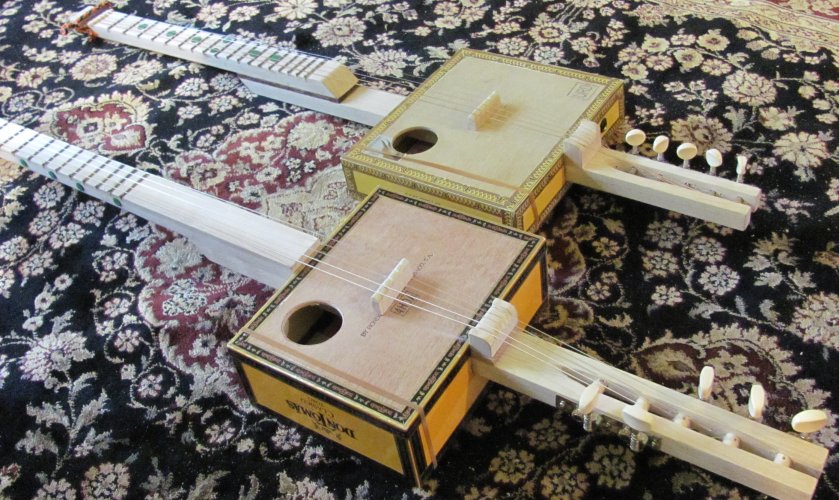
Headless guitars similarly don't solve a particular problem, as far as I can tell. I expect to be able to rest a guitar on leg and not have it tip one way or the other while I'm playing. Most guitars balance fine with a proper headstock. I haven't tried a Steinberger, maybe they're really great guitars, but there's no particular reason for me to expect that I would enjoy playing a headless guitar more than a "normal" guitar. (Note: I have built headless cigar box guitars [1], and I kind of like the design, but that's a bit different than a full-size electric.)
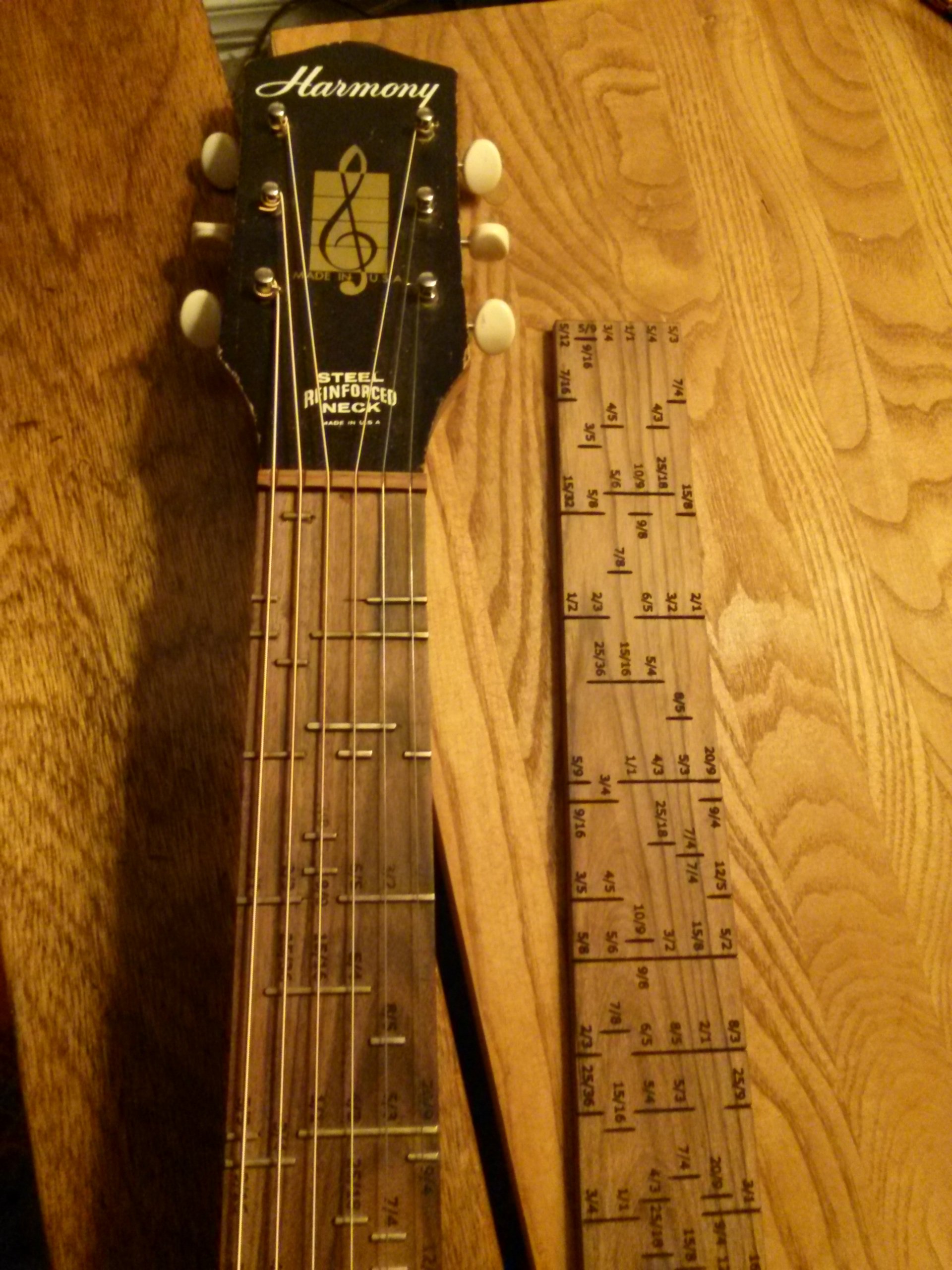
True Temperament is more interesting because that actually is addressing a real problem, sort of. Electric guitars are pretty bad when it comes to tuning, but the problem isn't so much intonation, the bigger problem is that 12-tone equal temperament is a compromise -- you can sound okay in every key (12-TET) or you can sound really good in one particular key (just intonation), but you can't have both. (The latter alternative leads you to some interesting looking fingerboards [2].)
I would be more interested in the TT guitars if they were focusing on temperament rather than intonation errors. (I suspect they may actually be doing that, but their marketing material says they're correcting intonation. I'm skeptical that any normal guitars would need such extreme corrections just to play in exact 12-TET unless the action is set unreasonably high.)
TT also has the problem that normal frets can be repaired or replaced by any competent luthier using ordinary guitar tools, but I wouldn't even know you would do a fret dress on TT guitar. Maybe you'd need a special crowning file that goes around corners or something?
I think there are some ways that the electric guitar could be improved, but to some degree, I think unscientific emotional hand-wavy reasons can be a better guide to making an instrument people want than to approach the problem by using science to optimize specific criteria based on some untested assumption that optimizing that criteria will make the guitar better.
Isn't it the heroes in any field that inspire others to take it up? Or are you saying that there can never be another guitar hero again who will be good enough to inspire another generation? That would be naive, wouldn't it, considering how awesome the electric guitar is?
I disagree. The guitar isn't gone yet, and even if there are newer instruments, the guitar will be with us for a long time.
And there's more to music than dancing. Even if guitars will be playing second fiddle to computers, they'll remain relevant just like violins are still relevant (and perhaps making a comeback in the hands of people like Lindsey Stirling). Besides, I need guitars in my dance music. Dance music shouldn't be sterile. The dirty, distorted sound of a guitar gives my the energy to dance in a way that an electronic beat does not.
The right kind of solo can accelerate the dancing. 80s pop had it all figured out in this regard: some of the best dance music ever made while also being phenomenal pop music.
If you listen to the whole of their albums and not only the commercial hits, it's a really solid rock band.
Now give me some of the other examples of rock bands that regularly make it to the top 10.
Like the other commenter said, Foo Fighters would have made a better example. Maybe Coldplay. Chili Peppers. Look, I understand that art is subjective, but at the end of the day, some art is less subjective than others. Nickelback deserves their spot in the pantheon of groups who get shit on whenever you mention them.
[0]https://headlineplanet.com/home/2017/06/20/nickelbacks-feed-...
I'm not a fan because they are unoriginal and re-use the same template in their production software for multiple songs.
http://www.npr.org/templates/story/story.php?storyId=4258547
They also seemed to take a few to many liberties with their 'inspiration', e.g.
Hero - https://www.youtube.com/watch?v=ZuX0RdK0HF8
vs
Kiss From A Rose - https://www.youtube.com/watch?v=yivLt9cTaio
The melodies are a little too close to gain my respect. It's like they were tasked with making music for a Batman movie and started browsing the previous movie scores.
The Black Keys are good, but maybe not that mainstream.
The best show I've ever seen was Avenged Sevenfold, which is definitely in the metal niche. But I'll never forget when they had a break in the middle of the show, and their lead guitarist came out and just solo'd for a while. Incredible talent.
There are obviously various reasons for this: 1. Technologically the instrument ran its course. While the tech was still innovative in the 90s with the new digital effects, it hasn't changed much in 20 years. 2. Electronic music however has brought in a lot of new sounds that gave pop music a fresh start in the 2000s 3. People seem to be more interested in 2 things: dancing and lyrics. You could write songs with totally inintelligible lyrics and a good solo, and you'd have a hit. I don't think that's true anymore. Similarly a solo kind of ruins the dancing.
I think die hard rock fans need to get over it, guitar heroes are not coming back any time soon. I don't think it means the electric guitar is going to die. It still is an amazingly cool instrument. But, it means that your average kid may not want to try to play that "ten years after" intro anymore.