It could be countered quite effectively by a system using larger jurisdictions each with multiple representitives.
I support replacing our winner takes all (first past the post) elections with approval voting. Maybe as a step towards PR. But we'll always have executive races that'd benefit.
Benefits
  * super easy to explain, administrate
  * per Duverger's Law, would end our two party system
  * eliminates separate primary elections
  * reduces voter fatigue
  * reduces admin costs
  * greatly reduce mudslinging, because everyone wants to be your second choice
https://en.wikipedia.org/wiki/Duverger%27s_law
Note: I prefer approval to the slightly mathematically superior score voting, we'd get most of the benefits but much more simple.
So the second half should be proportional to the error in the local representation.
No amount of education can be accepted by this crowd that doesn't amount to propaganda or brainwashing.
Not sure if I believe him, but it's interesting.
Redistricting and Representation: Why Competitive Elections are Bad for America
https://www.amazon.com/Redistricting-Representation-Competit...
Furthermore, American politics isn't two ideologies. Each party is composed of multiple groups that compete for dominance. Republicans have business interests, evangelicals, etc., while democrats have progressives, neoliberal, etc.
I do concede that odd shaped districts can be more representative. I've been told the "famously gerrymandered" Earmuff district in Illinois[2] actually represents a single Latino community that was split.
[1] https://www.austinchronicle.com/binary/3468/h309.jpg [2] https://en.wikipedia.org/wiki/Illinois%27s_4th_congressional...
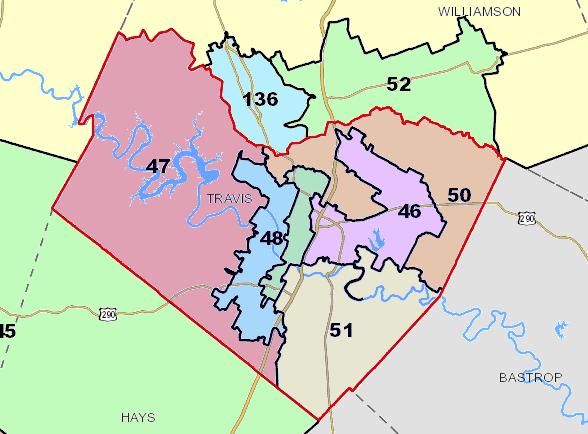
Without gerrymandering, districts would have a normal distribution from 60-40 to 40-60.
https://www.nytimes.com/interactive/2015/12/24/upshot/24up-f...
And even when choosing, they do it for job, etc reasons, not necessarily or primarily with political criteria.
I don't know when this shift occurred, but it is certainly the case now that any compromise is generally seen as a loss and failure to represent your constituents. Hence our very partisan climate and the increasing success of radical politicians. If all you have to do is vote the party line and never try to work things out, your job suddenly becomes quite easy to keep.
Now if things were to change and people would agree to discuss issues and meet midway, then more would get done and progress on long stalled issues would be made. In a country where small yet constant steps are being made, I would argue that the general populace would be far more happy than the one presented in that book by your professor.
The basic problem is that government at all levels has too much power. Less coercion and more voluntarism is the only long term solution to battles over power.
In a district that's strongly biased one way or another (which is the goal of gerrymandering), the general election is a foregone conclusion: the nominee of the majority party will win, even if (as it's been famously demonstrated) he's dead, or if he endorses his opponent, etc.
The result is that the actual electoral process occurs during the party primaries. And middle-of-the-road folks are a lot less likely to participate in that. The make-up of the primary voters is far more extremist and partisan.
And so what we wind up with are candidates that are extremists partisans, and fewer candidates that are appealing to the median, centrist voter.
You're preaching to the choir. I disagreed with him at the time I read it and still do. The single party south is a "great" example of what happens when primaries become what matter.
On the other hand, the current political polarization and problems are due to the old system, so conceivably changing the structure could change things for the better. It's just fun to consider.
I'd also note that he worked in Congress (not elected) for awhile and taught for a couple decades, so his 160 page book anticipates a lot of the obvious criticisms thrown out here.
Right, and that's the right way to do it. The wrong, current way, is to design the districts so their own party has a slight majority everywhere, thus winning more seats overall, not a significant majority in the areas where they are strongest.
The problem is that there's a conflict of interest, so redistricting shouldn't be in the hands of the politicians with a vested interest in winning.
This may not be the perfect example, but something like this
http://www.dailymail.co.uk/sciencetech/article-3201424/A-new...
then the anecdotal bit, got a cousin who is in politics in a mid Western state following in her dad's foot steps. here is the dirty part, at county and city levels and even to state levels the parties negotiate who runs. sometimes they get a wild card but both pretty much work to stop that. she wanted a county seat moving up from her city district, one she got because the guy in both sides hated and no one else wanted it.
to get the county seat requires finding a way for the person in it to retire or get into state level politics. she cannot simply go up against this person because she won't have her parties help.
politics gets dirty at the earliest possible moment. gerrymandering only seems to be an issue to most when the wrong party manages to overcome it and take power. yet sometimes we need this type of distracting for the same reason how the House is set up. To prevent cities from overpowering the counties and other areas in the state.
The "I'm currently fundraising" is kind of a giveaway that you're one of them.
While gerrymandering is strongly disliked, I doubt there is much that is going to be done about it. The Constitution allows the creation of districts like this. Much like the electoral college, it is what it is and I don't see how it matters whether districts follow neat lines or whether they are all crazy and chopped up like they are today. This sounds like another feeble attempt at grasping at straws by people whose priorities are completely out of whack.
The misunderstanding of who stands to benefit from redistricting has allowed republicans to propagate a narrative that "democrats do it too". In 2012, despite Republican house candidates receiving less of the popular vote they walked away with an extra 30 seats[1]. That's not a bipartisan effect.
[1] https://en.wikipedia.org/wiki/United_States_House_of_Represe...
Moving a Democrat into a Democratic district makes that district's Democratic seat more secure.
At the same time, moving that Democrat out of your district makes your Republican seat more secure.
You can't do one without the other.
The specific language that the OC, and almost all journalism uses to describe the strategy is "making districts more secure". The only way to interpret that, in the context of the phase definition of security, is adding voter proportion to a district which is already secure. This is never in the interest of the party that it is happening to, so yes, it is dishonest to describe it this way.
If you don't believe that this can be in the interest of either party (since it's happening "to" both of them), you don't have much left to complain about.
The party in power (in a State government) can either maximize the number of seats it has, or make seats safe. It cannot do both at once!
Maximizing seats -> minimizing the margin of victory in each district -> increasing likelihood of losing its majority in a future election!
Making seats safe -> maximizing margin of victory in each district and minimizing the number of seats by concentrating the majority's voters -> minimizing margin of victory in the popular houses (of the State legislature and Congress) -> increasing likelihood of losing its majority in a future election!
That is, no matter how you redraw district borders, as long as population per-district is roughly even (in each State), then you cannot get a long-lasting advantage.
This will probably be surprising to some here, but it's clearly true.
This means that Gerrymandering is a much smaller evil than one might think.
I would further argue that Gerrymandering is not an evil at all. It is part and parcel of the Republican system of government in the U.S.:
- the Senate, especially when Senators were selected by State governments, and still now due to its 6-year terms and staggered elections, modulates the popular House
- first past the post leads to a small number of parties and reduces party power (you vote for a person, not just a party as in the case of proportional representation systems)
- gerrymandering also modulates popular will
- juries modulate law and prosecutors
- the president is selected by the Electoral College, which also modulates popular will
- the States have police power, which modulates Federal power
- the Courts modulate Congress and the Executive branch
These things were well thought out by the Founders! They were arrived at by compromise. They weren't accidents born of ignorance of mathematics or science. This system has served us well. Changing it requires broad consensus, which requires strong arguments. So far I've yet to see any decent arguments against this structure.
Gerrymandering gives an absolute advantage. At the core of it, you are destroying part of the votes of your enemies, either by bundling them in one district, or completely destroying their power by cracking them.
Flawed argument, but good on you for noticing the tradeoff. Yes, there are two types of gerrymandering, with almost exactly opposite mechanics.
Unfortunately, the rest of your comment isn't even sophomoric...the US political structure is about sloppily conceived and aimless as your constant use of the phrase "X modulates Y".
How is this self-limiting? Also, I don't quite see how it maps to the rather abstract phenomenon you are talking about?
Edit -- wikipedia seems to match up with what I was remembering: https://en.wikipedia.org/wiki/Gerrymandering
If you maximize seat safety, you minimize the number of seats you have because you bunch up all your voters. This means that the opposition need only flip a few districts to win back a majority (and then redistrict to their liking!).
If you maximize the number of seats you have then you spread your voters thin. This makes it easier to win in a wave: with many districts close to 50/50, you only have to flip a few percent of the voters state-wide or nation-wide and you win. And that's exactly what's been happening. We've had a number of wave elections recently.
Downvote all you want, but all you're doing is showing your bias and ignorance. This isn't the sort of subject where you can reliably determine the truth value of any statement a commenter might make. You should be more open minded. I get the impression that if the tables were flipped you'd flip too, that the disgust you express at redistricting (or the Electoral College, or...) is merely convenient and insincere.
EDIT: And the tables have flipped over the years, haven't they. Democrats ran the table and redistricted accordingly for over 60 years between 1932 and 1994. I'm OK with that. I'm OK with Republicans doing the same now, and I will be OK with it when Democrats next get to do it again. Redistricting doesn't seem to have the effect you all seem to fear. In spite of redistricting, 2006 and 2008 happened, did they not? The 60 years that Republicans spent in the wilderness weren't due to redistricting, they were due to the long-lasting cultural effects of the Great Depression. It's reasonable to suspect that without the Great Depression we would have seen a much higher frequency of majority party switches in the 20th century. I think a switch frequency of 1 every 20 years is a reasonable guess. I can live with that.
We've certainly had wave elections, have we not? 1920, 1932, 1994, 2006, 2010... They're getting more frequent, perhaps because redistricting may not be maximizing seat safety as much? (I'm not sure, I've not and will not spend my cycles on analyzing redistricting history.)
Partisan gerrymandering allows for politicians to secure their seats - this leads to less voters being represented (allowing the politicians to become more polarized) e.g. when races are tight, politicians tend to move towards the center. [2]
Partisan gerrymandering is strongly disliked by both parties and across the political spectrum, the only people fighting for it are those currently in power (on both sides) [3]
Partisan gerrymandering disenfranchises a large portion of voters, whose votes end up “not counting” b/c of how district lines are drawn[4]
Because of this, I'm currently fundraising (from friends and family) for the legal team in the North Carolina case [1]. I've committed significant amount personally to the fundraise and can say that this is arguably one of the highest leverage ways to spent dollars that you can get to get America back on track as a representative democracy.
I've done a lot of research on this - if you want to help (with $$) or just want to learn more, feel free to reach out (valgui [at] gmail.com)
[1]http://www.campaignlegalcenter.org/sites/default/files/LWVNC... [2] http://www.nytimes.com/2012/10/21/us/politics/in-indiana-tig... [3]http://www.theharrispoll.com/politics/Americans_Across_Party... [4]http://www.latimes.com/opinion/op-ed/la-oe-wang-remlinger-ge...