I never changed back, so now I receive a new sheet of numbered codes whenever I've used a certain number of them. Nowadays I scan this sheet of codes, run an OCR task, and import the codes in my password manager¹. So when the bank asks for code 519:
pass -c bank/ing/tan/519
I wonder how long ING (my bank) will allow this method to exist… The alternative used by Dutch banks is a small token generating device they provide to all customers (I think only ING mentioned above doesn't do this yet). This requires no phone number either, just the (tiny) physical device.
I wonder what happens if I tell my bank that I no longer have a phone number I can be reached at?
My bank (or both of them) had no solution when i told them that i dont plan on having a phone number anymore. The one accepted it that they cant call me and send paper TANs, the other did not do paper tans for a few years now.
Btw: Your solution to store them sounds nice. Probably gonna adapt that
I thought this is more common in Europe, but apparently it's not? Although, our banks are increasingly pushing towards App-based 2FA because it's cheaper.. but I'm very confident they'll continue to support as it is the common way to do online banking.
0: https://www.vasco.com/products/two-factor-authenticators/har...
Banks now have introduced app based versions of the above, useful if you've not got the calculator or your card handy, but I don't believe they're looking to phase out the physical device just yet.
Seems similar to your device, but instead of an optical sensor to receive a code from the web browser you enter the account code and money amount of a transfer manually.
[0]: https://upload.wikimedia.org/wikipedia/commons/thumb/0/05/Ba...
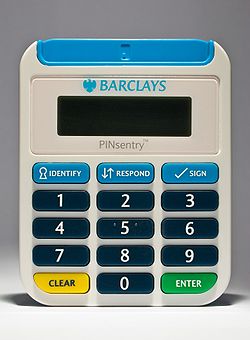
The other bank only offers different phone based solutions. Clearly my fault for not checking first, and also not a issue for me as i dont actually access that account.
If i could use that with other websites, Twitter, Github, whatever, i would happily carry that device with me :)
It is. Most of the other Dutch banks do use such a device (I haven't seen devices that try to read your screen yet though).
Maybe the bank is not interested in serving people like you - and why should they be? A bank needs to be able to loan money to fulfil its function - everything else they do is about enabling the loan business. To be able to make loans they need to be able to have some hope of being repaid, so they need a reliable way of contacting someone tied to that person's identity and expensive to mess with. Emails are ignorable and untraceable. Home address fulfils those functions but isn't really practical as a sole means of contact - would you like them to place suspicions transactions on hold while they send you a letter and wait for your reply?
I am more about everything else than banking tho. Things that dont have the need to contact me ASAP and still use SMS for authentification purposes. (Personally i dont even mind verification, i have a number, just not for long)
There's a link for if I authorized it and a link for if I didnt.
In fact, basically everything my bank does is by email, except a few legal documents amd sending replacement cards, which are by mail.
I cant count the number of times they called me on a single hand.
I don't get it, why are your prepaid cars only valid for a few months? Do people just lose their number regularly?
Around here you can get a prepaid SIM, and you only need to make a single call per six months to keep it active. Even an initial 10€ payment is enough for years of service. Can't you get the same in Switzerland?
Also as mentioned i cant get it again, prepaid is kind of contract less. If i loose the sim i am not entitled to get the same number again.
There's not a lot of genuine security or legal analysis to be found here.
Sure i could call my bank one a month to change my telephone number, which i loose control of shortly after that (only valid for a few months, prepaid). This is hardly a solution.
On the other side i control my email address, my private key, my home address to a degree, but never my telephone number.