We could be building small modern castles that we could hand down
While I see value in structures standing as monuments to be handed down to future generations - mostly large structures built for public use - I can't say that I've met a 100-year-old-house that hasn't had significant shortcomings. Renovations upon renovations to upgrade electrical, plumbing, HVAC have the potential to make building interiors look like a hodgepodge of bolt-on improvements. Then, one still contends with features that fall out of modern building code: that narrow staircase or the low ceiling in the basement or no windows in the bedrooms.
At a certain point, one cannot predict the housing requirements of the future and it would be more economical, and humane, to just start from a pile of dirt once again.
That's true. But if the next generation did not have to build their own houses it would give them a 'dividend' passed down by the previous generation and that wealth would ultimately give them more economic freedom and fewer opportunity costs.
Then with those advantages, any problems will be easier to face, such as starting from the pile of dirt again.
Otherwise each generation is constantly facing the same struggles with paying the rent.
Also consider, and I think this was implicit in what the OP was saying, that closed loop systems might make many existing problems relating to maintenance obsolete. So the next iteration of building might take place in two or four generations from now instead of for each one.
Sadly truly effective maintenance free filter technology appears to be holding closed loop systems development back. I know Kamen was trying to build a Slingshot mechanism but so far as I know this has not bourne any fruit. This is the kind of unsexy, hard stuff that Silicon Valley need to be pulling together.
2) Lots of young adults are going to chase the best opportunities in their fields, which are not accessible from the towns they grow up in.
3) Even only children don't get to inherit the house until parents die or move to a retirement facility. This is moving later and later into middle age, well after the "I want a house and marriage and kids" stage.
I don't think inheriting housing is a solution.
If houses could easily last 100-200 years without structural alteration being necessary then some generations would never pay for housing, just as we don't really pay for the capital cost of building most roads but the continued upkeep of them.
[1] http://freakonomics.com/podcast/why-are-japanese-homes-dispo...
Except inheritance comes when you need it least: late middle age, when the house is already paid off or close and there's little time for savings to compound before retirement.
Paying for (most of) your children's education is a much more effective form of inter-generational value transfer: it comes at the time young adults face the greatest expenses relative to their earning power, and lets them reap the benefits of a high-end career without excessive debt (so they can actually build wealth).
But if housing is treated as a more disposable asset (which is presumably less efficient in many cases than updating and remodeling) the cost of that decreased efficiency comes from somewhere. Perhaps from a grandchild's college fund.
Masonry construction is problematic in earthquake zones. It can work with enough steel reinforcement, but then the construction costs become too high.
In any place worth living the real value is in the land, not the house. Build houses so that they can be easily deconstructed and the materials recycled instead going to landfills.
That's a pretty sweeping generalization. I know that, for some people, life isn't worth living outside the core of a few hip cities, but they're really not the norm.
In general, at least outside of cities, the value of any structures tracks tends to track to the value of the land--assuming the land isn't very large (10s of acres and up). I'd guess that equal values for land setup for utilities and the structure itself is a fairly typical rule of thumb in a lot of places. (The median price for a home is about $200K. The construction cost for a new house is going to be a pretty significant chunk of that.)
This is short-term thinking.
I don't expect the insulation in my house to be sufficient for the significantly increased and/or decreased temperatures caused by deforestation, CO2 pollution, ice melting, etc.
Yes, we will have moved out by the time it will matter, but I think my children and their children could've potentially lived comfortably in our house had it been built with the best materials available today. And with more insulation, air conditioning wouldn't be causing even more warming:
http://www.nytimes.com/2012/08/19/sunday-review/air-conditio...
Substantially improved insulation in new housing and stopping deforestation could get the world back on track.
If you can't afford to even build a tiny house with great materials, perhaps you can with the help of several family members or friends or we could work out deals where domiciles are time shared during the day; while you're at work, someone else can live there. We really only need a place to live for 1/3 of the day unless you're too young/too old/sick/diseased/injured.
If you don't want to think about the long-term future of humanity or just don't give a crap about your ancestors- fine, but I'm not with you on that.
We're past the tipping point now, so we have to come up with better solutions, or we're screwed:
https://www.scientificamerican.com/article/global-warming-be...
That's great except most of the population (at least in the US) lives on, very roughly at least, the same schedule so they need the space at the same time between 8pm and 8am.
The real reason to use less paper is to reduce the other environmental damage caused by paper manufacturing.
Yes, my TH will the size of an average townhouse in sq ft in Ireland.
> what I think is unfortunate in house design and construction is that houses are built for use < 100 years, aren't easily upgradable via conduits, etc.
I agree but if you're clever you can low-tech hack by inserting pipes through the wall which contain what I'm going to call 'guide wires'.
That shall allow one to insert new cables into walls in the future.
You have to appreciate also that buildings get a 'deep upgrade' every 30-50 years. If only because with today's shit tier new growth wood and shoddy craftsmanship a house deteriorates around the time people finish paying a mortgage. What an unholy alliance there exists between bankers and building/material standards...
> Aerogel's Spaceloft that could significantly decrease residential energy needs is barely spoken of.
Don't tell internaut that! Things said by internaut in the last three months include:
> we do not see things like technologies to make heart attacks impossible or cheap aerogel insulation, the kinds of leaps we made in the past that really lifted all boats.
> using a material invented by them called aerogel (thin strips!) to thermally isolate the studs to prevent thermal bridging, it'll cost me just 1300 to raise the R (insulation) value by a min of 10% - 20%
> suppose the manufacture of aerogel could be brought down by 2 orders of magnitude.
The caveat I have to mention is that getting cheap aerogel production is not enough by itself to effect large industrial level change and an order of magnitude drop in energy bills for new builds. We also need an AR system (a special pair of glasses/goggles) that highlighted the places in the dwelling that require foam, special housings around penetrations, beads of chaulk, all in order to prevent the air escaping. Good insulation is close to worthless without the correct methods to prevent air infiltration.
Myron Ferguson does a nice demonstration of what I'm talking about on Youtube.
http://www.youtube.com/watch?v=Mhv9iFE3AY4
The passive house people are getting there but that will take forever unless they can be augmented by AR. So that is a good B2B start-up idea.
> We could be building small modern castles that we could hand down, but instead we still build cheap throwaways.
Yeah. The next generations should not have to worry about building their own houses unless they really wanted to.
My problem with modern building systems is that they are biased towards modern architecture styles I dislike. My attitude is the same as most normal people. Passive house cannot succeed without allow traditional building styles to exist.
Eliminating zoning rules and "voluntary" homeowners associations and eliminating property taxes would help.
Not worried about that.
The costs of heating and cooling a dwelling + the maintenance and upkeep are actually way in excess (1x - 2x) of the original house price adjusted for inflation. You get... dis-economies of scale the more you go up.
Housing markets are cyclical over long periods with nil capital gain.
Put the two together and you see a dismal end as entropy catches up. Not even to mention that this process shall accelerate if economic growth falters.
> Especially since the energy cost is small compared to the finance fees and property taxes paid.
Energy costs at first appear to be a small encroachment, but they really mount up over time in the most astounding way. I don't have a graph to hand but I remember being very impressed by it.
What is called THOWs or Tiny Houses on Wheels do not pay taxes or association fees. They are classified as vehicles and hence do not need to pay property taxes. They are also not very likely to encounter HOAs since complaints drive them away on their wheels to greener pastures. Sometimes they visit RV parks and pay those fees but those aren't very much.
> Eliminating zoning rules and "voluntary" homeowners associations and eliminating property taxes would help.
Of course! And I think such 'revolutions' will happen in time, because 'living like a normal American/European' will just become uneconomical.
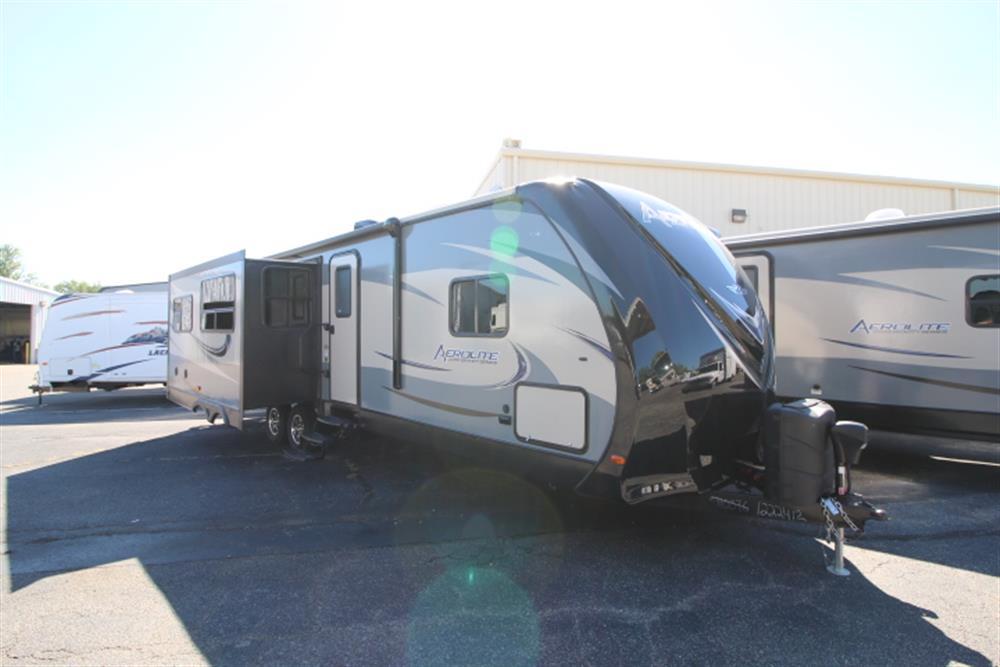
So RVs or campers with a cute name.
That can mostly be attributed to the use case:
RV (original intent) usecase was temporary living, moving often, the TH usecase is permanent living, moving rarely.
Compare:
https://i.reddituploads.com/303b76eaa06e495f8381f2bca3cf48f2...
https://i.reddituploads.com/ff4dee466ad34517bf0c1149ac3ba934...
with
https://i.ytimg.com/vi/crjeV4QxGmY/maxresdefault.jpg

http://www.bobhurleyrv.com/console/watermark.php?src=48636&w...
http://images.rvs.com/FOH/1222412/1000x/2016_dutchmen_aeroli...
http://www.finehomebuilding.com/2009/09/18/a-complete-guide-...
Fine Home Building is the HN of construction tech, I never fail to find something useful that saved money or gave me an idea or prevented me from doing something stupid. I'm sure I wouldn't have come across the concept of a Rainscreen (despite reading several construction books) but for them and I suspect that alone saved my butt.
> I agree but if you're clever you can low-tech hack by inserting pipes through the wall which contain what I'm going to call 'guide wires'.
Pipes can be conduits. And instead of guide wires, many use fish tape.
Thanks for mentioning fish tape since I wouldn't have heard of it before, it looks like the correct terms are 'draw wire' and 'fish tape' and they are used together.
But, what I think is unfortunate in house design and construction is that houses are built for use < 100 years, aren't easily upgradable via conduits, etc., and assume that weather and electricity/gas/water usage and cost as a fraction of income and will stay consistent.
As for materials, Aerogel's Spaceloft http://www.buyaerogel.com/product/spaceloft-10-mm-cut-to-siz... that could significantly decrease residential energy needs is barely spoken of, few spend more on quality insulated windows, many are content with hardiplank vs. masonry even though brick provides better insulation and doesn't need painting, cold-formed steel is a better option and would reduce deforestation in combination with increased taxes on the paper industry to drive consumers to use electronic alternatives, the same crap roof shingles are used and few use solar even as solar technology has vastly improved.
We could be building small modern castles that we could hand down, but instead we still build cheap throwaways.