Consider the extreme case: Tomorrow, the block reward changes such that only one bitcoin is mined a day @ $600/coin. The hashrate would definitely drop in that case, even though the price stayed the same!
> The last couple of halvings appeared to have little effect on the global hashrate, and so had little effect on the energy consumption.
True, but the system was not at equilibrium--the cost to mine a bitcoin had not yet approached the value gained from selling one, so after the halving most miners were profitable, and the hashrate stayed the same.
The more valuable bitcoins are, the more incentive there is to secure the system such that they retain their value and security.
This is true in a sense, but a majority of the mining is done by Chinese pools which do sell at a loss to the electricity costs even there. The losses are acceptable because it is used as a way to get currency out of the country.
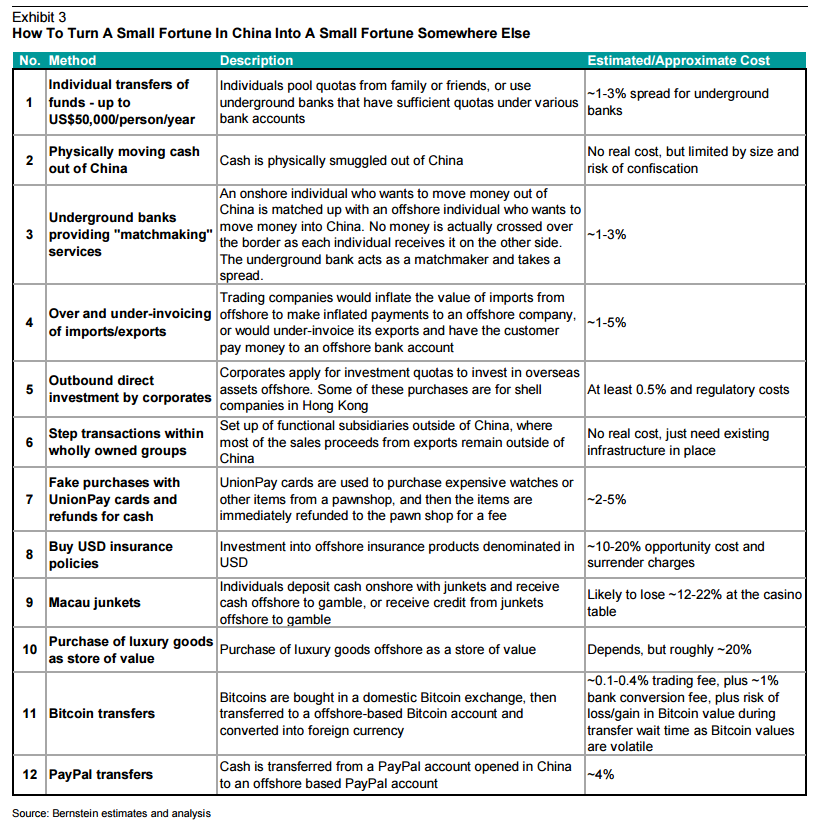
Bitcoin is certainly one way to get money out of China, but there has never been a shortage of ways to do that:
http://ftalphaville.ft.com/files/2016/03/Screen-Shot-2016-03...
The vast majority of Bitcoin mining is done by professionals. I doubt many people buy thousands of dollars worth of hardware to mine simply for fun. Miners are looking to profit.
People will mine the coin up until the point at which it becomes unprofitable. The cost of mining is more or less the cost of electricity (you can amortise the cost of the mining hardware over time). It makes sense to mine when the value of a coin is higher than the cost of the power used in mining it. Electricity cost is proportional to energy consumption. Hence, Bitcoin's energy consumption is proportional to its value.