If you'd like to argue that "purchasing power should have increased more if it wasn't for XYZ..." then that's fine, but it's separate from the point that I was debunking:
> but the purchasing power of that nominal wage has gone down faster than the increase
If one prefers 2016 products at 2016 wages, then purchasing power has increased. Since real wages have stayed constant, we're basically just talking about 1970 products vs. 2016 (and 2016 products are much better, cheaper, etc)
http://www.npr.org/sections/thesalt/2015/03/02/389578089/you... https://www.eia.gov/todayinenergy/detail.cfm?id=10891
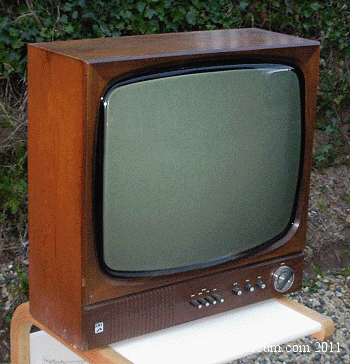
On that TV you can watch 1970s programming only. A 25" TV in 1970 cost $850 dollars ('77 Sylvania), which is equivalent to $5200 dollars today. I can hardly even find a TV that costs $5k today! For $4000 I can buy an 80-inch absolutely amazing Visio M80: http://www.amazon.com/dp/B00VQO5HSE - and they don't even sell TVs as small as 25" any more.
Your stove and refrigerator look like this, and work about as well as they look: http://airconvintage.com/antique/images/101_8149.JPG You also have access only to 1970s automobiles, which are nowhere near as comfortable, quiet, and maintenance-free as today.

If you're making this (hypothetical) tradeoff, then you're also limited to 1970s medicine and dentistry as well. Would you really choose 1970s medicine over today, too?
There are some people who would make this tradeoff, and I can respect that choice if you are one, but most people would not. Most people would prefer to live in 2016 with the products and services available today.
Childcare, healthcare, education, shelter, world travel, free time, organic food.
Keep your trinkets and baubles.
Which option would you prefer? (1) You have a 70s real wage, but can only purchase goods and services that were available in the 70s, or (2) You have a 2016 real wage and you can purchase all goods and services available today. Keep in mind that real wages have stayed roughly constant since 1970.
Most people I know will pick option (2), which suggests that purchasing power has in fact increased rather than decreased. Technology is improving and everything is becoming cheaper, bringing up our standard of living.
Here are some facts about Americans living in poverty, according to the Census Bureau [1]: 80% of households below the poverty level have cell phones. 96% have a television and 83% have a DVR. 97% have refrigerators, 96% have stoves, 93% microwaves, and more than 83% have air conditioning. 58% have computers. If you had to choose, would you prefer to live in poverty today in 2016, or would you prefer to live in poverty in 1970? How about 1900 or 1800? How does the standard of living in poverty compare to any other time in history? An American living in poverty today probably has a better standard of living than a typical king did in centuries past.
[1] http://www.census.gov/hhes/well-being/publications/extended-...