News for hackers. Stuff that matters.
Re:ReactOS, a 17-year quest for an open-source Windows, has ... by userbinator on Wednesday December 16, 2015 @09:07PM (#10749020)
IMHO the nixes have a far superior CLI, but Windows' GUI is (at least pre-Metro, i.e. Win32 desktop) superior to the many disjoint alternatives that the Linux/BSD/OS X/Solaris/etc. world has. Instead of Qt, Gtk, and all the others, Windows just has Win32 and all apps have basically identical look-and-feel (except for those that go out of their way to reinvent the standard GUI elements, but in my experience this is much rarer on Windows) and it's relatively easy for them to interact.

(I've been writing Win32 apps for over a decade, so maybe I'm biased that way, but I definitely prefer (ba)sh over command.com/cmd.exe. My ideal environment would be a pre-Metro Windows GUI with a UNIX-based filesystem and command prompt...)

Re:ReactOS, a 17-year quest for an open-source Windows, has ... by sho_hn on Wednesday December 16, 2015 @09:10PM (#10749036)
> Instead of Qt, Gtk, and all the others, Windows just has Win32

No, Windows has Qt, Gtk and all the others, too. Virtually any regular user Windows install has 2-5 Qt apps on it. And Windows has been infamous for apps reinventing standard UI elements with skinned monstrosities.

Re:ReactOS, a 17-year quest for an open-source Windows, has ... by dlitz on Thursday December 17, 2015 @02:41AM (#10750145)
> And Windows has been infamous for apps reinventing standard UI elements with skinned monstrosities.

This becomes painfully obvious when you start working with any kind of GUI automation tools (e.g. AutoIt). I imagine users of screenreaders have similar issues.

Re:ReactOS, a 17-year quest for an open-source Windows, has ... by donatj on Thursday December 17, 2015 @12:40AM (#10749788)
It's been about 5 years since I was a regular Windows user, but I can't think of a single Qt app I used on a regular basis. Care to name some examples?
Re:ReactOS, a 17-year quest for an open-source Windows, has ... by sho_hn on Thursday December 17, 2015 @01:36AM (#10749975)
EA's Origin and TeamSpeak (-> most PC gamers), VLC (-> most young tech-savvy media consumers), various device bundled software like the stuff that comes with TomTom GPS, the LightScribe control panel, ... it just accumulates. Germany's official tax app is Qt so that's a whole country right there. Many HN users might use VirtualBox which is Qt. The new Radeon Control Panel is Qt, too, so anyone who buys an AMD graphics card and installs the drivers. Many slightly geeky users use qBitorrent ever since uTorrent turned bad. Lots of one-off mini apps such as game launchers and settings apps are often Qt. And lots of weird random stuff people use for specific interests ... knitting pattern software, kids edutainment apps, language course CD apps, scientific citation managers, IRC clients and other messengers (Telegram desktop is Qt), ...

This is before you get into pro apps like Mathematica or Maya (and half of Autodesk's other apps and Nuke and so on). Or not-pro but widely used and semigeeky stuff like Avidemux. Or Valve's video making tool for Source engine video games like TF2 used by game YouTubers and esports people.

Qt is a pretty common way to write GUI apps for Windows. Just go to any regularly used Windows PC with a 20-something user and I almost guarantee you will find a few qtcore DLLs.

Re:ReactOS, a 17-year quest for an open-source Windows, has ... by coldtea on Thursday December 17, 2015 @02:08AM (#10750065)
Common is an exaggeration. You mentioned a handful of examples, most of which are either programmer/geek intended or niche (the LightScribe control panel? German's official tax app? language course CD apps? Virtualbox? scientific citation managers, etc?)...

The fact is a user can go for years without ever using one. And in the tens of millions of apps available for Windows, QT based ones make for less than 1/1000...

Re:ReactOS, a 17-year quest for an open-source Windows, has ... by sho_hn on Thursday December 17, 2015 @02:15AM (#10750081)
I don't really know why you seem to have an axe to grind here. My original assertion was that most Windows PCs used by regular consumers have copies of Qt on them, and I stand by that. How that happens is not hard to see across the examples I gave: Widely deployed hardware support software, widely used content client software, auxiliary roles in widely used entertainment software, software required by law to use by a decently-sized country population, software used in content creation of various kinds, software used by students and in the course of common hobbies ...

Yeah, a user can conceivably go for years without using one. By far most won't though, or will have Qt apps installed they don't use frequently.

Qt is an 800k developer ecosystem[1] -- do you think they all work on Wireshark? Most of them write Windows apps.

1 = https://youtu.be/sa2gS9GKG9Y

Edit: windows.com seems quite taken as well: https://blogs.windows.com/devices/2011/03/15/10-qt-use-cases...

Re:ReactOS, a 17-year quest for an open-source Windows, has ... by coldtea on Thursday December 17, 2015 @09:32AM (#10751623)
>I don't really know why you seem to have an axe to grind here.

Not sure about the "axe to grind" thing -- I didn't call any names, and it kind of calls for people to see any kind of reply from me as further "aggression". I merely stated my opinion based on what I've seen 15+ years in IT (including using QT to write some KDE API based apps).

I believe I have a quite good understanding on where QT stands in the "commercial apps" landscape, and common isn't the word I'd use for it. Skype would be the biggest success story, if they still use it, and it looks quite different from the regular QT/Windows look (which is what we were discussing).

So, just by Skype alone sure, you'll find "most Windows PCs used by regular consumers have [a copy] of Qt on them", but that's not enough to call it common in my book. Most regular PC also have had Java applet SDK and even JREs, and one could cite a few apps using it, but few would call Swing "popular" in the desktop space.

As for Qt being a "800k developer ecosystem", a lot of them work on internal enterprise tools, automation software and stuff like that, which has been a traditional market for TrollTech and QT in past decades. Then there's always KDE of course too.

Re:ReactOS, a 17-year quest for an open-source Windows, has ... by sho_hn on Thursday December 17, 2015 @09:40AM (#10751684)
> As for Qt being a "800k developer ecosystem", a lot of them work on internal enterprise tools, automation software and stuff like that

Many of which run on Windows, FWIW.

Re:ReactOS, a 17-year quest for an open-source Windows, has ... by coldtea on Thursday December 17, 2015 @10:28AM (#10751986)
Sure, but our original discussion, lost in the sands of time, was about UI libs and how "regular windows users" have lots of QT apps. In the enterprise all bets are off, and all kind of crap is used, including tons of Swing, Flex, old VB6 apps, etc.

In fact, as I've just checked it again to be sure, the whole initial point was a non starter, trying to paint Windows as equally fragmented, UI-wise, as Linux.

Re:ReactOS, a 17-year quest for an open-source Windows, has ... by sho_hn on Thursday December 17, 2015 @10:48AM (#10752121)
I'd say Windows is a bit more fragmented UI-wise than Linux, even if you remove Qt from the conversation entirely. There simply hasn't been a strong notion of "this is how a Windows app looks" since the, say, Win 98 days between multiple different generations of MS-blessed designs, the skin-heavy era and a myriad of toolkits. The classic "Windows app" design in my mind is Notepad, and few apps look like Notepad. I admittedly don't use Windows heavily, but the few apps I use occasionally inside a Windows VM or on the dual-booted Windows on my laptop all sport widely different UI appearance:

- iTunes (built on a port of some of Cocoa I think)

- Spotify (custom UX, also on Linux - using Qt - but I don't bother)

- Steam (custom UX, own toolkit - also on Linux)

- EA Origin (custom UX, made with Qt)

- KakaoTalk (custom UX, I think using a native toolkit though)

- LINE (similar to Kakao)

- Telegram (custom UX, built on Qt - actually this runs fine on Linux, but I keep it in the VM alongside KakaoTalk because it's the same use case)

- Firefox (custom UX, with native-ish theming by its own XUL toolkit grabbing stuff from Windows APIs)

- Chrome (custom UX, built on a custom toolkit called Aura with some Windows exceptions)

- Kodi (custom fullscreen UX)

All of these are apps with user numbers in the range of hundreds of thousands to tens of millions, and they're all unicorns. (You may never have heard of KakaoTalk or LINE, say, but both have 50+ million desktop installed bases.)

Some of the above (Telegram, Firefox, Chrome, Steam, Spotify) show up on Linux just the same, no better or worse. Outside of that, most apps people actually use on Linux:

- KDE/Qt apps, which import a lot of standard structure from kxmlgui and DE settings (e.g. dialog button order, standard dialogs) from Qt's QPA plugins

- Gnome apps, which follow a strongly defined HIG

- Non-Gnome GTK+ apps imitating the Win98-style HIG for the most part (which overlaps a fair bit with the kxmlgui standard structure)

Sure, there's a long tail of other toolkits on Linux (just as on Windows), but my argument is basically: Going by the most-used apps, Windows and Linux suffer this problem (if you consider it one) to a similar degree, but Windows slighly worse because outside the apps showing up on both platforms, the remaining popular Windows apps are more fragmented UX-wise than on Linux with its three broad categories.

Heck, Windows 10's bundled apps are fragmented UI-wise to a much greater degree than any competing offering due to the classic/Metro divide.

It's an utter mess. An interesting question is whether this messyness hasn't had some benefits (like allowing app designers to iterate and innovate individually, with no concern for following a system HIG, allowing the overall platform not to fall behind the curb). But arguing the mess isn't there is very strange to me.

Re:ReactOS, a 17-year quest for an open-source Windows, has ... by JonathonW on Thursday December 17, 2015 @12:58AM (#10749856)
I am a regular Windows user (split between OSX and Windows, actually, but Windows gets used on a daily basis) and I can't think of a single Qt app I use on a regular basis now. Actually, with my current workflow, I can't think of a Qt or GTK app that I use on a regular basis on either platform.

I guess Wireshark's Qt and it gets used occasionally. But most of the cross-platform Qt and GTK stuff I used to install (Pidgin and GIMP immediately come to mind) I haven't even installed on a machine in ages. I've moved to native alternatives for a lot of the stuff I run, and what cross-platform applications I do run (Chrome, Sublime, etc.) tend to implement UIs with the native toolkit, since that's a much better experience on non-Linux platforms.

Re:ReactOS, a 17-year quest for an open-source Windows, has ... by laumars on Thursday December 17, 2015 @06:19AM (#10750798)
Chrome uses Aura (http://dev.chromium.org/developers/design-documents/aura)

I'd also argue that Qt applications are still "native" in that they run as a native EXE (or ELF on nix). Granted they don't use Win32 APIs, but then calling them non-native because of that is a little like calling Windows OpenGL games non-native because they don't use Direct3D. But that's an aside point.

On the whole, I don't think it makes sense to categorise Windows desktop applications by what toolkit they use. MS Office 2003 didn't use Win32 toolbars. Office 2007 then introduced the ribbon bar, which changed in appearance in every subsequent release of MS Office. And even within MS Office, Microsoft doesn't always follow the same design patterns (Office 2007 used ribbon in Word and Excel but not in Outlook). Even outside of MS Office, some Windows applications in WinXP used different menu bars to the ones provided by the Win32 APIs (you can see by looking at whether menu items go 3D or just highlight when you hover over them). One example was the difference between Windows Explorer and Notepad. Plus often older Windows utilities go completely unaltered for years, eg the add font dialog box in XP was still using Windows 3.1 APIs: http://apagreekkeys.org/images/addFont1.jpg ....and this is all without discussing the disruption Metro has caused.
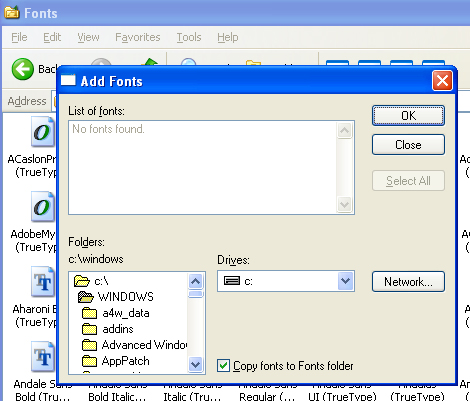
I will grant you that in spite of these criticisms, Windows still fairs better than Linux in terms of uniformity. But it's certainly not consistent enough to define anything that doesn't use Win32 widgets as non-native.

Re:ReactOS, a 17-year quest for an open-source Windows, has ... by cozzyd on Thursday December 17, 2015 @12:58AM (#10749858)
Skype might be the most popular.
Re:ReactOS, a 17-year quest for an open-source Windows, has ... by pjmlp on Thursday December 17, 2015 @03:10AM (#10750209)
Skype was written in Delphi originally.
Re:ReactOS, a 17-year quest for an open-source Windows, has ... by Qerub on Thursday December 17, 2015 @02:56AM (#10750175)
Last time I checked Skype only used Qt on Linux.
Re:ReactOS, a 17-year quest for an open-source Windows, has ... by rilut on Thursday December 17, 2015 @04:25AM (#10750397)
Not a common app, but GOG Galaxy is built on Qt
Re:ReactOS, a 17-year quest for an open-source Windows, has ... by pjmlp on Thursday December 17, 2015 @03:08AM (#10750200)
Only if you ignore Powershell.

You can orchestrate scripts in FP style, similar to the REPLs in Xerox PARC workstations, access any .NET, DLL or COM API as if it was part of Powershell, manipulate data without parsing it all the time, interact with running applications via Windows APIs....

Re:ReactOS, a 17-year quest for an open-source Windows, has ... by pjc50 on Thursday December 17, 2015 @07:00AM (#10750962)
I've tried to adopt powershell, and here are the obstacles I encountered:

1) You can't write or run scripts "out of the box", you need to do a security incantation first. A oneoff hurdle, but right at the start of the learning curve.

2) Perhaps because of (1), it's not very dogfooded: on a UNIX system, there are lots of already-existing shell scripts sitting around as parts of the OS. PS is not so rich in examples.

3) If you do actually want to parse data, it's not very good at this.

4) I've not worked out how to save intermediate stages in a pipeline to persistent storage.

5) Hasn't yet developed much of a "user culture", although I think that will come eventually.

Re:ReactOS, a 17-year quest for an open-source Windows, has ... by nailer on Thursday December 17, 2015 @09:33AM (#10751631)
You can't run scripts out of the box on nix either: you either need to manually mark the script as executable or invoke the interpreter and pass it as a parameter.

Not saying that's a bad thing, just that we (as Unix folks) do things intuitively that we forgot we once not intuitive.

Totally agreed on 2 though 5 though.

Re:ReactOS, a 17-year quest for an open-source Windows, has ... by noselasd on Thursday December 17, 2015 @09:34AM (#10751637)
What comes to mind by 4), is "tee", which powershell also has - but that's perhaps not what you want/mean ?
Re:ReactOS, a 17-year quest for an open-source Windows, has ... by pjc50 on Thursday December 17, 2015 @10:55AM (#10752167)
Almost, but not quite. Tee writes the pipeline to disk as text; you can't trivially take the written output and pipe it back in as objects. It's lost the magic.
Re:ReactOS, a 17-year quest for an open-source Windows, has ... by noselasd on Friday December 18, 2015 @03:24AM (#10757366)
Fair point. I believe you can use the Export-Clixml/Import-Clixml or ConvertTo-Xml/ConfertFrom-Xml for doing just that.
Re:ReactOS, a 17-year quest for an open-source Windows, has ... by pjmlp on Thursday December 17, 2015 @07:18AM (#10751013)
Regarding 1), at least it avoids the curl | sh => send $HOME to the world of current UNIX users.
Re:ReactOS, a 17-year quest for an open-source Windows, has ... by mkesper on Thursday December 17, 2015 @07:10AM (#10750992)
Re:ReactOS, a 17-year quest for an open-source Windows, has ... by z3t4 on Thursday December 17, 2015 @05:35AM (#10750636)
I use windows for the GUI. Win8 is very battery friendly, heck it uses less battery then Linux in console mode.
Re:ReactOS, a 17-year quest for an open-source Windows, has ... by cm2187 on Thursday December 17, 2015 @07:11AM (#10750994)
To me the superiority of the windows GUI isn't really beauty or consistency (which with Windows 10 is basically gone, you have three styles in the same OS - Win 8, Win 7 and Win XP). And Windows has many other rough GUI edges.

To me the real superiority of the windows GUI is that almost all of the settings are accessible with a GUI. In Linux or MacOX you very quickly end up having to write some command lines or editing a text file. That's great for already experienced users or administrators running batches. But to the common user, discoverability and intuitiveness is crucial and you are not helping them with an OS they can't understand or control. One should be able to visually see the state of the system.

If CLI had auto-complete/intellisense features, the gap would be smaller.

Re:ReactOS, a 17-year quest for an open-source Windows, has ... by flavor8 on Thursday December 17, 2015 @07:33AM (#10751073)
Regedit is not "discoverable".
Re:ReactOS, a 17-year quest for an open-source Windows, has ... by cm2187 on Thursday December 17, 2015 @07:48AM (#10751144)
Arguably it's not that bad, you can visually go through sections / sub sections, which is an order of magnitude better than having to call individual keys with a command line. But I wouldn't call that a good GUI either.
Re:ReactOS, a 17-year quest for an open-source Windows, has ... by kybernetyk on Thursday December 17, 2015 @04:53AM (#10750494)
>but Windows' GUI is [...] superior to [...] OS X

Hmm ...

Re:ReactOS, a 17-year quest for an open-source Windows, has ... by Zardoz84 on Thursday December 17, 2015 @06:15AM (#10750786)
If you think that an NOT USER CUSTOMIZABLE GUI is superior...