If you're looking for mistakes that can bring material harm to others, it might be easier to examine industries where errors in judgment lead to physical and/or financial harm. Transportation industries (aviation, trucking, etc), construction, and a whole slew of others offer a variety of examples to choose from that don't necessarily require intentional misuse of resources to cause harm.
Think of how many aircraft accidents have occurred over the decades as a direct consequence of mistakes made by the air crews--or controllers, or maintenance staff--and were, frankly, errors in judgment. Sure, there have been cases where maintenance shortcuts were taken to either save money or time, lead to the deaths of passengers and flight crews, and have been successfully tried in a court of law as negligence (or worse). But that clearly crosses what should hopefully be a distinctive line into unlawful actions, and even still, there have been circumstances where the maintenance staff wasn't held accountable. Again, it's a matter of intent.
So I think context is important. In the case of Microsoft, I don't think that the mistake in question should result in wanton firing. Perhaps if someone could prove that they were materially harmed by the upgrade, then it might be pertinent to seek damages from the company. But oftentimes the developers on staff either did something wrong (and fixed it) or were specifically told to implement that feature by management.
Everything else just seems like splitting hairs.
From my observations, people get fired over mistakes for two reasons - because somebody is stupid/overreactive/wants blood, or because the company wants to signal strong action taken (firing someone whose actions resulted in PR problems).
There's also a class of mistake, which I suppose the one discussed here belonged to, that's a combination of 'honest mistake' of a person along with a failure of the system to capture it in time. If it is known that a mistake in e.g. an update process can affect millions of users, a system should be set up to capture those before they have a chance to do real-world damage. Maybe a second person in another team should sign off update changes, etc. Lack of such a system may be considered not-so-honest mistake of senior management. Sadly, some companies design systems preventing (knowledge of) mistakes from getting out instead.
Cries for blood and similar hyperbole are unlikely to be helpful in any case, but questioning the position of anyone who thought this was acceptable behaviour or who was responsible and signed off on the update seems fair, and so does expecting Microsoft to provide fair compensation if anyone really does get significantly messed around because of this action.
Both true, and yet still it doesn't mean you have to fire the poor guy if the mistake was honest, regardless of damage done. Hell, he'll probably be beating himself over it harder than you imagine if the consequences were big.
Also, this: http://i.stack.imgur.com/eJy3b.jpg.
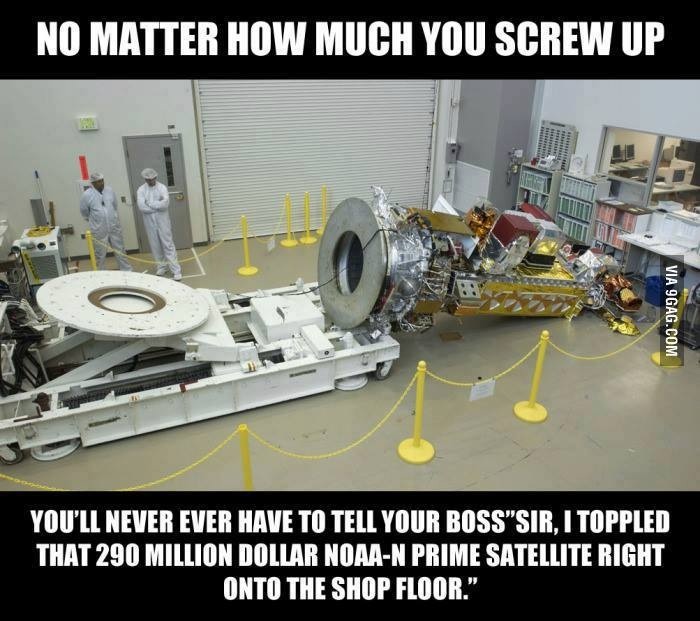
I disagree. Would an average user, the kind of person who is going to trust updates from Microsoft and leave them on by default and therefore wind up installing in this case in the first place, necessarily realise the significance of one extra confirmation dialog? People are notoriously blind to such messages, so I'd want to see exactly what that extra human intervention involved before making any judgement here.
Some mistakes should surely be forgiven in the interests of learning and doing better next time. We might call them "honest mistakes", perhaps actions taken with the best of intentions but which proved to have unexpected and undesirable side effects that could not reasonably have been anticipated.
Other mistakes are either not really mistakes at all or are actions taken by someone who might not have intended the final outcome but should clearly have known better. Consider installing a defeat device in a car to actively circumvent regulations, or a government agent or corporate officer abusing their authority for personal gain, or a police officer who has a track record of being more violent than was necessary when dealing with suspects. At some point, the mistake is no longer relatively harmless or something to be tolerated in the interests of overall progress, it's a demonstration of bad judgement that isn't acceptable for someone in that position.