In terms of what's happening here with Google/Alphabet, I imagine that there is some desire to see if some of these companies can make it independently while still being able to make transfer payments to support those that can't. The problem, of course, is that this builds much more explicit resentment from those that are profit-centers towards those that are cost-centers. It will be interesting to see how this works out, but hard to see how this is a stable state; it seems that shareholders will demand that businesses be spun out entirely -- or that the whole thing will have the fate of Google+ and be quietly folded up three years from now...
An additional bit of trouble, coming from the way Google's current profits are made, is that the profit centers are mainly perceived as less glamorous than the cost centers, which seems likely to only add to the resentment. It becomes much more explicit then, that the people doing the various bits of gruntwork needed to keep AdSense working (hugely profitable, but full of jobs like "sales" and "click-fraud arms race") are funding the people getting on the news for drones (not profitable, but cool). Not impossible to manage, and I'm sure they've thought about it, but does seem challenging.
if you don't balance people not wanting to do the low grunt work, you'll only get inexperienced or low rank employers to do it which is extremely hurtful in the medium run (say not in a year, but you'll definitely notice within a decade)
a) Is this about firewalling disappointments and legal problems from Google's core business from the new things that will drive it for the next 20 years?
b) Will they spin out Google's Europe operations in to a separate company so EU regulatory actions have minimal impact on the rest of thier business?
c) Are there other changes they are worried about to the ad business? Proposals to change the tax status of advertising deductions (US) would hit their bottom line hard, even if it if their ad auctions algorithms continue to behave as shill bids.
Will be interesting to see how this changes the main Google business, for better or worse.
Hear, hear.
The only thing Sun did that is the running for being even dumber is blowing Solaris x86. They released a pretty (for the time) awesome Solaris x86 product back in 1993, but never really got behind it. I had a Solaris 2.5.1 x86 workstation at work in 1997, and even then, my then-boss Scott Swanson was saying how Sun had blown it in terms of taking over the x86 server market.
I mean, even into the year 2006, Red Hat was telling me if their kernel crashed on a RHEL box, I had to set things up so the core file would go out over the network, instead of somewhere on a local disk. Sun had solved problems like that long, long before.
The only upside (such as it was) was that the loss of trust helped accelerate the argument internally to open source the operating system, which we finally did in 2005 -- a system that lives on today in illumos.[4][5] So in the end, Solaris x86 (like many Sun technologies) represented both the company's worst (capriciously killing it) and its best (open sourcing it, giving it eternal life). Nothing about Sun was simple!
[1] http://www.cnet.com/news/sun-delays-solaris-9-for-intel-chip...
[2] http://www.theregister.co.uk/2002/06/07/sun_to_reprieve_sola...
[3] http://www.theregister.co.uk/2002/10/04/sun_to_unbundle_sola...
[4] http://www.slideshare.net/bcantrill/fork-yeah-the-rise-and-d...
Now, there would be insane ways of splitting the company. Say putting building and operating data centers into a separate company from the company using the data centers to run services. Or splitting Android or Chrome into a separate company that'd then be funded by selling the default search engine setting to the highest bidder. If that kind of thing happens, it'd be women and children first into the lifeboats.
For example, Google would not want to miss on the data from its Fiber or Auto or Nest projects say. It is too valuable to not include as part of a user's profile.
If anything, I feel it can lead to just making the situation even more muddy. What happens to all the Terms and conditions? Privacy policies? Would they, or even can they, stay merged?
For another, they've said nothing about how they plan to handle IT and infrastructure. Though that'll certainly be interesting; they'd be foolish not to take advantage of the Google datacenter and cloud services to accelerate new projects, for instance.
Maybe the differences is that they did this to encourage diversification and innovation, not to manage it.
Internal markets are a really nice and well tested way to gather all the flexibility and agility of a corporate environment, while losing none of the risks, transaction costs and antagonism of a real market. It's a sure way to move your company forward!
But, rants apart, I read the article as Google creating something similar to Lucent Labs, not as separating bureaucratic divisions.
this is actually why bean counters exist!
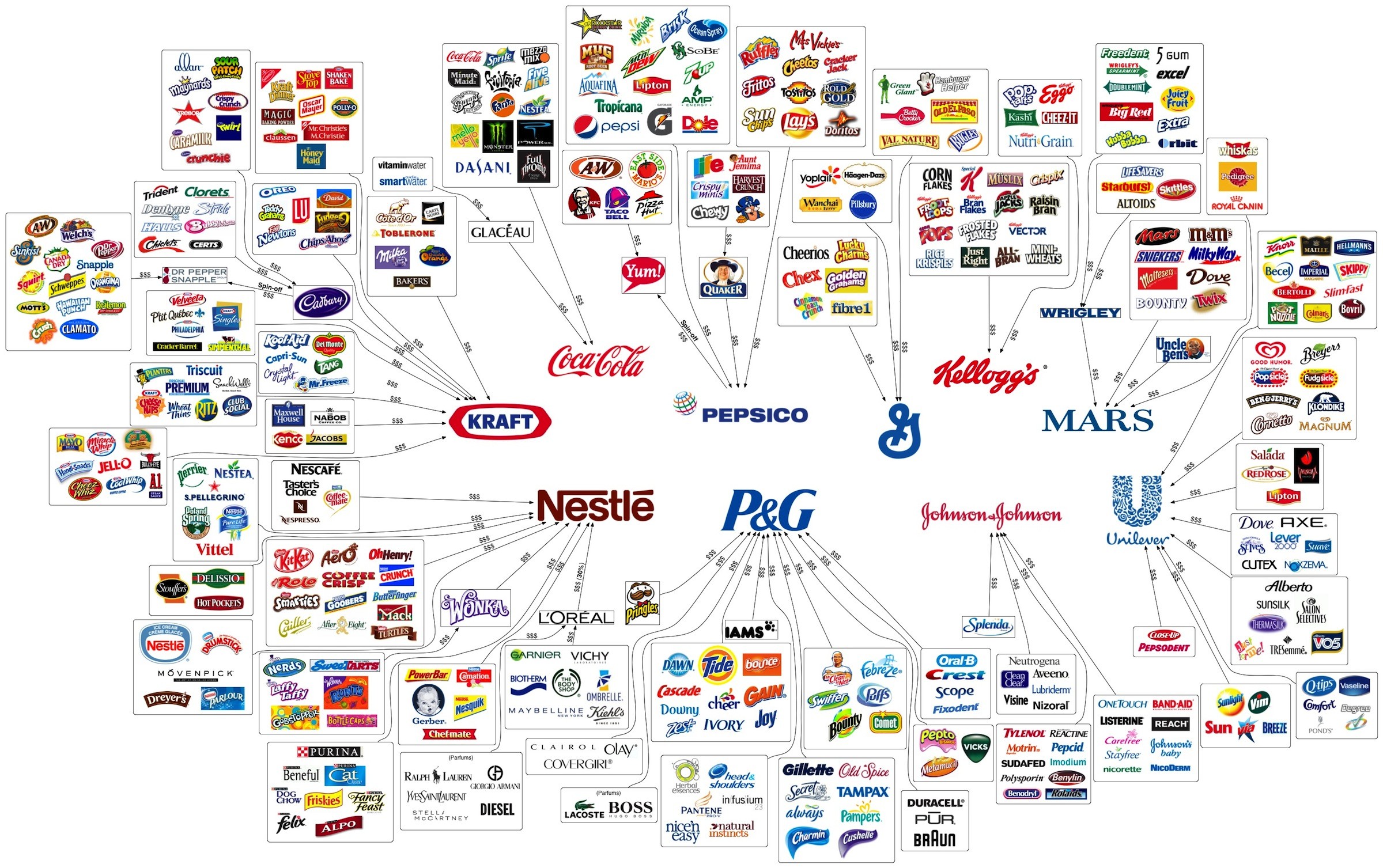
They're not going to collect one company per letter just so they can have an "alphabet" of 26 companies. The name just implies that they have a collection, a variety, a spectrum of companies.
http://www.cbronline.com/news/sun_microsystems_announces_plu...
But Alphabet has a long way to go beyond the 26 English letters, before they run out of funny diacritical Unicode letters with umlauts, accents, slashes, ligatures and dingbats.
The original Sun vision was that Sun Hardware would sell SPARC architecture machines running any OS, SunSoft would sell Solaris for any type of hardware, Sun Labs would license their innovative research rights to anyone who wanted to productize them. Except ...
Nobody really wanted to run their OS software on Sun hardware because SunSoft had an inside track on what was coming out. Sunsoft couldn't really make Solaris on x86 just as powerful as it was on SPARC because it would undercut Sun's HW arm, and Sun Labs? They could never really license a technology to a Sun competitor without the other two companies vetoing it. The whole reason FirstPerson was created (the shell company that was developing Oak which became Java) was to keep the politics and other constraints off what could be done with the software. And when the group told Sun it was going to ship first on "Chicago" (aka Windows 95), Scott McNealy blew a gasket.
Pretty much everyone I've talked to about that decision in depth thought it was a net negative for Sun and that had we had a chance to do it again, they would do something different. And since Eric was right in the middle of that, I would have expected him to advise Larry and Sergei that it wasn't the best choice. And maybe he did, and maybe they have a scheme that will avoid the problems Sun had. I'm surprised though that they chose that route.
Search, Android, Chrome, YouTube, Maps, etc. are all staying under Google. The stuff that's going under other Alphabet subsidiaries is the stuff that's totally disconnected from Google's core businesses, like Calico, Life Sciences, etc.
> Sun is the loose cannon of the computer industry. Unable to see past their raging fear and loathing of Microsoft, they adopt strategies based on anger rather than self-interest. Sun's two strategies are (a) make software a commodity by promoting and developing free software (Star Office, Linux, Apache, Gnome, etc), and (b) make hardware a commodity by promoting Java, with its bytecode architecture and WORA. OK, Sun, pop quiz: when the music stops, where are you going to sit down? Without proprietary advantages in hardware or software, you're going to have to take the commodity price, which barely covers the cost of cheap factories in Guadalajara, not your cushy offices in Silicon Valley.
http://www.joelonsoftware.com/articles/StrategyLetterV.html
By keeping Google as one, presumably around search, Google has a shot at avoiding the same fate.
Interesting strategy, hard to second guess from the outside of course. Sun's motivation was to figure out whether the other parts of the company could stand on their own[1], it also makes it less fiscally complicated to discharge an entire group into the void. Think HP selling off the Agilent half of itself.
Generally though this sort of move is a way of containing and then "fixing" cost problems. Divestiture is so much easier once you've created the framework of a whole organization around each chunk. It can also be weirdly inefficient, at Sun each of the "planets" paid in a sum of money to IT (Bill Raduchel's organization) for "Corporate IT support" except that Corporate IT didn't work for them, they were just the only vendor you could use to get your IT services, so what you ended up with was really crappy IT work that you couldn't shop around for. It was maddening. But the 'collection of companies' design pattern requires either that you have your "service providers" that everyone uses (HR, IT, Legal) which gives little incentive for quality service, or everyone gets their own version which means a lot of excess overhead and duplicated work.
I could think of at least two other ways Google could have re-organized without bringing that pain upon them, and as Eric lived through it at Sun as well I'm sure he has an opinion.
Oh, and having one of the sub-companies get the world's #3 brand? I wonder how that works out.
[1] Answer "No" for SunSoft, "Yes" for Sun Hardware, "No" for Sun Labs.