pixelhorse
https://caseantiques.com/item/lot-738-the-simpsons-animation...
Look at all that line detail. It creates subtle gradients in the final film, which don't readily transfer to vector graphics.
In this case, I think with some better pixel-based filtering before vectorization, they could've gotten a better result.
However, the much bigger problem is that the vast majority of animation uses paintings for backgrounds that aren't just solid lines and colors.
The inputs are similar:
https://www.nvidia.com/content/dam/en-zz/Solutions/geforce/n...
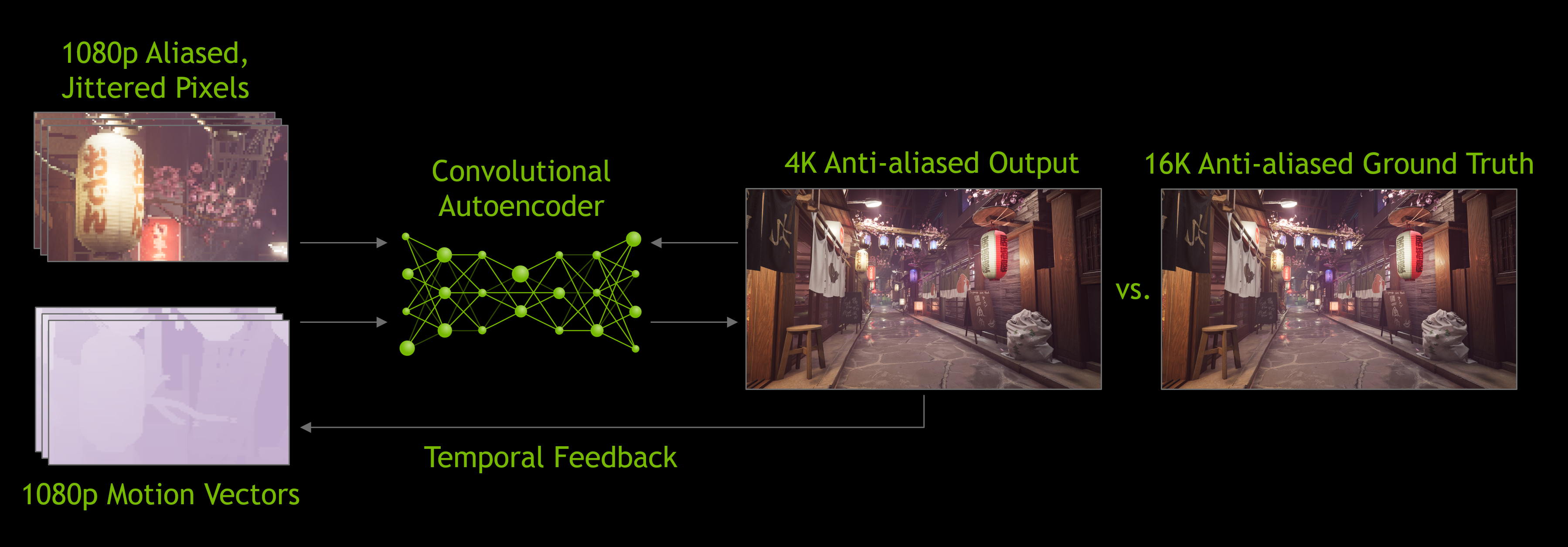
In contrast to DLSS1, the output of the NN is not color values, but sampling locations and weights, to look up the color values from the previous low-resolution frames.
With these shapes, this can be solved analytically with the equations shown. If this was raytracing, you'd need a lot of rays for such a clean image.
I couldn't replicate it a while later after an OS upgrade and I have since given up on it. Does anybody else have experience with this? Should I give it another try?
However, AMD has a history of shipping poor OpenCL drivers, so everyone just went with what actually worked - NVIDIA.
The trick here is to double the heap size, which would be completely unacceptable for a game that's making use of what the hardware offers.
Metal, in my opinion, strikes the best balance between performance and low-level control.
With Vulkan the intention is that you have multiple codepaths for every vendor for good performance. This is way too much effort for an API that is already of little relevance.
I think that with AZDO-style extensions to OpenGL/WebGL you would've gotten 95% of the performance benefit without adapting a whole new rendering API (and shading language). Unfortunately, AMD could never get a proper OpenGL driver going so they pushed for Mantle which ultimately turned into Vulkan.