oliverkwebb
TTF Font Rendering on Rust ESP32's for EPaper
Approximating the Position of Space Probes with Minimal Code
XEphem – Astronomy Visualizer for X
Small note on solving x^(n/m) = a
A visual tour of IAU SOFA
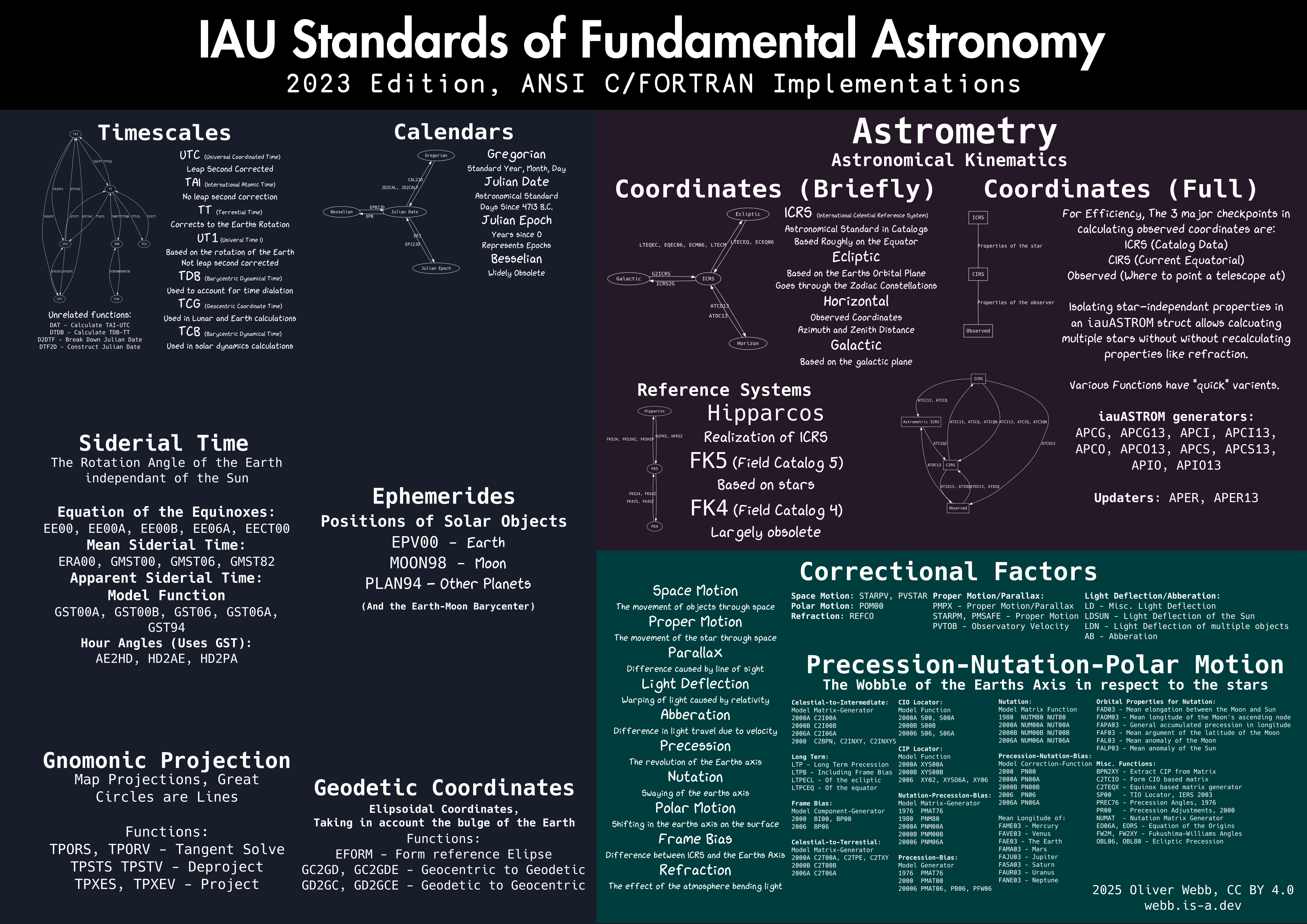
The lack of information-density is crazy
Linus Torvalds on Linus Torvalds (1999)
Exploring the Beauty of Roger Penrose's Journal
Generalizing Printf in C
Just a pinch of DSG for curl-able sites and confused AI crawlers
Word Hy-phen-a-tion by Com-put-er [pdf]
The Orphan Tsunami of 1700 [pdf]
Re:The CSS Handbook, 2025 edition
on Tuesday September 23, 2025 @04:31PM (#45352366)
You should be posting a link to https://flaviocopes.com/books/ or https://flaviocopes.pages.dev/books/css-handbook.pdf
The mailing list thing just sends you a public url. There's really no need to subscribe to it
Project Linework – Stylized Vector World Maps
Re:How the Tz Database Works
on Thursday September 11, 2025 @11:47PM (#45218489)
Related, I have written about the formatting of the TZ database and other representations before: https://gitlab.com/libtime/documentation/-/wikis/Timezones
The Unix-Haters Handbook (1994) [pdf]
Broken by Design: Systemd
Re:Microsoft Releases Classic MS-DOS Editor for Linux Written in Rust
on Wednesday June 25, 2025 @04:00PM (#44381289)
If the editor focused on becoming an IDE instead of being idiot-proof and cleanly designed, what would distinguish it from the 1,000 other editor projects?
Re:Microsoft Releases Classic MS-DOS Editor for Linux Written in Rust
on Wednesday June 25, 2025 @03:58PM (#44381277)
It's nice to see an editor that explicitly isn't an IDE and is more something like notepad.
often when editing config files and the such, it's more convenient to use something like notepad than it is to use something like VSCode.
This editor doesn't have delusions of grandeur, it focuses on usability more than features. and it is better for it.
Custom HTML Elements in JavaScript
Re:Fun with Telnet
on Tuesday June 17, 2025 @07:42PM (#44305165)
JPL provides a data generation API that you can telnet into: https://ssd.jpl.nasa.gov/horizons/ to get the positions and whatnot of asteroids, planets, spacecraft, etc.
Please don't resize our windows
Object personification in autism: This paper will be sad if you don't read
Writing a GameBoy Emulator in JavaScript
Re:Show HN: Moon Phase Algorithms for C, Lua, Awk, JavaScript, etc.
on Monday June 02, 2025 @10:49AM (#44159416)
Thank you! I accepted it
Re:Show HN: Moon Phase Algorithms for C, Lua, Awk, JavaScript, etc.
on Monday June 02, 2025 @01:45AM (#44156093)
This is also interesting for speed, The algorithms ran by all the impls are identical, but sacrificing speed for cleanliness and adherence to spirit is done regularly.
Without having actually measured, the rust impl probably runs faster than the C impl, but that's not because rust is "faster" than C. That's because I used a closure with one call to floor() for modulus in rust, whilst in C I did 2 fmod()'s to get it because the alternative would've been to make the code unreadable or add a second function/macro (although thinking about it now, undef does exist...)
Re:Show HN: Moon Phase Algorithms for C, Lua, Awk, JavaScript, etc.
on Monday June 02, 2025 @01:36AM (#44156058)
This discrepancy with time is explained in the book the algorithm is based on (Practical Astronomy with Your Calculator, which also does a good job explaining a ton of other ideas and models in astronomical calculation).
January 0th makes sense because a year starts on January 1st. You count days of the year from 1 instead of from 0. So if we are going by the day of the year, day 1 of the year should be Jan1, the consequence of this being that Jan0 exists and is Dec31 of the prev year.
I originally got into this because of my status bar on i3, hacking together C code from moontool into https://github.com/oliverkwebb/moontool about a year back.