Regarding Tek("Tektronix")-Graphics, here's an animated gif showing Tek4014 graphics...
http://phk.freebsd.dk/AducLoran/animation2.gif
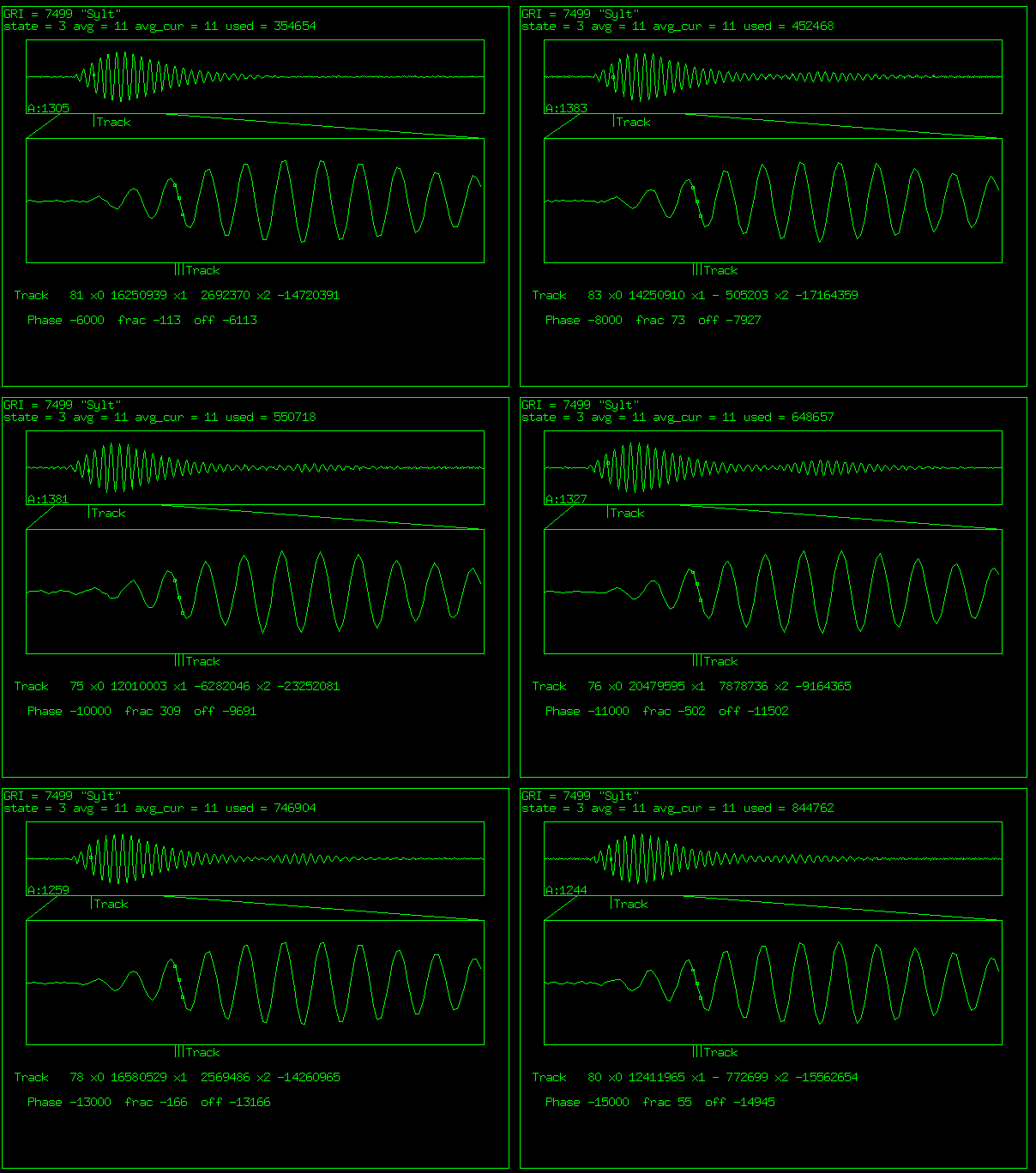
...part of a Loran-C receiver made by Poul-Henning Kamp which aparently outputs these plots over its serial port.
http://phk.freebsd.dk/AducLoran/
To play with it, for example gnuplot can output on an xterm running in tektronix-mode. Open an Xterm, then...
    * mkfifo /tmp/tek
    * cat /tmp/tek
    * Ctrl-Middle-Mouse menu:
        - show tek window
        - switch to tek window
        - (in Tek window:) hide vt window
    * start gnuplot, on the gnuplot-prompt
    * set term tek40xx
    * set output "/tmp/tek"
    * plot tan(x)    {or whatever you want to plot}
One of the craziest hacks on graphics terminals was NCSA Telnet. It supported multiple detached Tek terminals as well as a raster graphics protocol called "ICR". It had its own TCP stack built in, and could offer these features even on DOS. One of the weirdest rigs I ever saw was a guy at college who browsed the web, with graphics, using NCSA Telnet on a PC/AT running PC-DOS, at a time when that computer was at least 10 years old.