I built the site ten years ago, and the Long Now Foundation has plenty of other things going on, so I'm pretty confident that this will do for your 10-year bet.
If you find a challenger, I'm glad to help you two negotiate a testable prediction and get the bet up on the site.
In hindsight I was unnecessarily...cavalier...but I would be willing to work something out.
The GoodBet website would have two leaderboards: users with most winning bets by dollar and users who donated the most by dollar. That way even the losers win, encouraging participation.
Any chance you could adopt my ideas, either into Long Bets or a fork of it?
[1] Partisan Bias Diminishes When Partisans Pay. http://marginalrevolution.com/marginalrevolution/2013/06/554...
Note, I am a 7 year user of Intrade(which is undergoing a reboot) with over 100k USD total traded.
I think it will be like everything with technology, we will be more the same, and more different. People might share some information freely as a bird that we would be horrified at, but I don't think the intrinsic need for privacy will leave society on some level (for a host of reasons).
Maybe this will manifest into something like "For Us The Living" with a public sphere and a private sphere. Go outside and you are 100% monitored by thousands of sources, but in your home or private dwelling things turn off.
Social mores evolve slower than technology, but they do evolve.
Mostly I think kids are much more aware (though maybe not in an entirely conscious way) of holding on to several identities of varying degrees of privacy. They're better at segregating their lives into several online identities in addition to the one they physically inhabit at school/work/in public.
Not to say they are always successful at maintaining those boundaries. Really no one could be entirely. But they are much more active about it and it's a big part of their lives.
Someone on the bus with headphones is likely ignoring everyone else. Someone crossing the street with headphones is likely not paying enough attention to traffic.
Is glass different? We seem to forget that headphones themselves have drastically evolved in style and shape over the years, some designs were almost universally derided.
Let's not ignore the elephant in the room here though, glass is far more similar to bluetooth headsets. How are those aging? Do the kids think it's cool? I don't know for sure, but I'd guess not. You can put that guess in the time capsule.
No, because they have no use for them. There's nothing inherently goofy about them other than that society hasn't made them the norm. It certainly could be said that staring glazed-face at a glowing rectangle in front of you looks dorky as well. But smart phones have become a damn useful device, and that's why no one thinks twice.
Only time will tell with Glass.
That's what makes them uncool, they're unnecessary. Maybe someday glass will cut the rope of being paired with a phone, but not anytime soon.
Then, it's unnecessary at times like you said. I think this is what looks smug, you're walking around with something on your head, that you might not be actively using. Or with bluetooth, you have an earpiece, but you're not in a call. It looks like you're wearing it, just to show it off, and it seems like you're trying hard to impress. With headphones, we make the assumption you're listening to music when they're in your ear.
People enjoy their technology, but they like to pretend they're free from it. A friend posted on Facebook the other day how everyone is always on their tablet or laptop, and 'gah, can't people just put their phone or tablet down for one day and look up'. But... she was on Facebook writing that message. I get that feeling from a lot of people. They keep their phone close, but they don't want to look like they depend on it. They want instant e-mail notifications or texts, but, they don't want to give off that image. It's not an attractive quality to always be playing with your phone or attached at the hip with technology. It's anti-social. That's a negative. When you're wearing something like Glass, you give off that impression.
And lastly, with Glass, you're literally pointing a camera at my face, and could be taking photos, and recording audio or video without my knowledge. That's a little uncomfortable.
Personally, I think it's going to fail, and I wouldn't be surprised if I never see a single person wearing the device. However, I applaud them for taking the risk, since the technology and advances will be used in some way. Could it be used by doctors to stay hands free? Could it be used on motorcycles, so you can see your speed or a rearview image in the corner of your eye? Does it work well just for around the house, so I can do housework, and get notifications? Or can I cook with dirty hands, and see my recipe, or cooking time remaining? I think there are uses for it, I think others will see what they've accomplished and apply it in some way. However, as a device that everyone will be wearing while walking down the street, I just don't see it happening.
Seems like an easy design fix.
I don't normally consciously acknowledge that someone is wearing headphones, and that is the point. The article is pointing out how little we think of people wearing headphones in public now, while they used to be very noticeable and with largely negative connotations.
The argument that fundamental civil rights will simply disappear in the face of "technological progress" seems utterly vapid to me. In fact, it sounds like a fundamentalist ideology. This argument is a thin is "we have nukes, so let's blow up stuff".
This is not technology that will make certain jobs or products obsolete. This is not technology that will simply change the way we do things. This is not technology that merely affects our social interactions.
This is technology that robs people of fundamental freedoms, freedoms that we've not only had since home sapiens first appeared, but freedoms which we have explicitly protected through laws and constitutions as technological progress has made it easier to take away that freedom.
A society where everyone can be recorded on video 24/7 without restrictions is not a free society.
If this is truly the "inexorable march of technology", I might consider becoming a Luddite after all.
The technology of Google Glass is technological progress, just like printing a gun with a 3D printer is technological progress. I don't think that automatically means that in 10 years time we'll be walking around shooting at everything that moves with either.
Sometimes the way you look matters. See: the Segway. It's a threshold. Did headphones really make you look as dorky as the Segway does to your contemporaries? Doubtful. Does Glass? I think it comes close.
Your ability to predict what amount to fashion trends in the future is not particularly related to your ability to do so in the past.
I don't know, your ability to predict trends in the past sounds like the best predictor of your future ability.
Except if you think that there's no such an abilily, and it's all random guesses and luck.
And the thing is, above and beyond that, 10 years from now the tech that's evolved from Glass will look about as much like Glass as the iphone looks like my first touchscreen phone (behold: http://img.engadget.com/common/images/3060000000053553.JPG?0...)

To me, Segway with stick = http://s3.amazonaws.com/rapgenius/Y810072B.jpg
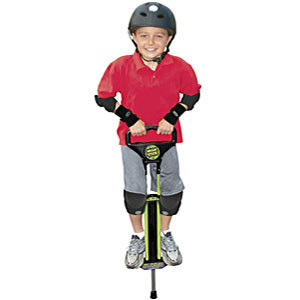
Segway without stick = http://i1.ytimg.com/vi/TkyLnWm1iCs/maxresdefault.jpg
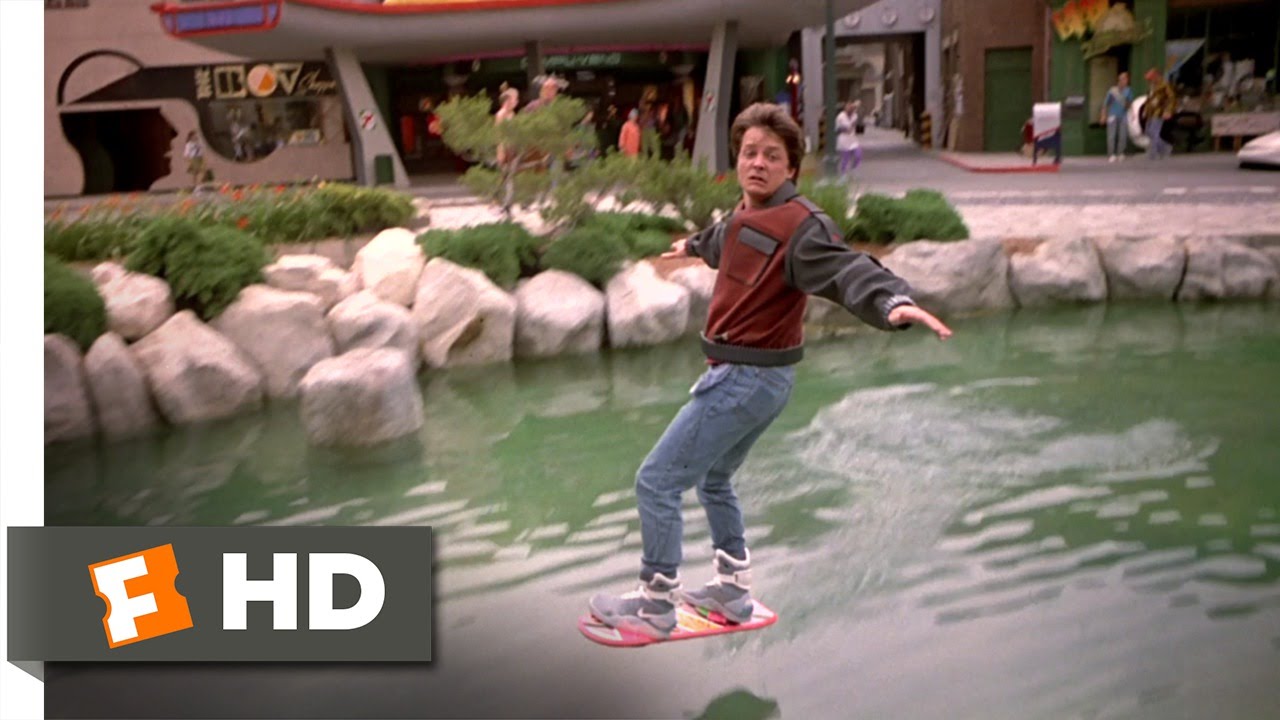
Does your job require walking around on a flat service all day? Segway for Mall Cops.
Do you want people who have a hard time walking for a few miles so they can do a tourist tour? Segway for tourist.
That's about it from me.
Speeding up intra-city commuting without having to walk or ride a bike obviously would be awesome. When people pointed this out back when the Segway came out even the fattest nerds were saying they were being lazy, but the truth is most technology helps people be lazy, so it seems to me the dork factor played a huge role in preventing early adoption.
a range which meant you were going to need to schlep it into your apartment/office to charge every day
taking up an incompressible 2-3 persons worth of space in an elevator/hallway/sidewalk/cubicle
no parking infrastructure
little/no ability to navigate grass and probably highly recommended not to drive off a curb
no extra carrying capacity
plus extra speed is either useless on a crowded sidewalk or makes you a giant dick on a crowded sidewalk and also useless if you're with some one who doesn't have that speed.
... so that you could walk a little less.
It was not a compelling product.
Taking a PC to a pub, so you could tweet is dorky. Taking a phone or glass to a pub to tweet is dorky, but you can pretend it's just a spur of the moment thing.
This keeps being said, but it doesn't have to be that way and may not stay that way for long. For one thing, if kids were so careless about privacy, they wouldn't be using Snapchat.
We'll take my great-grandfather for an example. He'd be horrified about how careless I've been about protecting our racial purity. How could I be so careless as to marry a women without realizing that she's not only a dirty papist, but also one of those swarthy French‽
However, the truth was not that I was careless, but that I didn't care. I know all of these things, but they didn't matter to me. Similarly, I know someone who broke federal privacy laws with respect to my personal information. I could report this individual, but the simple fact is that I don't care. If he'd posted the entire data set to wikileaks, I still wouldn't care. It's not that I have nothing to hide - there's some pretty embarrassing stuff in that data set. However, everything in that data set, good or bad, is true.
The important question to me, then, isn't whether the embarrassing (or mundane) secrets are true, but whether they would give someone the power to manipulate the subject of those secrets, or to manipulate others with respect to the subject of the secrets.
My younger siblings and their friends each have around 1500 to 2000 friends on Facebook. They hardly use their accounts anymore for that reason.
We are into the realm of game theory here. You can say "I don't care if my embarrassing photos/controversial opinions/whatever are public" only if everyone agrees the same thing at the same time. Because otherwise, you will find yourself competing with someone whose aren't public, in front of someone who does care. That might be a manager, it might be the electorate.
There's something about the need to criticize that seems inherent to humanity -- or at least the HN comments section.
No, it's an iPhone with a much bigger screen real estate. Which changes all kinds of things, user experience and UI design wise. Things that are awkward on small screen are easily done on a larger screen.
If it was just a magnified iPhone it would be stupid. Now, what's really bad is how many tech pundits though of it exactly like that...
the ONLY reason i use the tablets more is battery life. Given equivalent processing power/battery life, nobody would choose a tablet. the screen real state simply does not compensate for the lack of public use, uncomfortable long session use, etc.
give me a phone with decent battery life, and i won't even mind the occasional magnifying glass attached to it.
That's just like, err, your outlier opinion man.
Now, the phone might be easier to hold with one hand, but the iPad is easier/better for lots of tasks. From reading books and comics or watching videos to using music creation apps, drawing apps etc. Anything where screen real estate matters.
>the ONLY reason i use the tablets more is battery life. Given equivalent processing power/battery life, nobody would choose a tablet.
Wrong again. Not to mention that millions of people by Wi-Fi only iPads, and when using an iPhone in that way (with the 3G/4G turned off), you get pretty much the same battery life. Or you know, those people could get an extra battery juice pack for their iPhone, but they don't.
They buy wifi only ipads because the form factor is embarrassing to use with 3g anyway.
a clumsy ipad is still less clumsy than a phone+power pack+cables
BUT! now she has an iPad. She has had it for about a year and she loves it. She spends all evening shopping/browsing. I too have a tablet and struggled to think of how I would use one before I bought it, but now I read more than ever, and browse.
Very interesting how life-changing (or more like habit-changing) tablets have been, particularly the ease of use to look something up and read without having to turn a computer on. (I still use my laptop if I want to CREATE anything, but consuming is mostly done on a tablet, as attempting to create something on a tablet is an exercise in frustration). Perhaps Apple cleverly realised that most people consume instead of create.
Very clever. We would not have thought this 5 years ago.
"Similarly, privacy is going away,..."
Privacy is definitely going away in the public space. But I'm not so sure privacy in, well, the private space is going away.
We may even see a movement --heck, it may even get a name one of these days-- for apartments and houses built in a way that some rooms get a "100% no intrusive technology inside" treatment.
For example you may have an intelligent fridge (so that it can send spam as already happened and why not be part of a botnet mining bitcoins), intelligent TV which can report your mood to advertizers, etc. but have, say, a bathroom with no intelligent lightswitches (because even lightswitches will surely have NSA-friendly webcams and microphones), with no WiFi and just a "detector" at the door ringing a bell in case you try to enter with a smartphone / smartglasses / whatever.
Same for the bathroom and the toilets.
I don't know about you, but as long as the state isn't forcing me to have a webcam and a microphone in my bedroom and in my bathroom, I'll still have privacy there.
I see more and more people now putting a little piece of post-it on the webcam of their laptop (e.g. MacBook, on which there's no physical slider to obscure the cam).
In other words: as long as I'm still a free man, I get to decide where, on my private property, I do still have privacy.
And I invite you in ten years in my property and you'll tell me if the NSA can switch on a webcam and a microphone in my bedroom or not ; )
I really don't see a smartphone detector in the bathroom, but maybe you just turn it off, I don't think the bathroom is an issue. The bedroom maybe, but I would assume most smartphone owners sleep with theirs in the room, among other devices. The overall connectivity of households and their data to "the grid" is increasing rapidly. There will be some privacy, it's not a 24/7 visual feed, but the government, Google, Facebook, hackers, et al. will be doing what they do, and people will be giving it to them.
Personal video "always-on" cameras will NOT be pervasive in 10 years.
Put me down for saying that where ever you wish.
Once glass is directly on the optic nerve things will be better.
I really hope we get to see biological interfaces in our lifetimes. If there's a singularity, I'm guessing that's where it'll begin to take off.
Basically - unless we find a way to inject data non-invasively using an advanced version of transcranial magnetic stimuation.
The basic problem with bioscience - in fact anything that's not computer science, is you can't just hit "recompile" when you screw up. We can't just replace an optic nerve that goes bad, in fact anytime you do even minor surgery you run the risk of an infection that wipes out whole systems of the body from a tiny mistake.
Abstraction is a big problem, basically.
Don't be too confident though: predictions in general are very hard, especially about the future [1].
[1] http://andrewgelman.com/2014/01/21/commissar-traffic-present...
Perspective also means opinion. Not just accepting the "inexorable march" as fate.
I just hope the tech fades with it. Not away, but into the background. I'd rather have a pen that can draw a diagram on my workpiece tucked in my pocket than I would some geegaw strapped to my head all the time.
You can wear an iPhone. When's the last time you saw someone photographing their food in a restaurant, then tweeting while their friends checked their email?
There is no such thing. There are only specific technologies. Some march inexorably, some are jokes (if they're remembered at all).
How many times have we laughed at definitive statements, pontificating on this or that newfangled thing, that were proven to be wildly off-the-mark only a few years later?
How many times have we facepalmed at the print media's desperate attempts to combat or stave off digital publishing?
Whether it's Google Glass or something else, "invasive" wearable tech will be utterly pedestrian in a decade or two. Similarly, privacy is going away, and future generations won't care. You can already see it with the kids. It's just the obvious extrapolation of computing technology, and it won't be stopped by the old guard.
If you disagree, care to put our thoughts in a time capsule and see who looks more foolish in 10 years?