I suspect that the killer programming medium of 2050 isn't going to be some transformatively different methodology for programming that is unrecognizable to us, it's going to be something with a lot of similarities to things I've listed above but with a different set of design choices and tradeoffs, with a more well put together underlying structure and tooling, and likely with a few new ways of doing old things thrown in and placed closer to the core than we're used to today (my guess would be error handling, testing, compiling, package management, and revision control).
There is just so much potential in plain jane text based programming that I find it odd that someone would so easily clump it into a single category and write it all off at the same time. It's a medium that can embrace everything from Java on the one hand to Haskell or lisp on the other, we haven't come anywhere close to reaching the limits of expressiveness available in text-based programming.
We haven't come anywhere close to reaching the limits of expressiveness in assembler either, yet we've mostly given up on it for better things.
Try arguing the devil's argument position. What can you come up with that's might be better than text-based programming? Nothing? We're really in the best of all possible worlds?
The working code for the Nile viewer presented is on GitHub:
Dicebat Bernardus Carnotensis nos esse quasi nanos, gigantium humeris insidentes, ut possimus plura eis et remotiora videre, non utique proprii visus acumine, aut eminentia corporis, sed quia in altum subvenimur et extollimur magnitudine gigantea.
Why does that matter?
A bunch of ideas that sound great in theory are just that, it is only by surviving the crucible of the real world that ideas are validated and truly tested. When Guy Steele and James Gosling were the only software developers in the world who could program in Java, every Java program was a masterpiece. It is only once the tool was placed in the hands of mere mortals that its flaws were truly known.
Walk around a good gallery. There are a pretty good number of pieces entitled "Study #3", or something of that sort. An artist is playing around with a tool, or a technique, trying to figure out something new.
Piano music is probably where this concept gets the most attention. Many études, such as those by Chopin, are among the most significant musical works of the era.
In another talk Bret claims that you basically cannot do visual art/design without immediate feedback. I was wondering how he thought people that create metal sculptures via welding, or carve marble, possibly work. It's just trivially wrong to assert you need that immediate feeback, and calls all of the reasoning into question.
also Beethoven wrote down his complex music quite often w/o using the instrument as he heard it in his mind...
You can't play around with a tool or technique without actually producing something. You can talk about how a 47.3% incline on the brush gives the optimal result all day long, but it's the artist that actually paints that matters.
Van Gogh didn't ship.
Because I want to play with his Drawing Dynamic Viz demo. http://worrydream.com/DrawingDynamicVisualizationsTalkAddend...
The fact that you point "shipping" as a part of this discussion just shows how much he's right.
I assure you that devices of this sort require a great deal of code: http://cachepe.zzounds.com/media/quality,85/Ion_front-c20cdb...
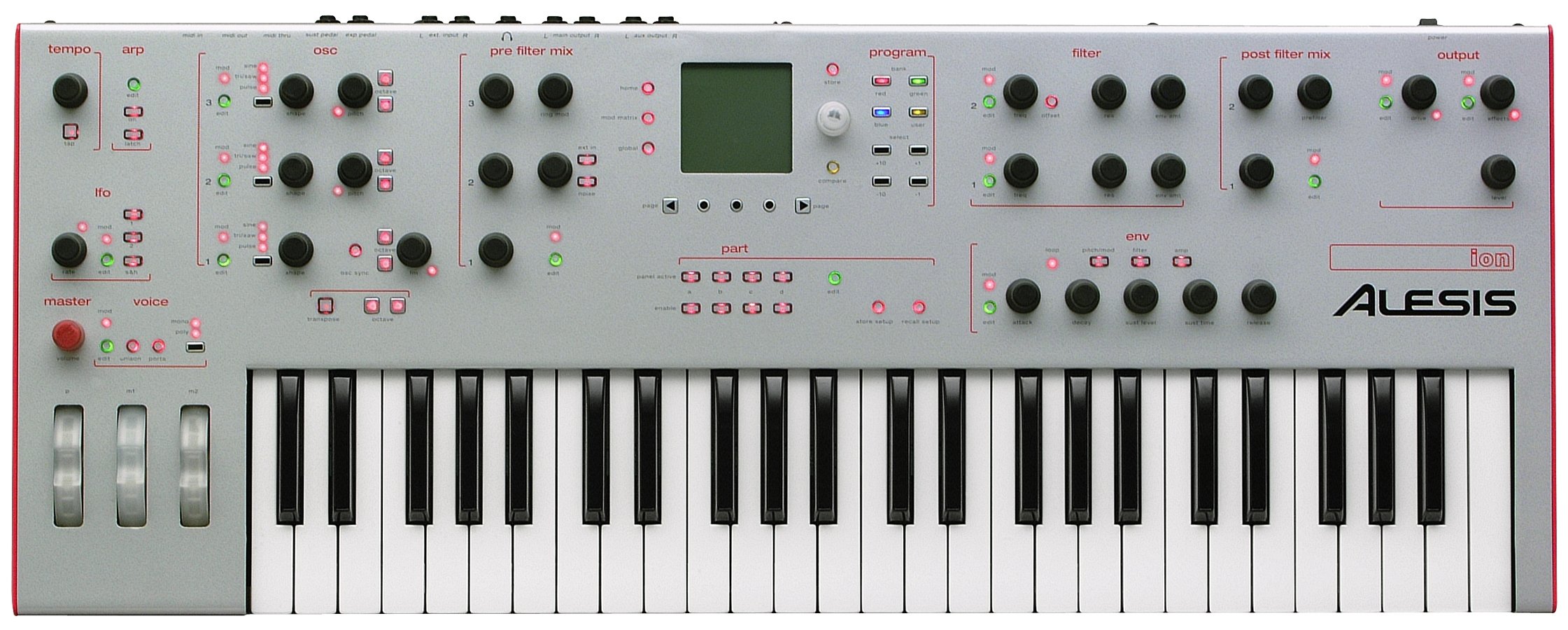
Since I've been doing it for quite a few years I guess I know a thing or two about MDA/MDE. And it's not about disdain for writing code.
This reminds me of the UML and the Model-Driven Architecture movement of the days before, where architect astronauts imagined a happy little world where you could just get away from that dirty coding, join some boxes with lines in all sorts of charts and then have that generate your code. And it will produce code you actually want to ship and that does what you want to do.
This disdain for writing code is not new. This classic essay about "code as design" from 1992 (!) is still relevant today:
http://www.developerdotstar.com/mag/articles/reeves_original...