Second, what Sanskrit literature we have is highly artistic and edited literary text, replete with hard-to-get cultural references, not ordinary spoken language.
Finally, it's probably just plain different from whatever language you're used to, not intrinsically harder or more complicated.
Did you compose this text with the help of Google Translate, then?
At bottom both Chinese and Sanskrit, like many other classical languages (Latin, Greek, Arabic), are quite modular. While Chinese's phanopoetic menagerie may not at first glance appear as RISC-y as Sanskrit's lexis (comparing radicals to roots may not be fair anyway), basically it's rare in both languages to stumble across a word that is just a black box, whose etymology you can't pull apart so as to guess what it means. Rarer, at least, than modern languages, which seem more atomized and dictionary dependent, as opposed to the classical languages, which by their systematic modularity were able to function as universalist languages of empire.
"It's rare in both languages to stumble across a word that is just a black box, whose etymology you can't pull apart so as to guess what it means."
Err, yeah I guess you can guess from the morpheme of a Chinese character that a particular character is a type of tree or has something to do with trees, but that's about it. Similarly with Sanskrit, because of sandhi rules often times you can't even figure out what the word is in advance, and I'm not sure how you are suppose to "guess" the meaning absent looking it up in Monier Williams (unless you are guessing backwards from other Indo-European languages, in which case your potential guessable vocabulary will be quite small).
As to how you guess, yes, you infer from the etymology.
The fact that it's guessing doesn't mean it's easy, or that guessing gives you as much information as actually looking it up, parsing it, etc.
Iamafrog <- you can figure that out what that means, but it certainly isn't easier than modern orthorgraphy.
Aamafrog <- you could figure that out if you know that "i" + "a" sometimes combines to form "aa" -- but why would you want to do that?
In what way is that easier?
It's not every day that we meet a legitimate word for which Google can only find a paltry 119 results ;-)
(This result did the most for me: Do we privilege sight or sound? - Foetry http://foetry.com/forum/index.php?topic=330.0;wap2 Let us call these tendencies the Phanopoetic and the Melopoetic; [...])
Sure! Long multi-phoneme words with all the tense built in... the wordcount will be low. I meant semantically verbose, roughly: "average minimum unit of well-formed expressible information". In this facet, I found Sanskrit far worse than even Latin.
It almost seems like Polish was optimized for reading/writing and correctness, and English for talking and speed.
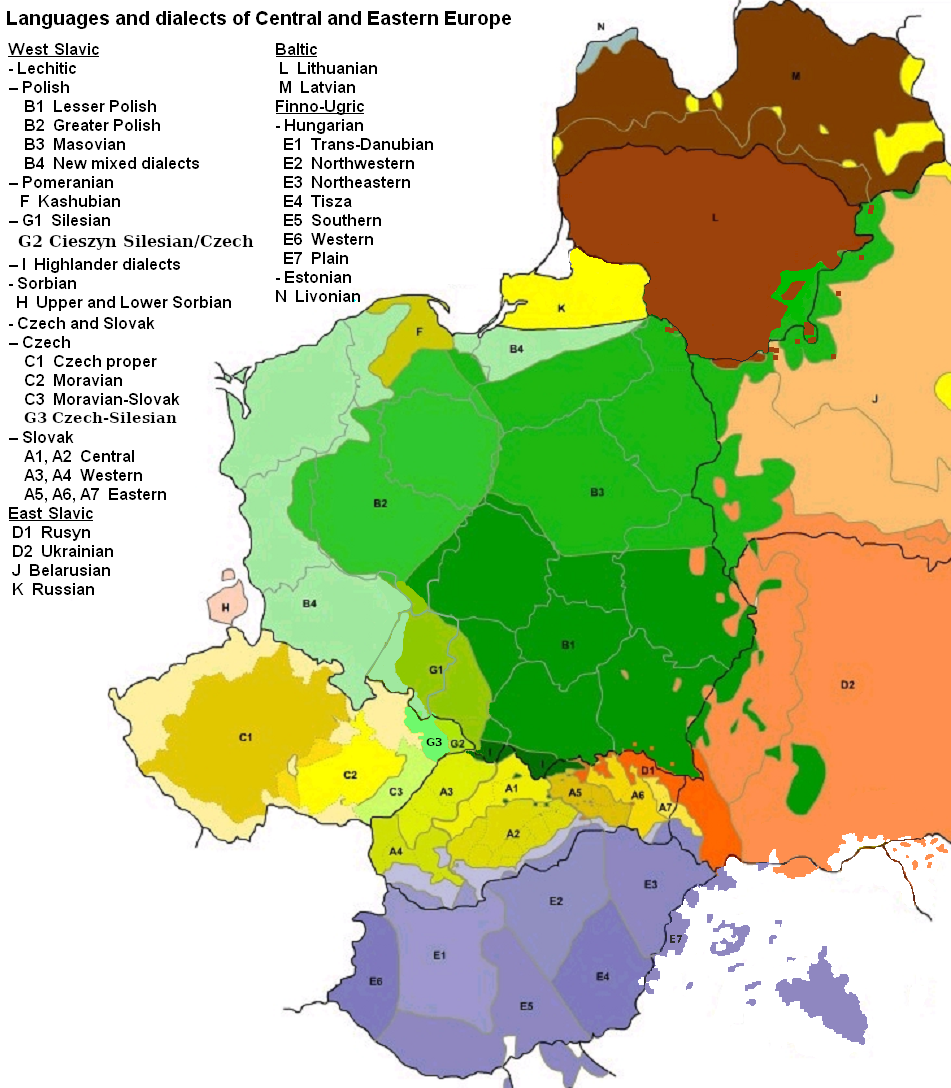
For example we have flexion system working smilary to that in sanskrit (you glue up pre and postfixes to the word to change the tense, mark the gender of the actor (mandatory), or depending on the case of the noun). German has sth similar only in a few places (past tense), and in concatenating nouns together. Most of the time word order and "keywords" decides on the tense, like in English. Polish have 7 cases (1 rarely used), sanskrit has 8 (1 rarely used), German has 4 IIRC.
Polish only recently (a few centuries ago) lost dual plurality that exists in sanskrit, and we still have relicts of that in many places, like proverbs, names for body parts, the way nouns change with numerals, etc.
And these all things aren't specific to Polish - almost all Slavic languages share them. I've also heard Lithuanians say their language are even more similar to sanskrit.
I would posit that Sanskrit is more like assembly language (for its unique combination of specificity, table-thumping traditionalism, and verbosity). On the other hand, classical Chinese, which presents a roughly similar vintage literature, is a more fluid and combinatory system for type-indistinct component thoughts ... sort of like an extreme version of perl.