Block Buster got squeezed out by automation - At the high end from iTunes and on the Low-End from Netflix/Redbox/Amazon.
People were tired of paying $5+ to rent from Blockbuster and get nailed with late fees all the time. Redbox simplified this model ($1/day until you return it). Of course the 24 hour kiosks are a boon too.
[1] https://lh3.ggpht.com/-0vJb6GbCYGs/Tn9dFJkPPUI/AAAAAAAAGtE/2...
[2]https://blogs.msdn.com/cfs-filesystemfile.ashx/__key/communi...

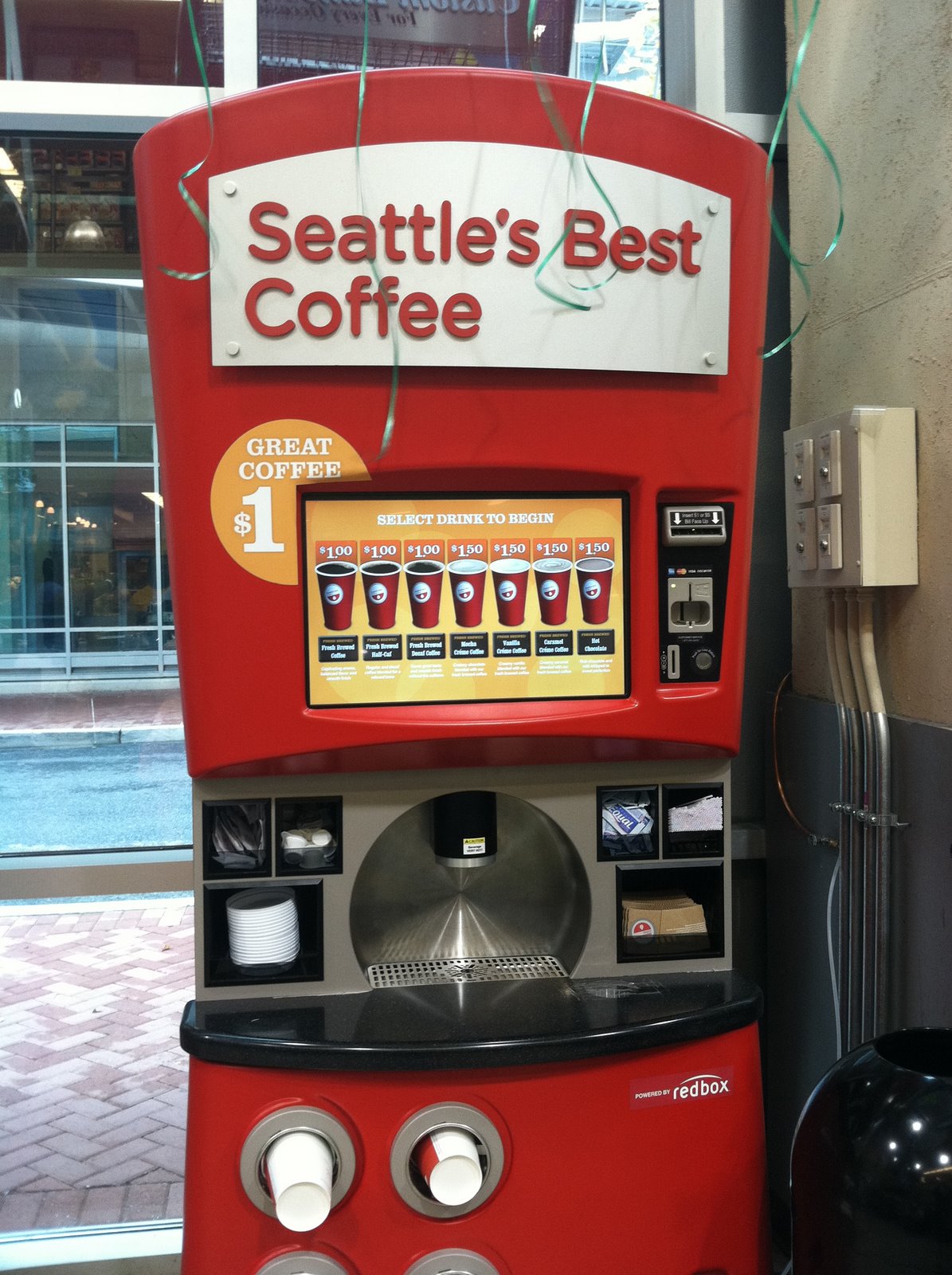
You'd punch in your order (tall drip, decaf, etc.), and it would grind beans and brew your coffee all in about 20 seconds. They're quite spectacular.
Burger King, to take an example, probably doesn't give a crap about the restaurant sales at all.
Most of their profit is from franchise fees, not restaurant sales.
Company restaurant revenues in 2011 were 1638.7 million, and company restaurant expenses in 2011 were 1447.4 million. All told, profit from restaurant sales was 191 million.
Franchise fee revenue in 2011 was 697 million, franchise and property expenses 97.1 million. All told, profit from franchise fee revenue was 599.9 million.
Basically, I can't imagine they care if they are franchising restaurants with people, restaurants with robots, or heck, franchising robot boxes themselves.
They only care that someone is paying them to call it burger king, and giving them a cut of sales
I still think they'd be just as happy franchising robots. I could be wrong.
It was this judgment that I felt super-serial was responding to.
In 10 years I think your comment will look just as silly.