On earth, you can build a power plant miles from the DC. And you can use all sorts of different sources of power, tidal, wind, nuclear, solar, fossil fuels. All options. And like the DC, if there's a problem with any of those sources, you can go fix it or replace it with different power sources. If there's a problem with the solar panels in space, your DC is dead.
That's both easier and a lot more flexible.
We should be thankful to those who propose to "let's step outside" instead of starting a bar fight down here on Earth.
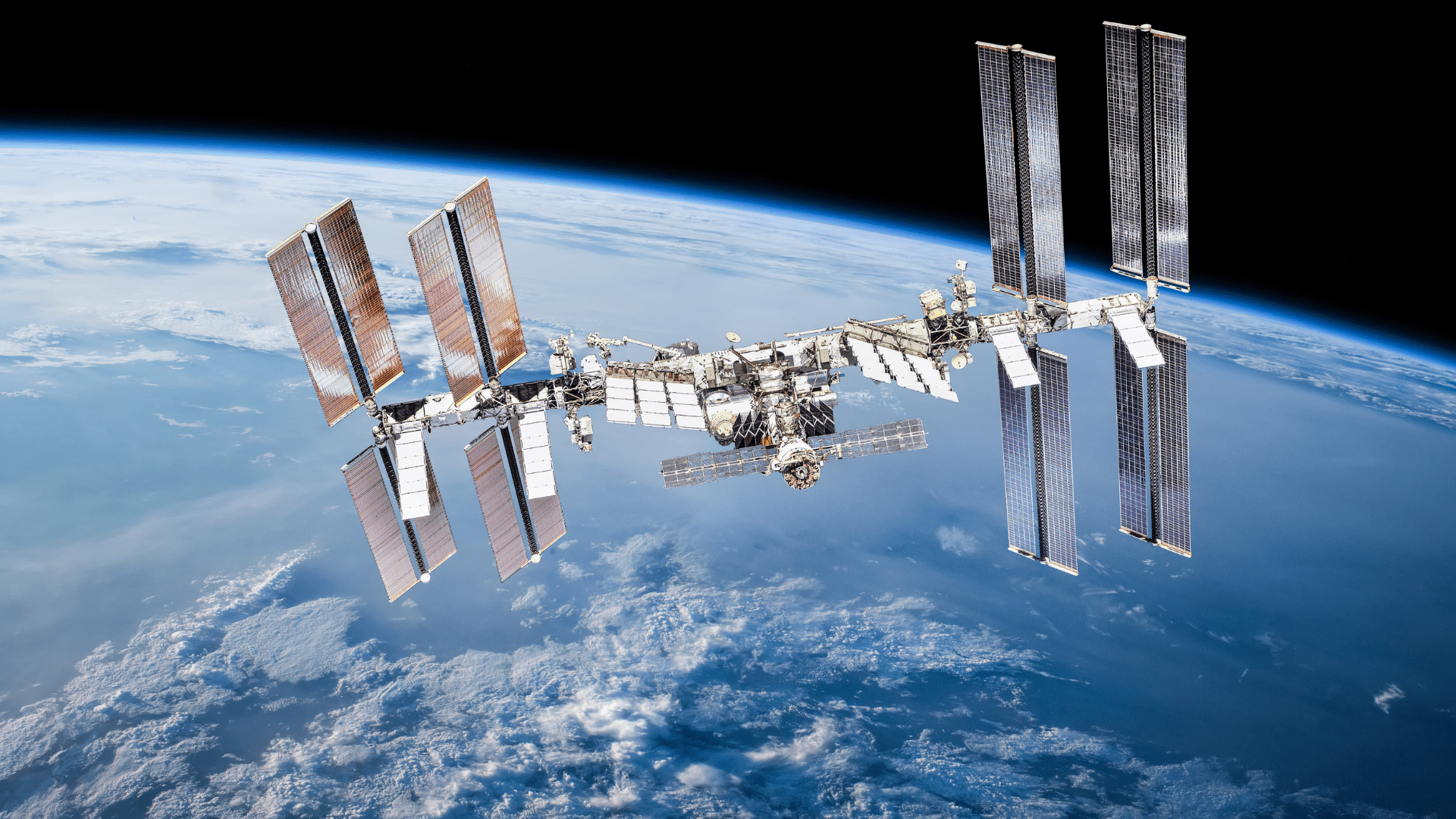
A single B200 can consume up to 1200W. A single GB300 system needs 14.5kW. So, you can only have ~15 (incl. satellite's energy needs) GB300 with ISS' solar panels, which is absurd. See [1] for the size of the panels we're talking about.
People dream about Starlink-style close flying systems to aggregate them to a single data center. With these power requirements, it's more like an AI hallucination. If we can build way more efficient chips or run smaller models on modest hardware, etc. We may go there, but needing ISS sized solar panels to run frontier models in space?
Also, don't forget the radiators. You also need those to pump that heat out of these systems.
The outlook doesn't look good at this point.
[0]: https://en.wikipedia.org/wiki/Solar_panels_on_spacecraft#Spa...
[1]: https://www.sgmk.edu.pl/wp-content/uploads/2025/10/iss.png
Spacecraft in LEO deal with corrosion due to metal oxidation from atomic oxygen atoms up there. The rate of this can be greater than on Earth's surface, though I'm not sure how oceans compare.
LEO does have corrosion (mono-atomic oxygen) as a matter of fact
When power blocks enter escalating computational races (searching for number theoretic breaks in cryptography) thermodynamics heavily favors space, the one who can launch datacenters at the highest rate will tend to be ahead of the competition.
Everything about storing a DC underwater is easier than it is in space (except corrosion).
It's easier to access, cheaper, easier to cool, easier to get enough power, easier to update.
Heck, doing a second story data-center resolves a ton of issues with today's data-centers (while being a bit more expensive due to additional structural support requirements).
There are so many options for terrestrial DCs to overcome whatever problem space might supposedly solve, and they are all cheaper than the space solution.