That aside optimist are also not always right, otherwise we would have cold fusion already and have a base on mars.
Are you suggesting that anything which is hyped is the future? Like, for every ten heavily-hyped things, _maybe_ one has some sort of post-hype existence.
A world where Segway never happened would be nearly indistinguishable from our own.
Not the most popular, especially these days, but they are very much descended from Segways and have their own fans.
Similarly, being optimistic doesn't mean you have to believe every single early-stage invention will work out no matter how unpromising - I've been enthusiastic about deep learning for the past decade (for its successes in language translation, audio transcription, material/product defect detection, weather forecasting/early warning systems, OCR, spam filtering, protein folding, tumor segmentation, spam filtering, drug discovery and interaction prediction, etc.) but never saw the appeal of NFTs.
Additionally worth considering that the cost of trying something is often lower than the reward of it working out. Even if you were wrong 80% of the time about where to dig for gold, that 20% may well be worth it; reducing merely the frequency of errors is often not logically correct. It's useful in a society to have people believe in and push forward certain inventions and lines of research even if most do not work out.
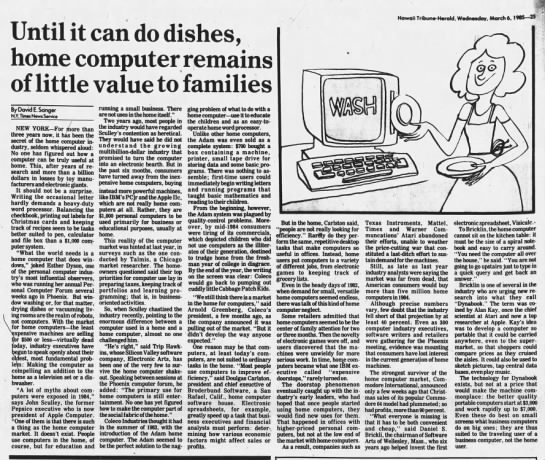
I think xvector's point is about people rehashing the same denunciations that failed to matter for previous successful technologies - the idea that something is useless because it's not (or perhaps will never be) 100.0% accurate, or the "Until it can do dishes, home computer remains of little value to families"[0] which I've seen pretty much ad verbatim for AI many times (extra silly now that we have dishwashers).
Given in real life things have generally improved (standard of living, etc.), I think it has typically been more correct to be optimistic, and hopefully will be into the future.
Generally people are resistant to change and the average person will typically insist new technologies are pointless.
Electricity and the airplane were supposed to be useless and dangerous dead ends according to the common person: https://pessimistsarchive.org/
But we all like to think we have super unique opinions and personalities, so "this time it's different."
When the change finally happens, people go about their lives as if they were right all along and the new technology is simply a mysterious and immutable fixture of reality that was always there.