Your position sounds like a No True Scotsman fallacy.
Neural networks do not directly encode high-level reasoning and logic, yes. But in the spectrum of “does this model the actual functioning of an animal/human brain”, they lack both a 1st order model of how biological neurons and neural chemistry behaves, but also lack anything like the multiple levels of structural specialization present in nervous systems. That’s the basis for my argument.
Let's say two alien beings landed on earth today and want you to settle a bet. They both look weird in different ways but they seem to talk alike. One of them says "I'm intelligent, that other frood is fake. His brain doesn't have hypersynaptic gibblators!" The other says "No, I'm the intelligent one, the other frood's brain doesn't have floozium subnarblots!"
Who cares? Intelligence is that which acts intelligent. That's the point of the Turing test, and why I think it's still relevant.
There are arguments to be made, including the Turing test, for some sort of intelligence and potential equivalence for LLMs. I am probably more skeptical than most here that current technology is approaching human intelligence, and I believe the Turing test is in many ways a weak test. But for me that is different, more complex discussion I would not be so dismissive of.
I was originally responding to the claim “isn’t a neural network a simplified model of the working of the human brain”. A claim I interpreted to mean that NNs are system models of the brain. Emphasis on “model of the working of”, as opposed to “model of the output of”.
We know there are neurons and that electric signals hit between them. That’s it. Literally everything else about your claim is bogus nonsense.
Well then you already think it’s a model. Being a simplified approximation makes it a model.
Just as I said in another comment, a SIR model also models infection behavior of COVID in humans, even though it is extremely simplified and doesn’t even look at individuals. It’s basically just a set of differential equations that give a curve that looks like infection numbers. But that is exactly what makes it a model. It’s a simplified abstraction.
That it's functionally impossible to do either leads me to believe that "it models some form of intelligence" is about the best we can prove.
Modeling a human brain, a cephalopod brain and a corvid brain aren’t even mutually exclusive if your model is abstract enough.
When I say „a neural network models a human brain“, I’m talking about the high level concept, not the specific structure of a human brain compared to other brains. You could also say that it models a dogs brain if you wanted to. It’s just the general working principle that is kind of similar. Does that not count as a model to you?
Edit: Here’s a simple example: I would say that a simple SIR model „models COVID infection in humans“. But that doesn’t mean it can’t also model Pig Flu in Pigs. It’s a very abstract model so it applies to a lot of situations, just like a neural network basically models the brain of every reasonably advanced animal.
Biological brains don't use gradient descent and don't seem to use 1-hot encoding/decoding for the most part.
Take an existing implementation, ChatGPT4 or whatever - is it closer to a brain of a rat or of Albert Einstein?
If you are not sure, then, we, it’s just have some sort of intelligence, not ‘model of a human brain’.
I would wager it’s closer to a rat.
Also the phrase implies that we understand the difference between human brain vs brain of an elephant. For some reason humans are more capable, it’s not just size. At the moment we don’t understand.
Also, it's obvious that our brain is not built like AI models.
There are similarities between both human and current AI models, but there also huge differences, which doesn't allow easily map one to another.
We can create a model of human brain (Artificial Brain) using a bunch of AI models, of course, but it's not done yet.
A model doesn’t have to be useful to study the thing you’re modeling, you can also just be interested in the output because it’s simpler than using the original thing. Modeling a human brain with a neural net and using it is simpler than directly simulating a human brain, so that’s what we do. Not being useful to study humans brain on doesn’t mean it’s not a model.
AI, in it current state, is not good enough to serve as substitute for human, or human brain, but good enough to serve as substitute of human level intelligence. At this point, we are able to model brain of a fly.
It looks like you are confused by similarity of scheme, model, and similarity.
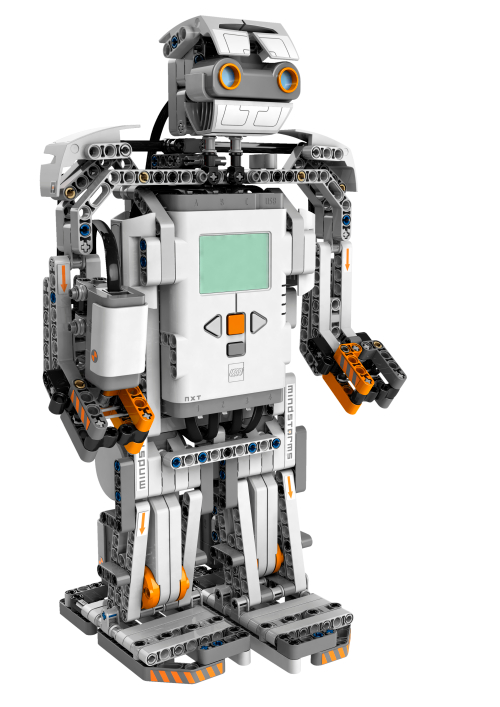
A model needs a map to transfer knowledge in both directions: from a real thing to a model, and from the model to the real thing, while in scheme, knowledge is transferred in one direction: from a real thing to a scheme. They toy humanoid robot is just a schematic representation of a real human.
Moreover, similar things are not models of each other. Apes are not models of humans and vice versa.
We know how to produce apes.
I work at a company with a substantial BI/ML footprint. Our head of research was tasked with evaluating the applicability of LLMs to either our product or our daily workflows.
To date the consensus is that there isn't much there for our product, that integrating LLMs into our models would introduce more problems than it would solve, and that we should cautiously experiment with allowing engineers to use tools like co-pilot, provided we take adequate steps to protect our IP.
It was a reasonable exercise carried out by a reasonable person for reasonable reasons (from my POV). I imagine this isn't an uncommon story? Color me pessimistically optimistic?
For practical reasons we need to have an answer to the buzzword bingo when communicating with customers/company ownership, and now we do. Now we don't talk much about it because there isn't much to talk about.
Unfortunately it isn’t just bosses being fooled by this. Scores of people push this crap.
I am not saying AI has no value. I am saying that these idiots are idiots.