Or is that a "recent cultural trend" where you can understand why publishers followed the trend and made a change?
Because once someone admits that change was okay, it's no longer a question of principles and just a series of judgment calls that different people will make differently.
Publishers make changes to ensure books keep selling.
They are human and don't always make the right decision. But they aren't doing it for any reason other than profit.
My daughters are Asian I wouldn't buy them a children's book where "be Chinese" is considered an acceptable Halloween costume.
The publishers would probably prefer I consider purchasing it.
Famously, Christie set out to deliberately write her most technically challenging book, having ten people murdered on an island in a manner in keeping with the poem, whilst still keeping the reader guessing whodunnit. Most readers agree it was her best book by far.
The idea that the book is racist simply because of it's title is a rather modern phenomena (not to mention changing the title and poem somewhat hides her original challenge).
This depends on the audience. For some people it is a turn off to adopt the title to a woke zeitgeist.
But it is not just about people buying the book knowing it changed, or buying it because it changed. It’s about coming across a title like that cold, without knowing any context. (Remember: the aspiration of a publisher is always to have the book become more popular with new formerly uninterested audiences). It’s an empirical question whether that title will do better than a retitle but my money is on the title without the most fraught words in the English language on the cover.
It is, if nothing else, convenient that I don't have to say one of the worst slurs in American English every time I discuss Agatha Christie's body of work.
It's worth noting that, for that reason, the book was released as "And Then There Were None" in its first US edition in 1940; the use of the original title until 1985 is a UK thing.
Nobody is wishing they had a more prominent place today, nor in the future. Rather, there is a need not to edit the past, lest we forget it.
> "And Then There Were None" in its first US edition in 1940; the use of the original title until 1985 is a UK thing.
I suggest that is because in the USA, particularly in the south, political sensitivities about such a title would be difficult to overcome and the association with an old British poem would be completely lost.
But I do tend to care about the opinions of people who wish that works of the past are not manipulated to fit the current zeitgeist - in particular if it is claimed or suggest that this is the work as written by the author.
As a black American, I'm forced to care about the efforts of people to retcon pervasive racism out of history, or relegate it to one-dimensional "bad guys." This will not save my children from racism, instead it will make them absolutely bewildered by the pervasive racism they will face, and make them blame themselves.
Rewriting crimes out of history does not help victims, it helps perpetrators.
You just don't put that word on the cover of a book due to "changing cultural trends"
There also exist people who would rather avoid buying books where the publisher changed the content in 1984 style to appease the woke moaners.
There was indeed a huge backlash in the UK, amongst authors and the public, when publishers sought to edit classic children's books by Roald Dahl and Enid Blyton to make them politically correct. Children a quite capable of understanding something was written at a different time.
Even if some person is certain that this is not the case, the child's parents hopefully are capable of explaining this to their children. :-)
Sometimes you just want to read a book and children books are not all that much fun for adults anyway. You might not want to then have to go into explaining that racism was normal for the author, but we think differently jadda jadda ... it is additional completely pointless complication for what was supposed to be good night story.
It is something you will need to explain to children at some point, and doing so over a light hearted story is an ideal approach. Shying away from the difficulties of bringing up a child isn't something you should be doing.
Besides, the best children's books are also fun for adults! (I raise you Roald Dahl's 'Boy' and Judith Kerr's 'The Tiger Who Came to Tea')
Also Kipling's Just So stories. My eldest loved me to read them to him and it was no chore at all.
And I am not always interested in research about the original reason - how much author was or was not racist.
I don't know how you define best children's book. I found most of then boring and kids taste was not the same as my taste.
With 1984, I meant the book by George Orwell where newspaper articles of the past are permanently changed (and any references to the existence of the old versions are destroyed) to fit the daily political climate/narrative.
In a conversation about censorship being used to alter past events, I'm somewhat surprised you didn't understand the reference. Can I suggest this is a book you read as a matter of some importance:
Admittedly that's actually a more complicated when it comes to electronic texts which may be automatically updated.
You mean 1940. (Its original publication in the US.)
> Because once someone admits that change was okay
You seem to be going with the assumption that everyone is on board—that they agree that that change was okay (had it actually happened, that is).
Or when someone dresses up as a 1920 gangster, just always happen to Italian...
Perhaps you would like to give us all a 'hierarchy of the races' so we can all judge who punches up or down? You can call it the Rassenkunde des deutschen Volkes.
You are an acceptable costume. Face it. But context matters. The reading kid is not singled out, nobody is making this negative. It could also be perceived as a celebration 'hey I want to be like my adopted asian sister, she is cool'.
Live and let live, and give context if the kid is asking questions. But don't censor because you feel like a special snowflake
See these examples
https://www.culturalsurvival.org/sites/default/files/nmai-sp...
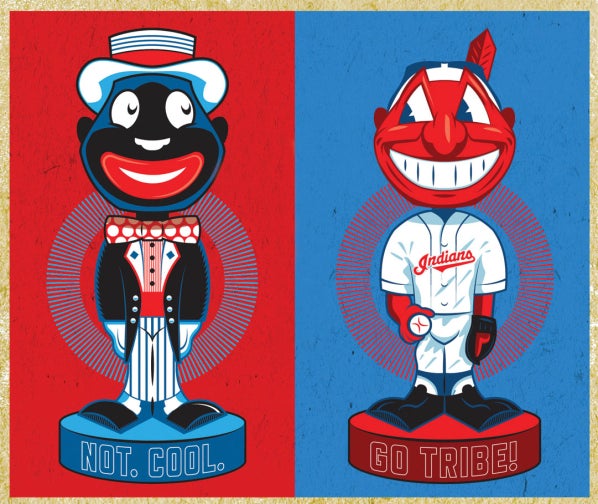
http://www.slate.com/content/dam/slate/blogs/browbeat/2013/1...
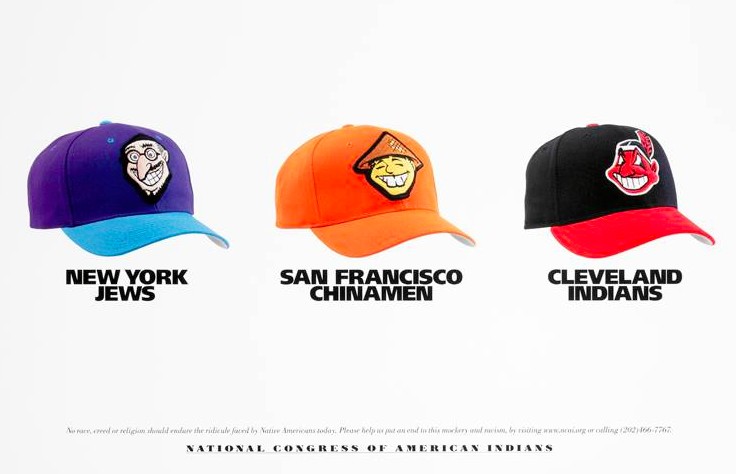
https://risetowin.org/assets/img/what-we-do/educate/resource...
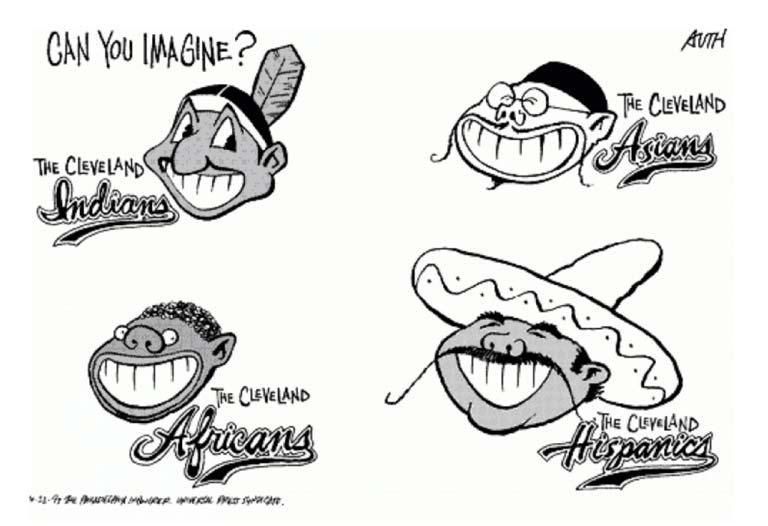
Of course, this isn't foolproof because your descendants or heirs might also be willing to bowdlerize your work or even take it out of print altogether. So another option would be to just release all of your copyrighted works into the public domain upon your death allowing anybody who cares to publish uncensored copies.
> I think we agree at this point that a nationality is not a super-cool Halloween costume, but I’m not clear on whether Clarissa’s putting on yellowface or has just borrowed her mother’s lipstick. And so how do we handle this? This is not Huckleberry Finn — it’s not a book about race, where we talk about the history and the controversy. Should we be concerned with this type of incidental racism in an ebook that we’re selling today, one that looks just like the new, and hopefully more enlightened, children’s ebooks we’re publishing in 2015?
That's something I never understood: rewriting books from the past to match recent cultural trends. What happened happened, whether you like it or not. (I also don't really get the Halloween costume controversy, but I acknowledge there's something to debate there, unlike with the history-rewriting topic which is just dumb).