Unfortunately, we live in an “Excel world”. The predominant thinking is that our highly complex world can be modeled into an excel sheet. And based on the outputs we should make decisions.
This approach mostly ignores the second order effects you describe.
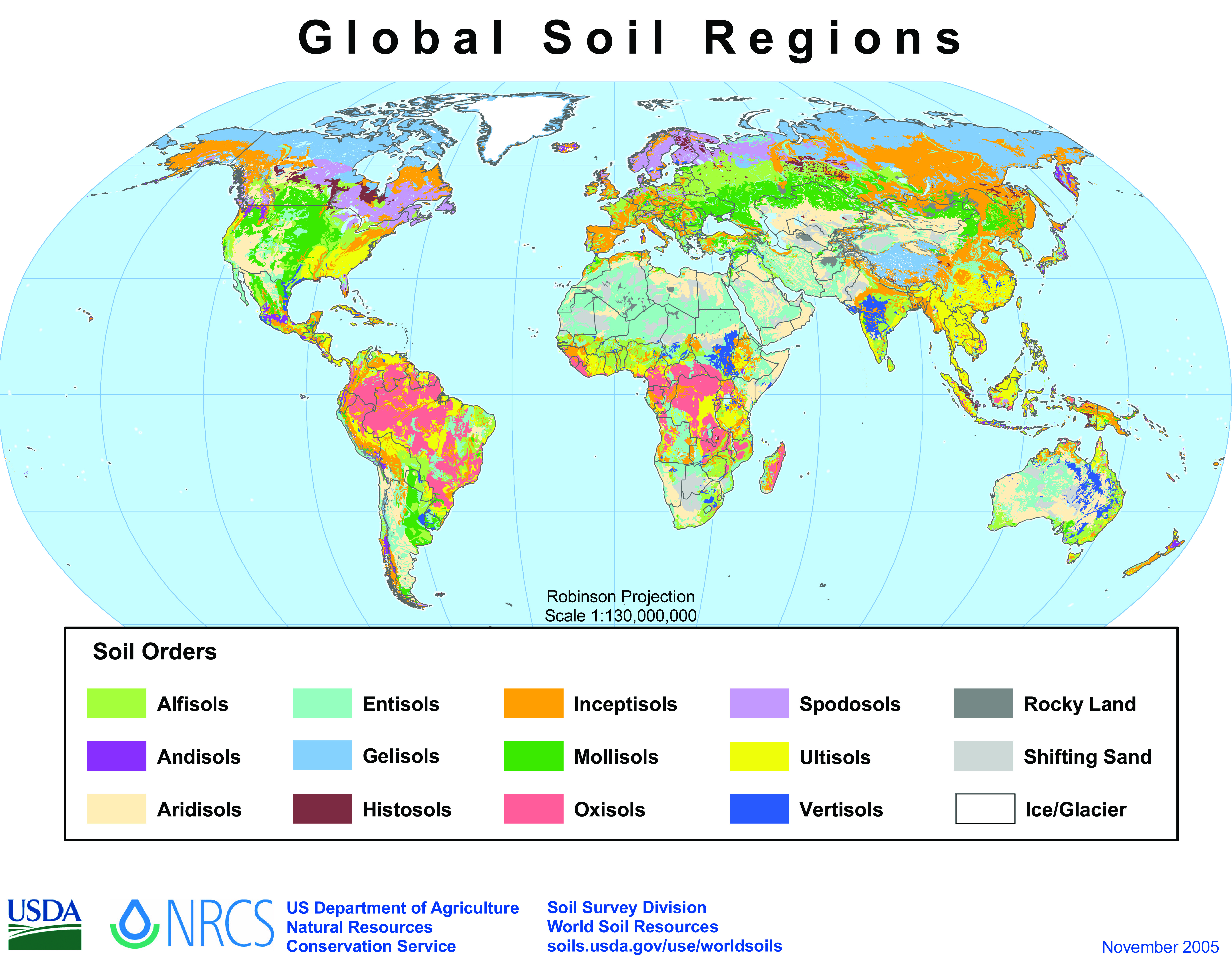
But here’s a question for you, total arable land increases or decreases with a warmer wetter world? (We must consider soil as the soil in eg norther Canada is garbage and would take a millennium to improve)
https://upload.wikimedia.org/wikipedia/commons/e/e5/Global_s...
> Annual food caloric production is the product of caloric yield, cropping frequency (CF, number of production seasons per year) and cropland area. Existing studies have largely focused on crop yield, whereas how CF responds to climate change remains poorly understood. Here, we evaluate the global climate sensitivity of caloric yields and CF at national scale. We find a robust negative association between warming and both caloric yield and CF. By the 2050s, projected CF increases in cold regions are offset by larger decreases in warm regions, resulting in a net global CF reduction (−4.2 ± 2.5% in high emission scenario), suggesting that climate-driven decline in CF will exacerbate crop production loss and not provide climate adaptation alone. Although irrigation is effective in offsetting the projected production loss, irrigation areas have to be expanded by >5% in warm regions to fully offset climate-induced production losses by the 2050s.
> “The final section is intended to illustrate a possible future, though perhaps an improbable one,” Roberts said. “I wanted it to be dramatic, so it is an illustration of a particularly extreme outcome where literally all of the fossil fuels are burned, but I tried to keep the effects realistic otherwise, based on scientific articles I've read about such a hypothetical.”
https://www.vice.com/en/article/xgx7nq/watch-four-billion-ye...
Basically it's a cool sim when it's trying to simulate stuff that actually happened, and before it gets opinionated.
Moreover, it apparently equates heat with dryness, and also doesn't take into account the effect of additional CO2 on plant life. It is called a greenhouse effect for a reason. It's quite possible the equatorial belt could heat up to where it's uninhabitable by humans but overrun by jungle rather than desert.