News for hackers. Stuff that matters.
Re:The Great Lightbulb Conspiracy (2014) by Animats on Thursday July 11, 2024 @05:29PM (#40940770)
Is there a similar conspiracy today for LED lightbulbs? They should be lasting 10,000 to 20,000 hours, but they don't.
Re:The Great Lightbulb Conspiracy (2014) by SeanLuke on Thursday July 11, 2024 @07:52PM (#40941656)
Re:The Great Lightbulb Conspiracy (2014) by kevin_thibedeau on Thursday July 11, 2024 @07:09PM (#40941416)
This is the downside of the race to the bottom caused by globalization. Commodity electronics are almost exclusively made in China by mystery brands that aren't around long enough to care about reputational damage from unreliable products.
Re:The Great Lightbulb Conspiracy (2014) by 01HNNWZ0MV43FF on Thursday July 11, 2024 @07:50PM (#40941646)
Other way. Racing to the bottom caused globalization.
Re:The Great Lightbulb Conspiracy (2014) by dredmorbius on Thursday July 11, 2024 @06:09PM (#40941054)
I've seen a few failures, most of which seem to involve electronics.

A set of reflector spots (replacing 45W halogen bulbs) all in recessed ceiling fixutres in one specific location within the house failed within a few months of one another.

Another spot in the kitchen, in an exposed can, failed within a year or so. It was located directly over the sink.

I suspect moisture / condensation as issues in both, as the ceiling cans have minimal insulation between them and the roof, and the kitchen fitting would be exposed to steam / vapour coming off the sink.

Other than that, a couple of stick-style closet bulbs have failed, also apparently electronics. And one fixture in the garage which seems to have been physically struck.

That's over roughly a decade's experience and roughly 30 bulbs / fixtures. Far better than incandescent or even CF bulbs. Though still not quite meeting expectations.

Re:The Great Lightbulb Conspiracy (2014) by stephen_g on Friday July 12, 2024 @01:42AM (#40942954)
I have a bulb in my bathroom that I have had to replace every year or two. Meanwhile, in other rooms that I have renovated and I put good quality high-CRI LED downlights in, they're all still going strong after seven years.

I think the biggest difference is that these downlights have separate driver modules and a short wire to the lamp itself, which must make the thermal aspect a lot easier to manage. This also puts the electronics up out of the condensation.

The bulb in a regular socket in the bathroom on the other hand has the driver electronics there in the bulb, being heated by the lamps, so they're getting a lot hotter, and also it's there in the steam from the shower etc.

Re:The Great Lightbulb Conspiracy (2014) by dredmorbius on Friday July 12, 2024 @02:11AM (#40943061)
Is that fixture in or near the evacuation fan or not?

I'd suspect that in/near the fan might reduce condensation / humidity. Lavatory moisture is no joke.

Re:The Great Lightbulb Conspiracy (2014) by rootusrootus on Thursday July 11, 2024 @07:05PM (#40941395)
Early ones for sure, but I've noticed steady improvements. And I've only ever had problems with fairly inexpensive bulbs. I have a house full of Cree retrofit cans which have been 100% reliable for years now. My guess is that is partly because Cree is higher quality, and partly because they are not bulbs, and so the heat management is way better.
Re:The Great Lightbulb Conspiracy (2014) by addaon on Friday July 12, 2024 @01:12AM (#40942859)
Some of the early ones were great too. I have a bunch of L Prize bulbs [1], some of which have been on for significant duty cycles since their production in 2011, and have had zero failures.

[1] https://en.wikipedia.org/wiki/L_Prize#60W_Competition

Re:The Great Lightbulb Conspiracy (2014) by brewdad on Friday July 12, 2024 @01:34PM (#40947643)
Is Cree considered higher quality? I had one of their CFLs try to burn my house down about 10 years ago. I smelled burning plastic from the adjacent room and found a bulb in an open fixture with a completely blackened base.

I haven't bought a Cree product since then no matter how cheap Costco marks them.

Re:The Great Lightbulb Conspiracy (2014) by rootusrootus on Friday July 12, 2024 @02:07PM (#40947951)
> Is Cree considered higher quality?

They were, for sure. However, in 2019 they were sold to another company and I do not know what may have changed since. All of my Cree lights pre-date that.

> I had one of their CFLs

Cree was founded entirely on the premise of creating LED lighting, I am pretty sure they have never done CFLs.

Re:The Great Lightbulb Conspiracy (2014) by Astronaut3315 on Thursday July 11, 2024 @06:05PM (#40941020)
Adding more LEDs to the design allows them to be underdriven, increasing efficiency and longevity. The driver board and LEDs run cooler that way. Less heat equals less stress on electrolytic capacitors, a common failure point.

There’s only a few bulbs I’m aware of that follow this pattern. The Philips Dubai Lamp takes this to an extreme. A 60W equivalent uses only 3W. Other 60W eq. LEDs tend to be ~3x that. All that heat has to go somewhere.

I just picked up a 40W eq. bulb from IKEA that has double the normal amount of LED strands- they’re unusually long, too. It also uses about half the power of the LED bulb it replaced. I expect it to last quite a long time.

Re:The Great Lightbulb Conspiracy (2014) by ssl-3 on Thursday July 11, 2024 @06:47PM (#40941287)
Someone thinks your comment is worthy of down voting, but you're absolutely correct.

Heat is a primary killer of many electronic things, including LED bulbs and their constituent parts.

And LEDs -- the diodes themselves -- do tend to become more efficient (in terms of lumens produced per Watt of input) when not pushed to their extreme operational limits.

And it is definitely possible to create a longer-lasting, more-efficient LED bulb.

It's absolutely trivial to do this, even: To start, just add more LEDs, reduce their individual RMS current, improve heat sinking and dissipation, and use better capacitors.

But it does cost more to do these things, and regular consumer products are all built down to a price.

Re:The Great Lightbulb Conspiracy (2014) by amluto on Thursday July 11, 2024 @10:16PM (#40942258)
> And LEDs -- the diodes themselves -- do tend to become more efficient (in terms of lumens produced per Watt of input) when not pushed to their extreme operational limits.

This isn’t some weird surprising tendency. The forward voltage (the amount of energy needed to shove each electron through the LED) increases with current, approximately according to the Shockley equation. The external quantum efficiency (photons out per electron in) is no more than 1, and tends to get lower at higher current [0]. The wavelength of the emitted photons is pretty much constant. So you get the best efficiency when the current, and hence voltage, is low.

Incandescent bulbs, in contrast, don’t have a meaningful quantum efficiency, and they produce a more useful spectrum as they get hotter.

[0] There’s a ton of detail here, for example https://www.degruyter.com/document/doi/10.1515/nanoph-2018-0...

Re:The Great Lightbulb Conspiracy (2014) by ssl-3 on Thursday July 11, 2024 @10:44PM (#40942381)
Thanks.

Approachable explanations like this are a huge part of the reason I hang out here.

Re:The Great Lightbulb Conspiracy (2014) by jchw on Thursday July 11, 2024 @06:33PM (#40941213)
I would love to know why this is apparently being downvoted, as far as I know it's true. A lot of cheap LED bulbs use few LEDs being grilled at relatively high current and definitely get hot enough to impact the lifespan of the LEDs. Am I missing something?
Re:The Great Lightbulb Conspiracy (2014) by Astronaut3315 on Thursday July 11, 2024 @06:35PM (#40941225)
My initial reply was a bit rough around the edges. I've since edited it for clarity.
Re:The Great Lightbulb Conspiracy (2014) by jchw on Thursday July 11, 2024 @06:39PM (#40941248)
Ahhh I see. I know it's discouraged to discuss voting for good reason, but I was definitely perplexed. That makes a lot more sense.
Re:The Great Lightbulb Conspiracy (2014) by yjftsjthsd-h on Thursday July 11, 2024 @10:14PM (#40942252)
> It also uses about half the power of the LED bulb it replaced.

This may or may not be the only thing in play for that much of a difference, but my absolute favorite thing about LEDs is that their power consumption vs brightness is not 1:1, so taking an LED to 50% brightness will use <50% power. (So then doubling the number of LEDs means you will always get more brightness or less power or I suppose both if you split the difference.)

Re:The Great Lightbulb Conspiracy (2014) by Astronaut3315 on Friday July 12, 2024 @09:14AM (#40945264)
The old bulb was a Cree, rated at 460 lm, 3000k, 90+ CRI. It used 5.5W.

The IKEA bulb’s rated at 450 lm, 2700k, 90+ CRI. It uses 2.8W. Both are dimmable and I suspect the IKEA bulb has a higher R9 value.

Re:The Great Lightbulb Conspiracy (2014) by shawnz on Friday July 12, 2024 @10:24AM (#40945858)
Consider also the new Philips Ultra Definition series: https://www.youtube.com/watch?v=XeR2uPPCA2k
Re:The Great Lightbulb Conspiracy (2014) by Astronaut3315 on Friday July 12, 2024 @10:35AM (#40945971)
If only they were available in 3000k. I made an exception for the specific fixture the IKEA bulb ended up in, but our entire home is 3000k throughout.
Re:The Great Lightbulb Conspiracy (2014) by sbierwagen on Friday July 12, 2024 @11:52PM (#40951638)
Re:The Great Lightbulb Conspiracy (2014) by Astronaut3315 on Sunday July 14, 2024 @11:53PM (#40965159)
These aren’t the same as the Ultra Definition series they mentioned, unfortunately. They lack the dim to warm feature that makes those desirable. RAB is the only manufacturer I’m aware of that makes 3000k dim to warm A19 bulbs for the US market.

The RAB bulbs have a weird stair step warm-then-cool when turning on and off. They also have a huge non-linearity when dimming. That makes the Philips version more desirable, but they’re 2700k.

Re:The Great Lightbulb Conspiracy (2014) by Izkata on Thursday July 11, 2024 @05:46PM (#40940877)
IIRC this is because those estimates are for the part that actually emits light, but the electronics in the base that control it are what fail faster.
Re:The Great Lightbulb Conspiracy (2014) by thrtythreeforty on Thursday July 11, 2024 @06:12PM (#40941075)
As a consumer, I don't give a shit - it's false advertising. I have taken to writing the installation date on the bulb body in Sharpie; I suspect I won't be able to force manufacturers to honor their claimed lifetime, but perhaps I'll get a free box of bulbs after a blog post about it goes viral.
Re:The Great Lightbulb Conspiracy (2014) by imp0cat on Friday July 12, 2024 @03:31AM (#40943392)
If your LED bulbs do not last, I think your light fixtures might be to blame for that. They need to be "airy" to provide adequate cooling.
Re:The Great Lightbulb Conspiracy (2014) by vundercind on Thursday July 11, 2024 @06:17PM (#40941104)
Had similar issues with CFLs, when those were A Thing. “Oh they last sooooo long! Don’t worry, they’re expensive but they’re actually cheaper than incandescent because they last so long and use so little power!”

Shitty light, and they consistently averaged a shorter lifespan than cheap incandescents across two houses. Nope. Done with that tech forever.

Re:The Great Lightbulb Conspiracy (2014) by cyberax on Thursday July 11, 2024 @06:24PM (#40941162)
I still have CFLs in my bathroom. The plastic in the plug has faded from white to yellow. Yet they still work fine, although it takes them 3-5 seconds to get to full brightness.
Re:The Great Lightbulb Conspiracy (2014) by gowld on Thursday July 11, 2024 @07:24PM (#40941514)
But you get free mercury vapor when they shatter, which is priceless.
Re:The Great Lightbulb Conspiracy (2014) by SoftTalker on Thursday July 11, 2024 @09:23PM (#40942030)
Yep, same. I replace CFLs and now LEDs about as often as I used to replace incandescents. On the upside they put out less heat. On the downside they cost 10X or more what an incandescent did, making the payoff in electrical energy savings suspect at best, and the quality of the light is worse (subjective).
Re:The Great Lightbulb Conspiracy (2014) by gowld on Thursday July 11, 2024 @07:23PM (#40941510)
That's the oldest conspiracy -- the Invisible Hand of the Market.
Re:The Great Lightbulb Conspiracy (2014) by kalleboo on Thursday July 11, 2024 @10:09PM (#40942236)
We need to decide on a new design for "LED bulbs" that maximizes cooling, instead of insisting on sticking to a design that was optimized for a completely different bulb type (vacuum bulbs) where the electronics have to be stuck in an unreasonably small and difficult to cool base which is then mounted inside a cavity with no airflow.

Here in Japan, ceiling lights have a standardized socket[0] so ceiling lamp fittings are easily user-replaceable without people being stuck with old bulb fittings, and so ceiling LED lamps are not fitted as bulbs but typically a large flat metal plate with the LEDs mounted to it[1], which results in fantastic cooling and good lifespan.

[0] https://www.garageland.jp/wpimg/hikkakeceiling_topimg.jpg
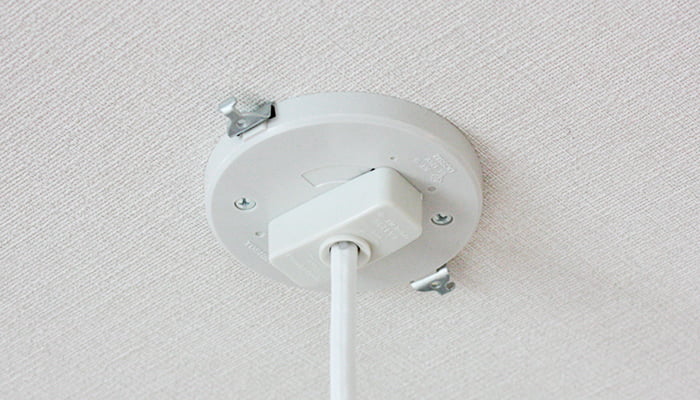
[1] https://kensroom.c.blog.ss-blog.jp/_images/blog/_bda/kensroo...

Edit: Our apartment was built in 1998, at the height of "CCFLs are the future", and the hallway lights are all recessed "G24q" bulbs, which I had never heard of before.

There were supposed to be the CCFL-native replacement for Edison screw bulb sockets, where instead of having to build the CCFL ballast into each bulb, it was external in the ceiling socket, increasing longevity and decreasing the cost of the bulbs themselves.

We have yet to need to replace any of them, a much longer lifespan than I've ever had from one of those CCFLs with the ballast embedded in the base of the Edison bulb. With a less-compromised ballast they also work much better (light quicker, less affected by temperature)

Re:The Great Lightbulb Conspiracy (2014) by musicale on Friday July 12, 2024 @01:31AM (#40942922)
It seems to be forcing a switch to horrible, flickering, ugly LED lighting. And blindingly bright headlights.
Re:The Great Lightbulb Conspiracy (2014) by mtalantikite on Friday July 12, 2024 @11:02AM (#40946232)
When the incandescent ban went into effect last summer I bought a Phillips Hue system, since it was going to be harder to get regular bulbs. I could tell the difference, but was willing to just deal with it. Then I got 4 ocular migraines in 2, maybe 3 days. I shipped them back, bought a bunch of regular bulbs from a local hardware store with stock, and really don't know what I'm going to do when my stash of incandescents is done. It seems like Waveform Lighting is recommended for high R9 values and flicker free, but they're certainly not cheap.

Don't get me started on blinding LED headlights. It's so hard to see on the road at night these days.

Re:The Great Lightbulb Conspiracy (2014) by nitins_jakta on Friday July 12, 2024 @02:00PM (#40947895)
You're not alone with these LEDs causing migraines.

See https://FlickerSense.org for a PhD scientists personal account, and, https://LEDStrain.org forum full of people that get migraines, dizziness, eyestrain and headaches from LED lights and other forms of flicker like temporal dithering.