Obviously, I don't believe that there should be any intersection between religions and politics, or at least if religions get involved in politics, then they should lose any protections that other religions get and be taxed like other businesses.
I was such a big advocate for the push to legalize gay marriage because the government has absolutely no business telling people who they can and can't marry, and the legal distinction caused ridiculous ripple effects in everything from healthcare to taxes for anyone that wasn't allowed to marry their partner.
At this point I guess the political debate would be that the government can, in fact, tell us who we're allowed to marry?
Same sex marriage has been around for a lot longer than ten years.
The first legal same sex marriage in the U.S. was 1971
https://en.wikipedia.org/wiki/Timeline_of_same-sex_marriage
> At least two of the Roman Emperors were in same-sex unions; and in fact, thirteen out of the first fourteen Roman Emperors held to be bisexual or exclusively homosexual. The first Roman emperor to have married a man was Nero, who is reported to have married two other men on different occasions. First with one of his freedmen, Pythagoras, to whom Nero took the role of the bride, and later as a groom Nero married a young boy, who resembled one of his concubines, named Sporus.
If you think that you can separate politics from religion, I've got some news for you.
And like politics, it's a bunch of made up shit, that when believed by an entire society, will determine how, and whether, you can or cannot live in it.
Humans are defined by making shit up and then believing it.
Its also worth noting that any concept we have written down is a bunch of made up shit, invented by people along the way to try to explain the world around us.
What is asinine is suggesting that because all knowledge is provisional there exists a kind of great democracy of knowledge in which we must respect anything anyone has ever believed. Some ideas hew more closely to the real way the universe is than others.
As for religion, the important aspects about it aren't the supernatural beings that judge us. God and the devil are a reflection of our "soul", and religion is a recipe for morality, being simply tradition that found a full proof way to be passed between generations. Even if you don't believe in God, you should believe in the power of tradition to pass on knowledge in the human culture.
I've also replied to another comment that (IMO):
1) All humans are religious, if we define religion as faith in non-falsifiable theories, with the existence of a God not being required;
2) We are not enlightened enough, and we don't have enough resources to base morality simply on observations of the natural world.
In general, if you're going to be an atheist, might as well be the kind that understands our history. Hubris isn't good, and we aren't more enlightened than past generations, we just have more resources and slightly better traditions; although here I'd add that social progress isn't guaranteed, given how ancient civilizations crumbled.
I think its pretty disingenuous to suggest that all humans are religious. I don't have faith in anything. Faith isn't an operating concept in how I approach the world.
And I don't even understand what you are talking about in the second point. As a matter of fact, technically speaking, I'm a so-called moral skeptic - I don't believe morality constitutes any kind of universal truth. I see it as an often unfortunate shorthand for social conventions. Not only I am ok with the idea that humans have to live together and come to accommodations about behavior, but I think in general the world would be a better place if everyone else understood that social convention is precisely what we are up to when we discuss morality.
And the mere desirability of moral certitude in itself is neither evidence nor justification for believing things that are implausible.
History, hubris, enlightenment have nothing to do with it, from my point of view. God is just a very implausible assertion about the world and therefor I don't take the idea all that seriously.
A democracy of knowledge, if that is a thing, wouldn't require respecting anything anyone has ever believed. That's a fundamental misunderstanding of democracy, where everyone may have the right to their opinion one vote doesn't decide anything. A democracy of knowledge would likely look more like scientific concensus where everyone doesn't have to agree but what is considered "fact" is really just what most people seem to agree they believe to be supported. Facts in that sense can change over time, can be built on assumptions or belief, and can have competing ideas held by others.
No one has the right to use violence against someone for being gay or transgender. Whether being gay or transgender is immoral or not is a religious question and not something politics can adequately answer.
Just an example: is banning abortion an injustice to women, as they lose autonomy of their body, or is abortion a crime? Is an abortion 1 month before birth a crime? What about killing a baby 1 month after birth?
I am radically pro-choice, BTW, due to seeing what happened in my (Warsaw-pact) country that banned abortions. But there are no good answers, which is why compromises need to be made. E.g., abortion on request in Europe is usually allowed until 12–14 weeks old.
No one should have the right to "use violence" against someone for their sexual preferences, ethnicity, religion, or gender identity. We agree here. But what about free healthcare? Should transgender people have access to free, universal healthcare for their needs? I, for one, think they do, I think everyone should get free healthcare. But notice how we aren't talking of "violence", but about spending the state's resources, coming out of people's taxes.
Bigots may think being gay or being trans is immoral. But they are, IMO, the minority. Moderates care about other topics that are not bigoted and that often are a question of morality.
Another commenter said that religion is just a bunch of made up shit. That's a silly view of the world. Religion is tradition, religion is a codification of best practices, as a sort of learned knowledge that is passed between generations. Some of those practices are obsolete, or downright harmful in modern times, but some are as relevant as ever.
If you let reasoning, for example, be the only guiding principle in politics, the problem is that politicians and the people are blinded by the fact that science is often biased, doesn't have all the answers, or that whatever findings we have are incomplete. And when nihilism takes over, you can easily arrive at the conclusion that certain groups of people need to be eliminated in order for society to thrive (e.g., the Jews, the handicapped, the bourgeoisie). I, for one, am not happy that one of Canada's answers to poverty appears to be assisted suicide.
The belief that all human life is sacred, and that everyone needs to be free to live and to find their happiness, is ultimately a religious belief, much like liberalism in general. And that's good, actually.
When a government passes a law that prohibits transgender people from obtaining healthcare to treat their condition, that is a violation of their natural right to live.
There is no shortage of genocides and pogroms committed by religious groups, were they being 'nihilistic'?.
For instance, I think that the most heinous, most damaging ideas tend to come from rationalist philosophers, because with the right set of first principles you can justify anything. In fairness, you mentioned empiricism (observations), however, how are you going to conduct studies on what's "murder"? All kinds of social experiments ended in disaster, we can't even do good studies on nutrition without spending a lot of resources, and studies that can knowingly hurt individuals are deemed as immoral and thus forbidden.
In general, I think that at this point, "secular ethics based on observations" is a pipe dream. At least until we'll be able to simulate society somehow, and in the meantime, mathematical models are bullshit with a really poor prediction rate.
I also have this opinion that ALL people are religious, and by religion I mean beliefs that are non-falsifiable, or close to being non-falsifiable, and in this definition religion does not require the existence of a God.
> When a government passes a law that prohibits transgender people from obtaining healthcare to treat their condition, that is a violation of their natural right to live.
Again, I'm all for transgender people having all the healthcare they need. However, access to healthcare is not a natural right for the simple fact that somebody else has to pay for it. Consider how free universal healthcare is only possible in affluent countries with a high GDP. "Taxing the rich" is also only a solution in countries that have enough rich people to tax. The public budget is never limited and there are always priorities.
Countries like the US could provide free universal healthcare, no doubt about it. It is also my impression that US's healthcare is corrupt, and they could probably do it without increasing current spending, if the corruption was dealt with. But if the public spending goes up (big if), then it's the taxpayers that have to agree with it, and they do that by voting. Which is a sad state of affairs, as all would benefit from universal healthcare, but it underlines the fact that free healthcare is a privilege.
Note that I'm saying this as an asthmatic, a chronic condition for which I need medication, without which I'd be unable to live. I do have access to it, but I don't consider it a right, but rather a blessing to live in a century in which I can have access to it. I might have been born 30 years earlier.
One notes that communists, fascists, religious fundamentalists, and absolute monarchists, are all like that.
So it's political in that regard.
A separate, though just as divisive topic, is abortion rights. I've watched for 20+ years as each side screams across the aisle and yes they have different opinions but at the end of the day it has always seemed to me a battle over where to draw the line. Both sides support new legislation, and therefore new governmental reach, defining what a person can do with their body. They can't agree on when an unborn child is considered human and must be protected, but both sides want the government to tell us what we can or can't do.
Growing up in the 90s the parties were always pitched as big government vs small government, balanced budget vs spending for social causes, war hawks vs anti-war, etc. My opinion at this point is that we have two parties that are different in degree but not kind - both are pro-war, big government, money printing machines that have done a great job at keeping up a front of a two party system. This is why I say the left/right split seems lost here today, I don't see any divide in core principals driving the parties.
Granted, though, that for anyone who is a one or two issue voter there can be very different policies that would push one to either side.
* Bans on teaching about the existence of LGBT people[0].
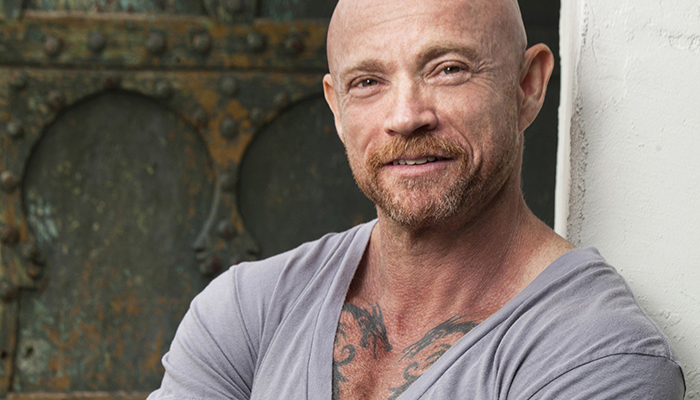
* Bathroom bills[1] that could call for genital inspections that would require this person[2] to use a women’s restroom because they were born with a vagina.
* Democrats passing (and majority of Republicans opposing) The Respect for Marriage Act, which enshrines into Federal law the right to marriage, regardless of religion, race, gender, or sexual orientation.
* Bans on gender affirmative care but only for LGBT people, not cisgender individuals.[4]
So these are actually laws, beyond just rhetoric, these are actions that discriminate. There are stark differences that are irreconcilable between the parties. One supports LGBT rights the other opposes.
Your point about Abortion is baffling. You are claiming that one group wanting to not make abortion illegal is engaging in government overreach? That doesn’t make any sense to me.
The approaches the two parties take to war, immigration, government spending, taxes and so on are different if you look into it. There are a lot of similarities. American hegemony is going to be very similar even if a third party had control of the white house. Even thinking both parties are the same is something similar to both the left and right do! So are communists and neonazis the same because they both believe America is bad and both parties are the same?
[0]: https://en.wikipedia.org/wiki/Anti-LGBT_curriculum_laws_in_t...
[1]:https://en.wikipedia.org/wiki/Bathroom_bill?wprov=sfti1
[2]:http://thefightmag.com/wp-content/uploads/2014/06/BuckAngel1...
[3]: https://www.reuters.com/world/us/us-congress-expected-pass-b...
[4]: https://en.wikipedia.org/wiki/Transgender_rights_in_the_Unit...
My original point really wasn't meant to say that both parties have the exact same view on any one specific political football, if that's how it came across then I explained myself poorly. My point was simply that, in my opinion, we've lost the classic left/right divide that was trying to find a balance between government powers and individual freedoms. Both parties in the US believe the government should have a say over nearly everything, from who you can love to what food you can eat. We don't have an option for a party that wishes to see keep government small by prioritizing individual rights. I may very well just misunderstand the core of the elft/right divide, but I was always led to believe that it came down to how big the government was, how much it spent, and what we can be told is/isn't allowed.
With regards to my point about abortion, it's much too detailed to put here and was probably an unhelpful distraction. But I don't see either party arguing that abortion should never be illegal, save for a few extremists both parties seem to agree that abortion should be illegal at some point and only disagree where that point is. Meaning, they disagree about whether that line is conception, birth, or sometime in between but both parties believe that they have the right to legislate what a pregnant mother can or can't do.
My questions would be the following:
Do you believe that this is an expansion of government power? Or is this an example of limiting government control over people?
How are rights (of any kind) protected in a society, if you would support the right but not specifically laws like these?
[0]: https://ballotpedia.org/Ohio_Issue_1,_Right_to_Make_Reproduc...
Assuming there aren't existing laws either protecting or prohibiting abortions, my read on this bill is that it is playing two roles.
It does establish a right to reproductive treatment and grant elgal protections to Healthcare workers providing it, I don't see this as an expansion of government powers as it is focused entirely on protecting the rights of the people. The state isn't really claiming any new ground there, and if anything is limiting it's own powers a bit by protecting individual health decisions.
The second part of the bill seems to get into an expansion of powers though. The state is granting itself the right to prohibit abortions after the treating physician deems a pregnancy viable, unless the physician believes the mother's life is at risk. Thats absolutely a expansion of government if there aren't currently any abortion bans in Ohio today, as the state otherwise hadn't claimed the power to ban abortions.
Given both in the same bill, my personal read on that would be the first section protecting freedoms is a political stunt to get the second part through. The state is leaving itself a backdoor of the definition of "viability" as well as the line for what level of life/heath risk to mother warrants a later term abortion. If passed, the state would also have the opportunity to try a case in court that challenges a treating physician's determination of either point, opening the door for case law that would effectively expand or refine the law based on the court's ruling.
tl;dr; I see this as the state protecting some rights while claiming more power under certain conditions. The line distinguishing the two is a gray area that the state has likely left poorly defined and/or can try to move later through case law rather than legislation.
A great example would be LGBT rights. Republicans broadly support stripping these rights and protections from discrimination away and Democrats do not. That is profound difference in existence for LGBT people if one party’s policy goals are implemented versus another. Even if on every other topic they are in agreement but this one, that is still a significant difference in my opinion.