I think what confuses some people about this topic is that their mental image of "suburbs" is a quiet street surrounded by lawns & trees, with minimal traffic, while their mental image of cities is of noisy, stinky, dangerous streets with lots of traffic.
I would argue that the "pleasant" qualities that we associate with taking a walk are orthogonal to the density of the neighborhood itself, and that the negative qualities people see in cities are really a problem of their car-centric design in the US. For example, see a neighborhood like Sunnyside, NY, just a few subway stops from Manhattan:
https://www.newyorkitecture.com/wp-content/gallery/sunnyside... https://www.newyorkitecture.com/wp-content/gallery/sunnyside...
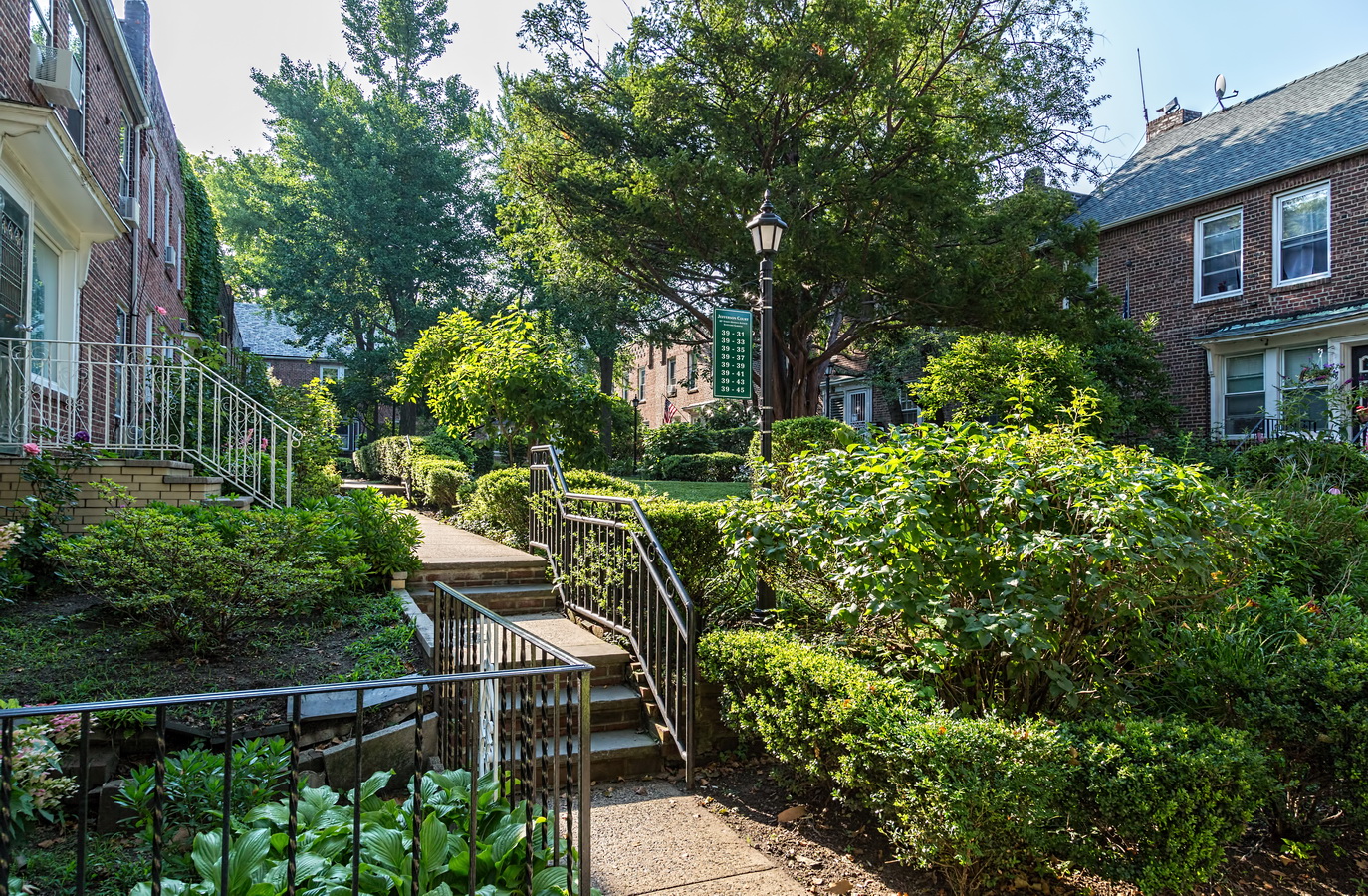
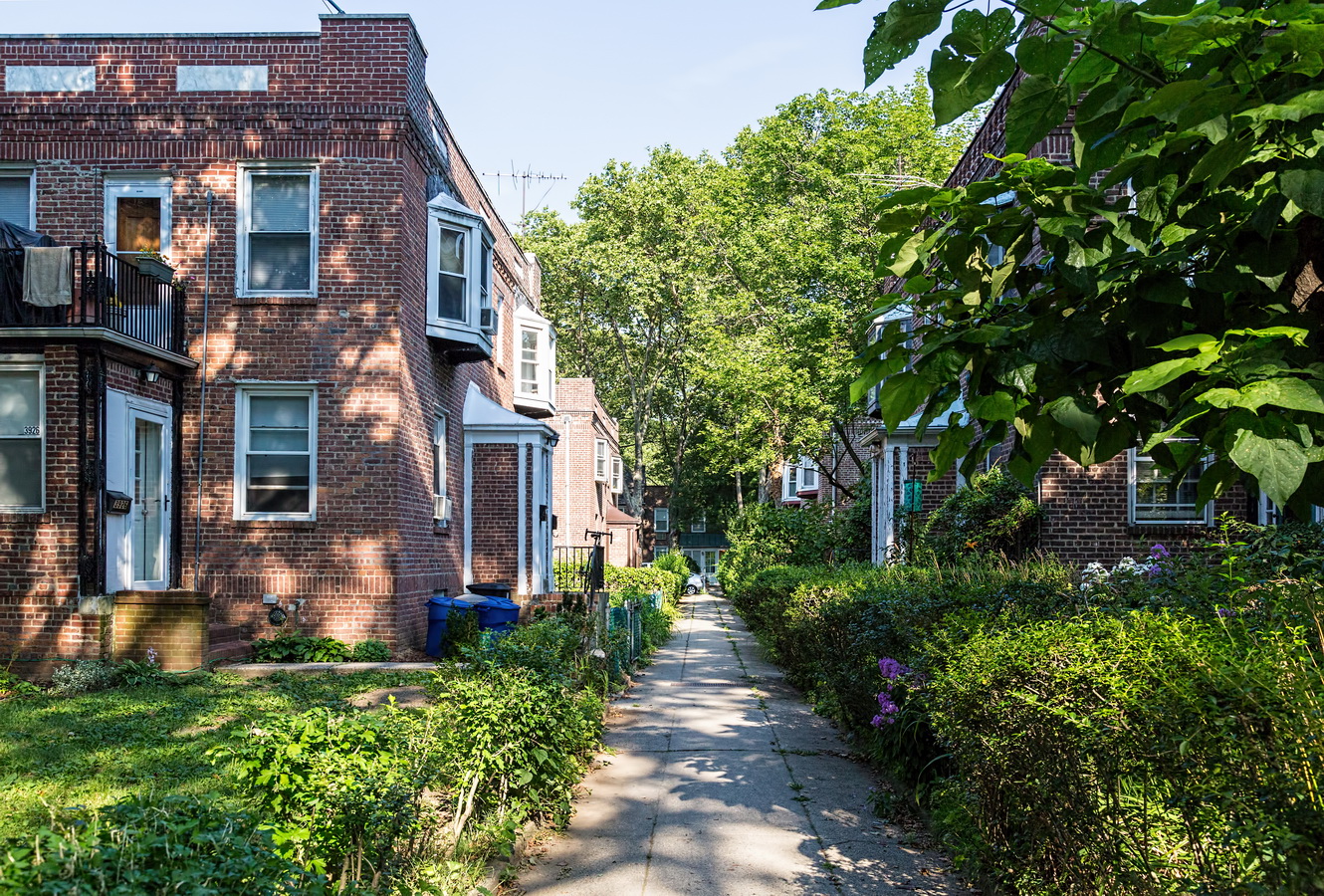
Highly dense row-housing, but with ample green spaces and many pedestrian-only pathways. Has enough density to sustain many local businesses within walking distance, features a number of subway stops easily reachable on foot--it's very possible to live in this neighborhood without driving.
It would be impossible to build a low-density neighborhood that works as well without a car, because there won't be enough people to sustain the businesses required to serve them within a walkable distance. And once you start assuming that everyone will own a car and will use it for every errand, then you inevitably get sprawl + congestion + traffic.
> Not everything has to be centered around consumption/consumerism
If you're arguing for a completely non-consumptive lifestyle in which you grow/forage all of your own necessities, then I concede that my argument doesn't apply to you, but I think most suburb-dwellers are not at your level. Suburbs are typically much more resource-intensive to maintain than denser neighborhoods.
Not really directed at you, but more at the general topic which causes all the stereotypes to appear and I don’t see them in the real world. Everyone I’ve met in an apartment living space wishes for a home. I know I did.