By “dispute resolution”, most people in payments mean “I paid for a chicken, you sent me an egg” type disputes. Or didn’t send anything at all.
That’s hard to deal with in UPI, last I checked. But I could be wrong! But then — why do all these UPI scams keep cropping up?
Or deal with a fraudulent withdrawal (no matter how it happens) by getting a refund with one phone call. The driver for this is that under most consumer-friendly legal systems, the customer gets a near-immediate refund for any unauthorised withdrawal. UPI => no. It’s damned difficult.
1. In scenarios where UPI is replacing a cash transaction e.g., purchasing fruits from a fruit vendor on the street (just did it a few hours ago), the transaction is immediate. Disputes are settled exactly as how it would be done with a cash transaction i.e., discuss and settle with the vendor in situ.
India had a separate settlement mechanism called Cash-On-Delivery that was needed for companies like Amazon/FlipKart etc., to penetrate the ecommerce space before UPI came into being. Even Amazon does returns and refunds through their online/app-based customer service process.
2. In scenarios where UPI is replacing a credit card e.g., I order food through a food delivery app and an item is missing. The food delivery app provides a customer service option where they are able to resolve the issue (they could a. deliver the missing item at no charge, b. give me a cash coupon for the inconvenience that I can use on their app, c. refuse to resolve the issue). I haven't had a scenario where the service provider has refused to resolve the issue.
3. As far as fraud is concerned, a couple of months ago the local police visited our apartment complex for a brief meeting to educate people on frauds and safety. They focused on digital crimes and told us about the national helpline for cybercrime. [1] Residents can dial 1930 to reach the national cybercrime helpline to report crimes, including online frauds -- this also includes the QR code scams that you hear about in the media. They register the complaint and guide you with the process for recovering lost funds. I haven't done this myself, but what the officer explained is that based on the transaction details, the national cybercrime control center coordinates with the participating banks on both sides of the transaction to immediately freeze funds. You can also take the complaint number to the nearest police station and get an FIR (First Information Report) filed to get the fraudsters criminally prosecuted.
4. In scenarios involving a buyer-seller dispute, there is the consumer protection laws where the consumer can directly file suit against the provider in a consumer court. These are special courts (separate from the civil and criminal courts) and are very effective in protecting consumer rights. This works for all types of consumer disputes about service/product issues.
This would be the last resort for protecting consumer rights even in cases where a credit card company declines to handle a consumer's complaint on technicalities and is not just for UPI. These courts are at the district level in all states. [2]
People in the west and other developed countries have a lot more of their digital transactions occuring on credit/debit cards and are comparing that with UPI. While what UPI is doing overlaps with a lot of that, it also is more than that in enabling micropayments and p2p payments. So, that is of value for the average Indian resident.
Speak to regular (not well connected) people who’ve been through the justice system. It’s not pretty.
But then maybe you’re lucky enough to live in a state with super responsive police and courts. After all, a lot of this stuff is a state subject and can vary by state.
But the stories of hellish experiences seem to come from all around the country.
So, a subtle difference from a payment stack perspective is that the consumer protection offered by credit cards is not necessarily a payment stack functionality but a feature of the credit card (just as credit and loyalty points etc., are a function of the credit card).
It is just a slighly different design goal and honestly most users of UPI are okay with it because they favor the cash-replacement offered by UPI.
I will say this though -- the ease of use in UPI is so smooth that if users fail to double check the QR code they have scanned (actually the UPI virtual address) with the vendor and confirm that it is indeed their account (I do it every time), there is a possibility of hackers diverting the funds at the point-of-sale through the use of fake QR codes. This risk is similar to skimming devices installed on PoS machines/ATM machines to steal credit card data.
It makes me sad that there are so many misconceptions about UPI that people are willing to resort to falsehoods (such as CBDCs and privacy) and it shows that most criticisms are from people that haven't used it in the real world.
When you use the term “falsehoods”, keep in mind that a lot of these criticisms come from people who’ve worked in payments for decades, and know a fair bit about customer protection.
If we’re going to talk about falsehoods, we should also talk about the falsehoods UPI proponents share about card payments.
And to be clear, my focus is customer protection. I don’t give a flying fish about the mechanism.
The world is full of jealous fucks who are surprised and shocked that a "backward" country of beggars and snake-charmers was able to come up with UPI.
Recall the NYT cartoon when India launched a mission to Mars: https://ichef.bbci.co.uk/news/976/mcs/media/images/78030000/...
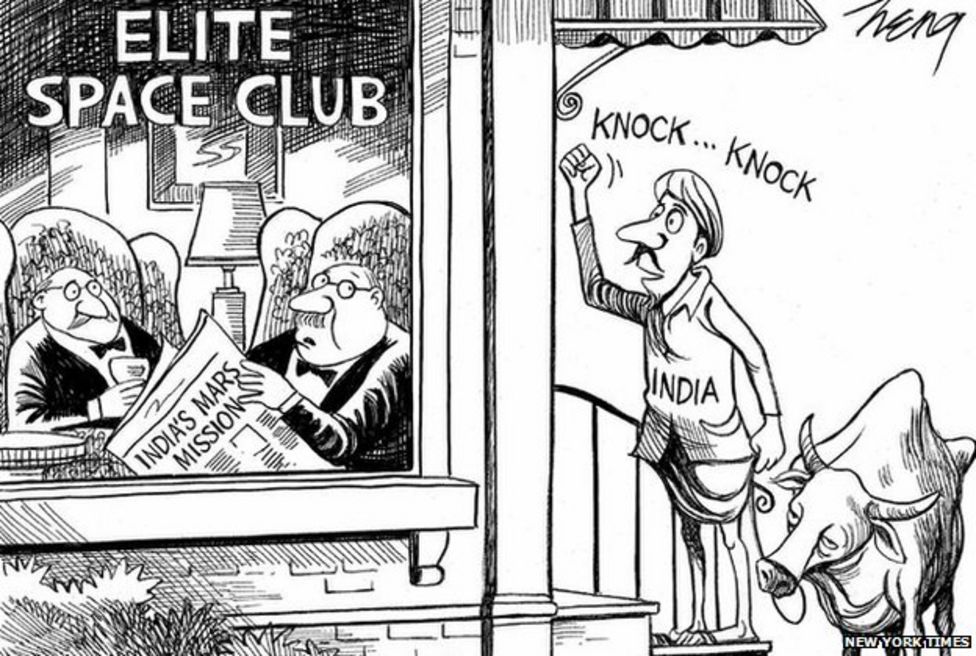
But UPI as a layer on top of IMPS is great, especially the idea of providing an easy you@bank identifier. By contrast Faster Payments is like 102030-12345678. And being designed post iPhone was actually a blessing because it allowed UPI to have a mobile-first deployment strategy.
But UPI also makes a virtue out of necessity: the reality that cards and a protected e-payment mechanism are difficult to organise, especially for India’s less-well off.
This then turns into nationalistic chest thumping about “jealous foreigners”, while completely ignoring real issues around customer protection and scenarios that UPI doesn’t enable.
To be clear: I wish UPI well. I also want to see less opportunities for scammers in UPI and for people to be able to use UPI with confidence knowing they will be easily refunded if things go wrong.
It’s honestly tiresome to have reasoned conversations with nationalistic chest thumpers.
Not true. [1]
[1]: https://www.npci.org.in/what-we-do/upi/dispute-redressal-mec...