If you want science, you want plate tectonics and geography focused around the boundaries of plates and volcanic science. If you want to know what a continent is, whatever model you were taught in school is good enough for government work. The important thing is to know what that land over yonder is if you’re on a boat.
My solution would have been:
Planet = any standalone body in space, formed around a star or brown dwarf, large enough for gravity to mold it into a sphere, but not massive enough to enable any fusion. (i.e. exclude stars and brown dwarfs).
Then:
Major planet: Planet that has cleared the neighborhood around its orbit. We have 8 of these.
Minor planet: Planet that has not cleared the neighborhood around its orbit. This would include Pluto, Ceres, and many extra-Pluto bodies.
The current scientific definition is tortured. I.e. a "dwarf planet" is not a "planet", which is just unintuitive nomenclature grammatically, as well as violating the regular use of the word "planet".
https://upload.wikimedia.org/wikipedia/commons/b/b4/Plate_te...
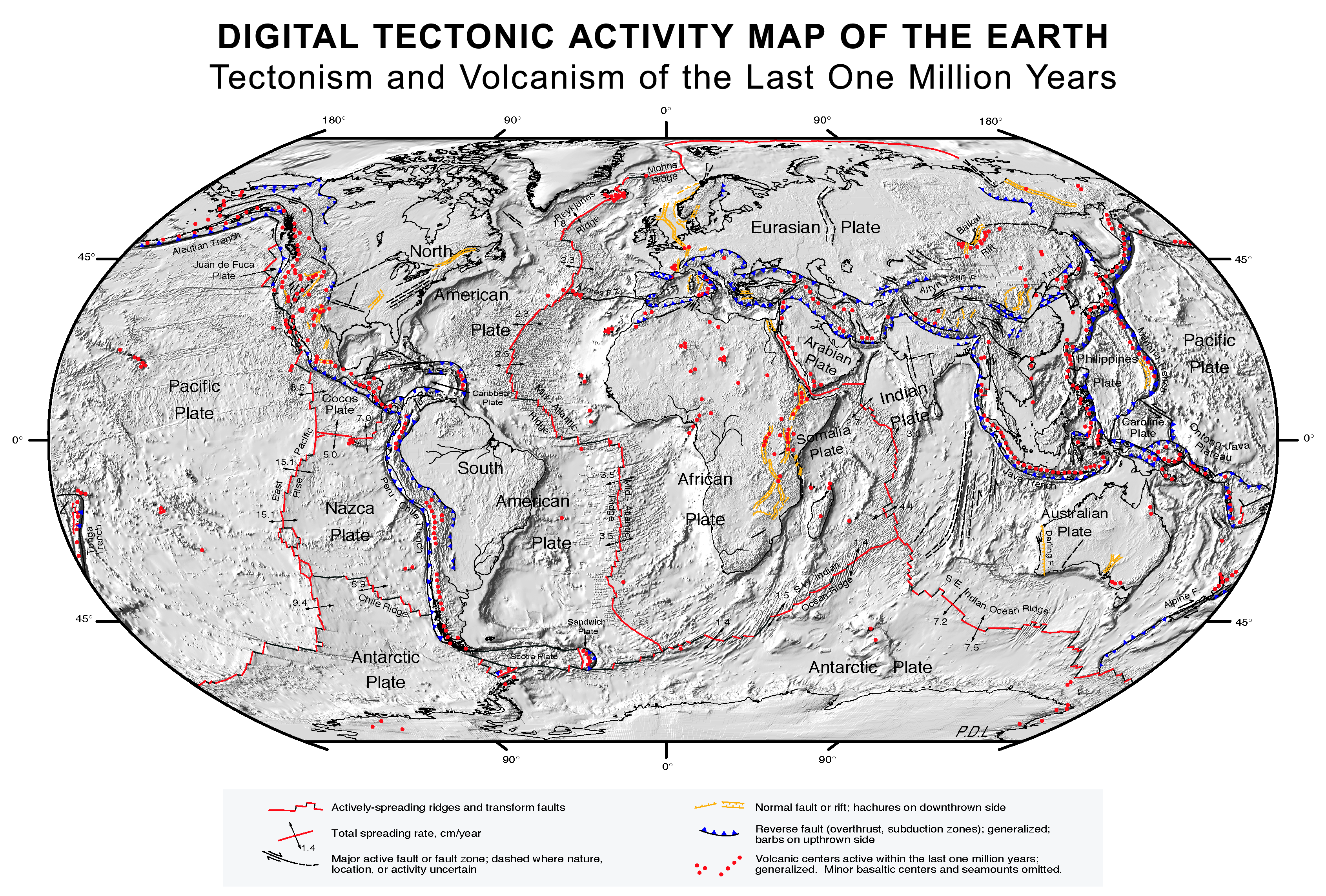
I think continent, in the general usage, is really more of a cultural/political definition than an an objective standalone concept.
That is both vague and by no means the only definition of a continent. A continent is basically defined culturally - different places say there are 4,5,6 or 7 continents.
The closest to a good scientific definition is 'the largest landmass of a continental plate' (which would include Australia but not greenland, but then arguably India, east Africa, Arabia and Central America are really also on their own plates)