City centers are already viable places to live without a car.
Unless the US had a waaay higher population density, we would have a hard time arriving at another system.
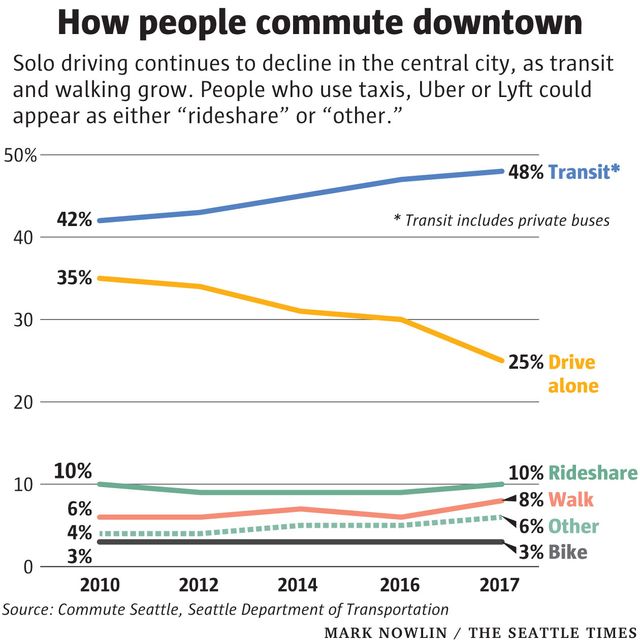
Here is a nice graph from back in 2018: https://images.seattletimes.com/wp-content/uploads/2018/02/d... (from https://www.seattletimes.com/seattle-news/transportation/tra... ). Transit was the plurality of downtown commuters (and growing).
Being able to technically survive in 2% of the land if you never leave, pay a great deal more in rent, accept much greater inconvenience, suffer poor air quality from all the people driving, and endure constant abuse and threats to your life that are wholly unnecessary (such as right on red) isn't non-car-dependence.
Spending 20% of the space cars use on dedicated transit right of ways and active transport and having a handful of areas where you might have to park and walk or use a mobility aid for 1km isn't the authoritarian dystopia you're pearl clutching about and will make driving easier for you. It literally helps everyone.
The US had a better system. It was systematically destroyed at great taxpayer expense and done so in a way designed to cause as much economic harm on the people living where the highways went as possible. There are at least eight separate regions smaller than Switzerland with higher population. Even if the rural transit system the US used to have were impossible to build you could at least service those regions as well as the Swiss serve their tiny rural towns.