At issue is how. We do not know. No one is working on it, or anyway publishing.
Then why did you say:
> We will need to wait for another of our own generations to learn who really made, e.g., the many precision-machined 50+-ton empty stone boxes under Saqqara, and why.
If the issue isn’t who, or why, but how?
We do not know when they were made, which is to say which generation of Egyptians made them, or for what, or how, or why they left one in the middle of the hallway, or how they could have moved any of them into place. What is offered is obviously inadequate.
Which crude tagging are you referring to here?

     ---
       |
       |
      /   <---
     |
This doesn't seem to be entirely straight across the entire face either (unlike my crude ASCII "drawing"). Almost like a huge ball 'dented' the stone.
There's also a huge flash and glare going on which doesn't help and probably overexposes the specks that you see are also present in other pictures (like you posted in the sibling thread).
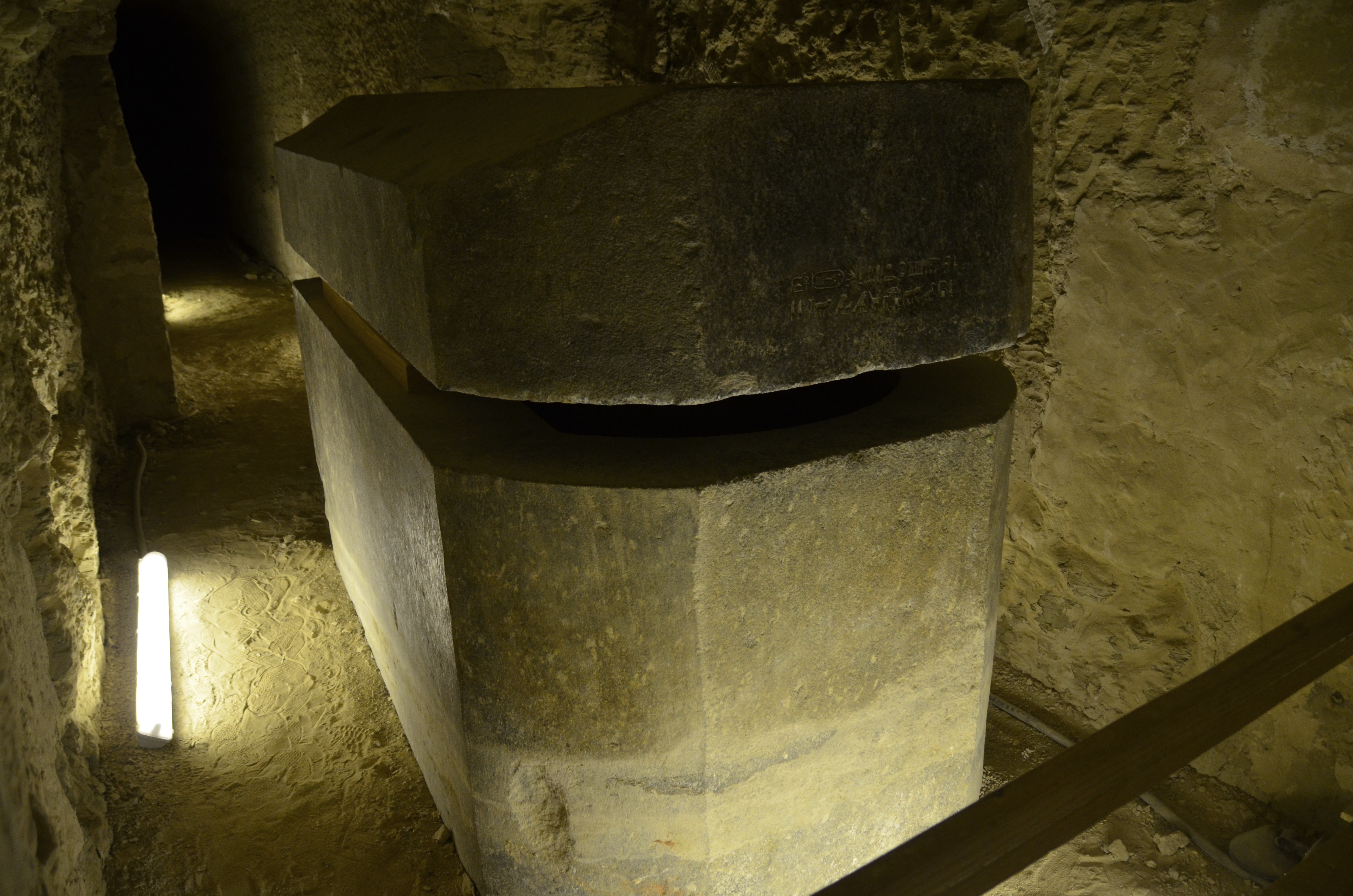
There's not much writing there, but I wouldn't call that crude.
That there is no uniformity is more evidence that they were tagged.
As someone who can read the inscriptions you're talking about: they're not crude at all.
https://www.ancient-code.com/wp-content/uploads/2016/12/saqq...
https://www.theancientconnection.com/wp-content/uploads/2021...
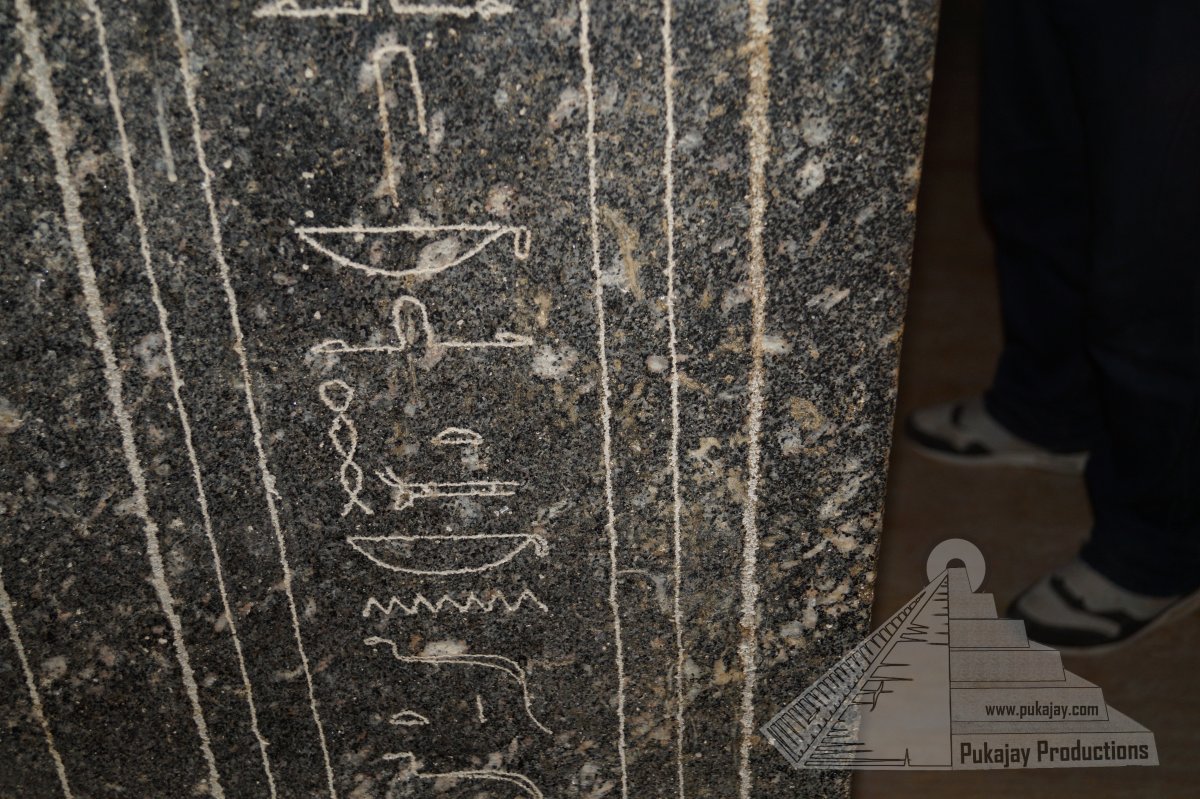
There's firm archaeological evidence around quarry sites, etc.
The same (pretty nonsense) questions could have been asked about Roman concrete or how tunnels were bored through the Apennines for aqueducts or whatever else you feel like during the late Middle Ages, despite the fact that the demographics of Italy hadn't really changed. The gap in time between Khufu and Ramses is basically the same as the gap between the reign of Augustus and the Hundred Years' War.