The only thing that approximates this is that pocket lint can accrue inside the port, as small amounts of lint are repeatedly pressed into the port when inserting the connector. USB-C is susceptible to this too for exactly the same reasons: frequently-used female port that spends most of its life in a lint-generating pocket. As more is packed in, we push on the connector a little harder until the debris is deep enough to prevent contacts from connecting.
You can scoop it out in two seconds with a safety pin or other thin metal probe. And again, USB-C is equally susceptible to this failure mode.
I've never had an issue with my USBC ports on my phones or billion other USBC devices going bad.
OTOH, it's a frequent problem for iPhone users. In my circle, it's frequent enough that even my brother who works for Apple has this issue, and it's frequently (but not always) severe enough that the phones require replacements, instead of the $5 cable. And that was my point from the beginning: USBC is designed so that the failure mode affects the cheap, easily replaceable cable rather than the expensive device it is connecting to.
The Lightning port has less of this problem because it's smaller but I've seen my colleague use a SIM-card removal tool to pick things out of his iPhone connector too.
The reason "USB-C is bad" is because you're comparing some of the highest quality manufacturing (Apple) with others. Apples USB-C on the Macbook is really solid.
That's the wrong measure; outlasting cables is inadequate.
The correct measure is how long a USB-C connector lasts.
In my experience, the "tongue" in the USB-C connector gets broken in about two years. That forces me to buy a new phone, and hope that it arrives before my old phone's battery dies.
As to "you're doing it wrong" or "you're supposed to clean it every 30 insertions", it's freaking consumer connector. It should just work.
Meanwhile, I've never seen a lightning connector fail. The cords do, and they cost too much, but they're just cords.
And, yes, the lightning connector could/should be more robust.
Only if you don't realize the reason they're built that way is to not wear the connector down, they're designed to last "forever".
> In my experience, the "tongue" in the USB-C connector gets broken in about two years. That forces me to buy a new phone, and hope that it arrives before my old phone's battery dies.
I've never seen or heard anyone break the tounge of the USB-c.
> it's freaking consumer connector. It should just work
There are physical limitations to this and lightning are also prone to the issue.
> Meanwhile, I've never seen a lightning connector fail. The cords do, and they cost too much, but they're just cords.
All I see is broken iPhone cables, not that it matters though, since we're discussing connectors.
And, yes, the lightning connector could/should be more robust.
No.
https://media.idownloadblog.com/wp-content/uploads/2016/03/i...
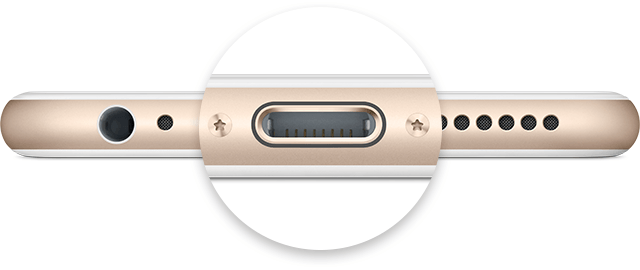
See those teeny metal thingies in there? That's how an USB-c cable looks inside, why you ask? Because that's the most unreliable part of the connector (other than filling up with crap).
I mean if you're so incredibly violent you break the tounge then lightning would indeed be better, but that's not a common failure mode. It's designed for wear and tear, not violent bending forces.
I think it's because iPhone cable has the male adaptor with the female on the device, which is a lot simpler and less prone to debris, which is what you want with a cable that gets tossed around.
The USB C cables has the female adaptor on the cable which accumulates debris and moisture. USB C also oddly has the male adaptor inside of an indentation, so with USB C you basically have two female adaptors that can collect debris.