Long dark hallways filled with apartments where nobody knows each other or has any occasion to interact. Secluded offices vs. anxiety inducing planes of "open" disasters. Apartments designed to be a shrine to a television and a small bedroom with light only suitable for cave dwellers.
The shape of spaces is important and shapes our quality of life. I would like to see a revolution in that much more than a different kinds of facade.
To be fair the working space is being experimented upon. The open spaces are fairly new, and there are plenty of workplaces also where people don't have attributed desks, they just walk around the building and sit wherever they want. Whether any of it works, I don't know...
All of this is purely driven by cost cutting.
Many jobs require deep concentration and quiet and in places that respect this you get individual offices (extremely rare for the entire company, but notice that in 99% of companies every level above manager tends to get an individual office) or team offices (probably the best compromise in terms of cost - socialization trade-off).
The flexible desk ("flex desk") setups work for some things, but they tend to suck, too. You have to take everything with you, generally. Over the ear headset? Bring a bag! Favorite mug? Probably the same. Pens, notes, whatever? Nomad life style.
This probably the true for those big and famous offices (especially the part with interns). But "Architects" is broader group then that. Smaller offices often do consider internal spaces. Also sometimes it is often challenge to design it in way that can survive yak shaving [1] in commercial projects.
[1]: this one often occurs even after original budget was met in the design. That is why public projects are more attractive to many architects even if they are often more modest.
As a rule of thumb, main architects are just sellers. They sell projects to clients and authorities - only. Most senior architects are project managers, they don't plan anymore, at most they give some ideas and impose limitations. The rest, including "interns", do the bulk of the project, interiors or facades.
Though it's a bad photograph, here's a recent car rental lobby I visited: https://raw.githubusercontent.com/aboxwithrocksinit/test-buc...
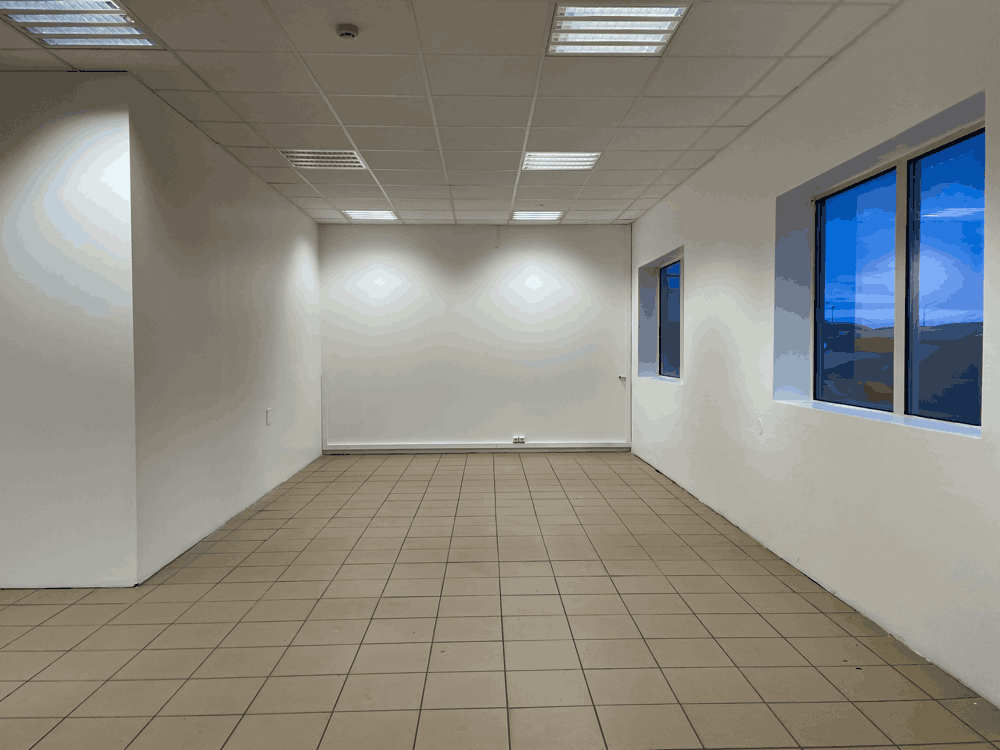
I worry about people who have to work in places like that.
I guess it's just way more expensive to design than those standard boxes we see everywhere.
Those marquee architects influenced the later architects, who aren't as broken, but still want the cache. So they add "textures." Then, when CAD took off, it got even easier to do big boxes fast and cheap. The premier design software today, Revit, is so good at churning out box buildings.
We were able, through materials science, to increase vertical density at the cost of human scale structures. Lost is the recognition that buildings don't stand alone. They are a part of society, and the way buildings are designed and built reflect the society they are in, and they affect the society in which they are placed.
We don't build grand buildings anymore. What we build looks more like the box a building would come in. The interesting thing is, if cheap energy ever becomes scarce, all these lauded brutalist structures will become useless. While the stout, high-ceilinged brick and stone structures, with operable windows and lots of natural light will remain.
I’m not sure the two are in opposition. I feel more connected to humanity in NY, Tokyo, Hong Kong than I do in, say, Denver or Orlando.
The economic forces that drive verticality also drive the use of ground level for retail, restaurants, etc.
Orlando wouldn't be human scale any more than the Burj Kalafia is. Orlando is automobile scaled, and would suffer the same consequences as the Burj if energy costs skyrocket.
That said, there are some people who thrive in places like NYC. It takes a certain kind of person to be able to deal with the sea of humanity, and not a lot of people can.
I’d love to see a return to small sculpture elements based on 3D printing and concrete casting — even if it starts with wholesale copying of ornamentation that works well from the late 1890s.
https://www.youtube.com/watch?v=iHdFd2RKRSI
This is the intro of a Soviet Christmas romantic comedy, with the premise that the main protagonist, quite drunk, gets into a taxi, gives the address of is home, gets there, unlocks the door with his key and go to bed, only to realize a bit later that something was wrong when an unknown woman enters... Everything was identical to his apartment (street name, number, building, keys, etc)... except he is in Leningrad and not in Moscow.
From my experience I would say completely the oposite, every intern is a Idris or at least a Haskell programmer. Architectural offices, soon or later, will make them Java programmers.
COBOL programmers are the government authorities and the typical investor.
Out of curiosity, before modernism, what would an architecture curriculum have looked like? Are there any foundational texts?
*I don’t hate modernism, lots of it is pretty cool. However, I hate what it did to the pedagogy of painting. It set me back ten years because it was so hard to find anyone who knew what they were talking about. Western art departments figuratively and literally destroyed the basis for teaching representational aesthetics, which had been developed for thousands of years, and then celebrated themselves for doing so. Now, relatively, no one knows how to draw.
I suspect something similar happened in architecture, and in light of that, I don’t know who to trust or approach on how to start self-learning. I’ll never build cool buildings, but I can design them and use architecture to inform my painting.
The treatise on Architecture from Vitruvius, a Roman architect. This is it.
The state of architecture is a disaster. Ever since Adolf Loos wrote “ornament is crime”, architects have booed anything decorative. We get textures, sure. Oh boy do we get textures. We get all the woods, all the stones, all the 3d printed concrete. Sculpture? Hell, no…
And no it’s not that expensive. When you build 234 park avenue, every apartment sells for $10m. maybe there is some of it that can go towards making things fun a little bit.
The worst part is even Modernist heroes like Corbusier and Wright did fun stuff. The Church at Ronchamp is weird and playful. And Wright’s blocky mayan influence is crazy and refreshing.
Not asking your everyday architect to change overnight, but the people who influence the profession, give the prizes and write the articles seriously need to change.