And yes, I think we should change the incentives. We should change them such that executives face direct personal punishment for negligent or intentional harm. We should have learned that lesson during the 2008 financial crisis, but instead nobody did time. The worst that happened was that some very rich people were forced to give back a modest percentage of their gains.
>>We should change them such that executives face direct personal punishment for negligent or intentional harm. We should have learned that lesson during the 2008 financial crisis, but instead nobody did time
does not contradict anything else.
But this
>>So either this is exactly what they want or they're hopelessly incompetent.
is incorrect. Those are not the only two options. Reality is typically more complex, and more boring than that. Doing harm does not require willful malice or profound stupidity and trying to reduce it down to that does no one any good.
Not that after investigation we could find that it was really one of those two cases for many people! But 'negligent harm', which is something you want people to be held accountable (me too!), does not require gross incompetence. It can be as simple as ignoring a couple inconvenient truths and being insulated from the consequences of ones decisions, or the cumulative outcome caused by the group.
Think of it similar to handling explosives. Are they useful and important in society? Definitely. Are they subtle and complicated, such that working with them can easily harm somebody in ways that are not foreseeable to the naive? You bet.
But when somebody decides to create and apply explosives and hurts somebody, we don't just say, "Gosh, that's very complicated. Who could have known how it would work out?" We say, "You intentionally chose to work with something powerful and dangerous, so you're responsible for the harm you caused."
Is it more complicated? Sure. And I'm saying that when it comes to highly paid executives who seek out positions that put them in control of dangerous complexity, they become responsible for the outcomes.
They are already seen as responsible when it comes to anything good that happens on their watch, which is why they get paid such fast sums. I'm saying they should be seen as equally responsible when it comes to the harms. No more of this, "Oops we crashed the economy/poisoned a bunch of people/actively enabled genocide" stuff. All of that "more complex" reality becomes their problem if they are in control of it.
I think the definition of success they're operating under is vastly different from yours.
And I think it dramatically aided early internet adoption. If you read "When Wizards Stay Up Late" you'll see how big a barrier AT&T was to the adoption of packet-switched networks, rather than the circuit-switched networks they sold people. How far would the Internet had gotten if AT&T had banned home modems [1] or priced early ISPs out of existence? They would have vastly preferred something like AOL, not the Internet, which destroyed their long-distance call business entirely. Look at how they behaved with mobile apps up Apple launched the app store.
Our problem was that we didn't stick with it. Starting in the Reagan era, antitrust enforcement shifted toward much laxer standards. So AT&T reassembled itself as a (smaller) juggernaut and kept going.
[1] I realize this sounds insane now, but one of the things the DoJ sued for is "Obstructing the interconnection of customer provided terminal equipment and refusing to sell terminal equipment, such as telephones, automatic answering devices or switchboards, to subscribers".
You mean a competitive environment like this one? https://www.beingguru.com/wp-content/uploads/2019/06/top-mes...
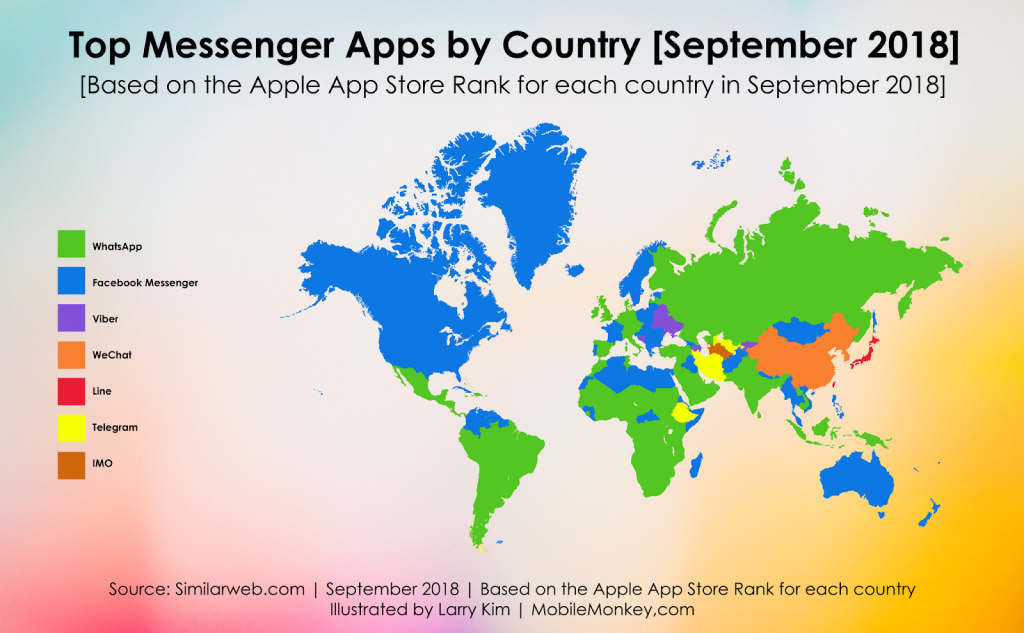
Ah, this is what I think of as Schrodinger's Accountability. Zuckerberg and Facebook's senior execs are simultaneously: A) so brilliant for running Facebook that they deserve to be incredibly rich, and B) so normal that they can't possibly be expected to understand the consequences of their actions, and so are morally blameless. Heads they win, tails we lose.
I say it's one or the other. If Facebook is too big to be understood, it should be broken up into small enough units that mere mortals can see the forest and tend it responsibly. And if not, the execs should be morally and legally culpable for the harm it does.