Only $850? That is a new use of the word only as far as I'm concerned. These things, which are in many ways similar to if not identical with bluetooth earbuds should not cost more than those - and given the fact that Apple managed to convince people that $200 is a normal price for these things that should leave more than enough margin for an unhealthy profit margin seeing as how the ones I'm using cost ⅐ of that while achieving a longer battery life.
There was an IndiGogo project aiming to produce 2-in-1 earbuds/hearing aids, it was funded in 15 minutes...
https://www.indiegogo.com/projects/olive-pro-2-in-1-hearing-...
Having hearing aids myself, the big thing is amplifying the sound without the noise. The device needs to figure out what to focus on. If I'm in a restaurant with lots of background noise and people talking, what should be amplified. Most hearing aids use multiple microphones and program settings to identify what to focus on. And there are different kinds of noise like car engine noise or HVAC noise. And don't forget the wind noise on the microphone when you are walking. Also hearing aids compress the dynamic range and frequencies to extend the range of hearing to improve comprehension. And if there is a sudden loud noise it shouldn't go beyond a comfortable power level.
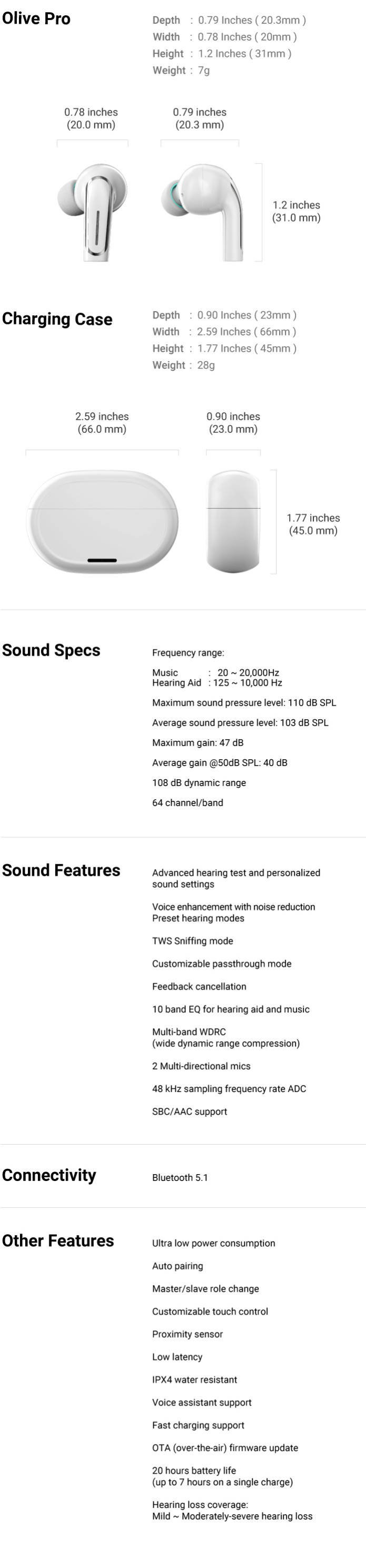
Yes, a hearing aid is not the same as a noise-cancelling earbud, they use different algorithms and the former needs to be more configurable than the latter. Then again, this functionality is implemented in firmware and uses common audio processing algorithms on off-the-shelf low-power DSPs, just like those noise-cancelling earbuds. The IndieGogo example I mentioned seems to be able to sell a pair of multi-purpose buds for around $250 a pair, $600 for 3 pairs. Assuming they are actually making a profit on these sales - and I don't see why they wouldn't, the hardware seems quite standard for noise-cancelling earbuds - this is proof of what I stated before and gives lie to the "overhead" excuse for the high mark-up, especially given the small size of the company behind the things. Of course I do not know whether the buds sold through IndieGogo are as capable hearing aids as "regular, overpriced" ones and I do notice that the stated running time (18 hours) is that of the buds and the charging case together - the buds themselves last for 7 hours between charges. They're specified for "mild ~ moderately-severe hearing loss" and seem to have the required amplification and equalizing capabilities [1]. Maybe give them a try? I don't need hearing aids myself but my mother does use them so I'm thinking about getting her a pair of these once her current pair is in need of replacement.
[1] https://c1.iggcdn.com/indiegogo-media-prod-cld/image/upload/...
Good hearing aids are also environmentally aware. They will adjust the amplification to be different in a car, bus, and quiet conference room. Cheap hearing aids rarely do this well. There is a very drastic difference between 800 dollar hearing aids and 10,000 aids. Trust me, I’ve tried both of them.
At best these Bluetooth headphones / earbuds you mention can just make all noises louder, across all environments. That helps a bit but it is not the same as what a good pair of hearing aids can do today.
At Costco you can get what seem to be high end hearing aids for $699 each. The current generation are rechargeable and support bluetooth. This includes the free hearing test free fitting ("real ear", which is current best practice) and followup so long as you have a membership.
The key thing that is lacking is a decent app or api for me to write my own. Oh, that and phone conversations using the hearing aid's bluetooth is pretty bad.
https://www.npr.org/podcasts/381444600/marketplace
https://www.bose.com/en_us/products/headphones/earbuds/sound...