Your problem set sounds super cool, and it would be nice if DOD had a functioning acquisition process that would allow people with interesting tech to out-compete companies whose boards are stacked with current and former public officials. But alas, that's not the world we live in.
The sad thing is, there are probably dozens of proto Kelly Johnson's out there. But they've made defense industries so intolerable that none of them work there.
If Amazon signs a 5 year contract to get all their delivery trucks from Ford, GM isn't going to go out of business; and when they're re-negotiating the contract in 5 years time there'll still be a vibrant competitive market.
But if you make tanks or jet fighters or railroad rails, you might only have one customer. And if your only customer signs a 5 year deal with someone else, you're out of business.
Similar trends took place in commercial aviation. There aren’t successful entrants into this market despite a lot of state backing, because it is now very hard and expensive to create an aircraft that matches the performance and efficiency of the latest models of Boeing and Airbus.
https://upload.wikimedia.org/wikipedia/commons/0/0e/Qualitiv...
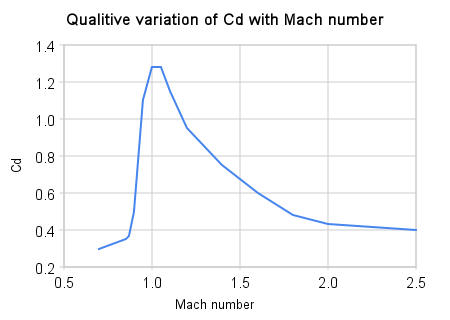
F35, as an aircraft created more than a decade later, is supposed to have a much better RAMs.
See F35-13174 "Add timeout for supersonic flight at high altitude" for details.
Interesting that they called out the materials problem, and specifically the duration of research time necessary to develop and test new materials. I currently work for a company specifically targeted at shortening R&D cycles for materials companies.
It's an interesting AI application - materials data tends to be small, and sparse, because each data point is expensive to generate. But you have the benefit of physical properties being bounded in the real world, where we already know certain relationships. So you need a way to inject ground truth into your model(s) so that you aren't trying to have your model re-learn the boiling point of water.