I used to take the access road parallel to the bridge and avoid a lot of traffic that was south bound. When the bridge collapsed and I-85 was blocked off, everyone learned about the parallel access road, and it now became a cluster of a traffic hot zone too.
Prior to that, a lot of people were not aware of the alternate route.
[1] https://en.wikipedia.org/wiki/Interstate_85_bridge_collapse
Unless the bridge collapse resulted in increased traffic levels afterwards, the same traffic that used to go over I85 is now distributed over 2 routes.
While there's a net negative to you, it's likely that a lot of people ended up saving time on their routes.
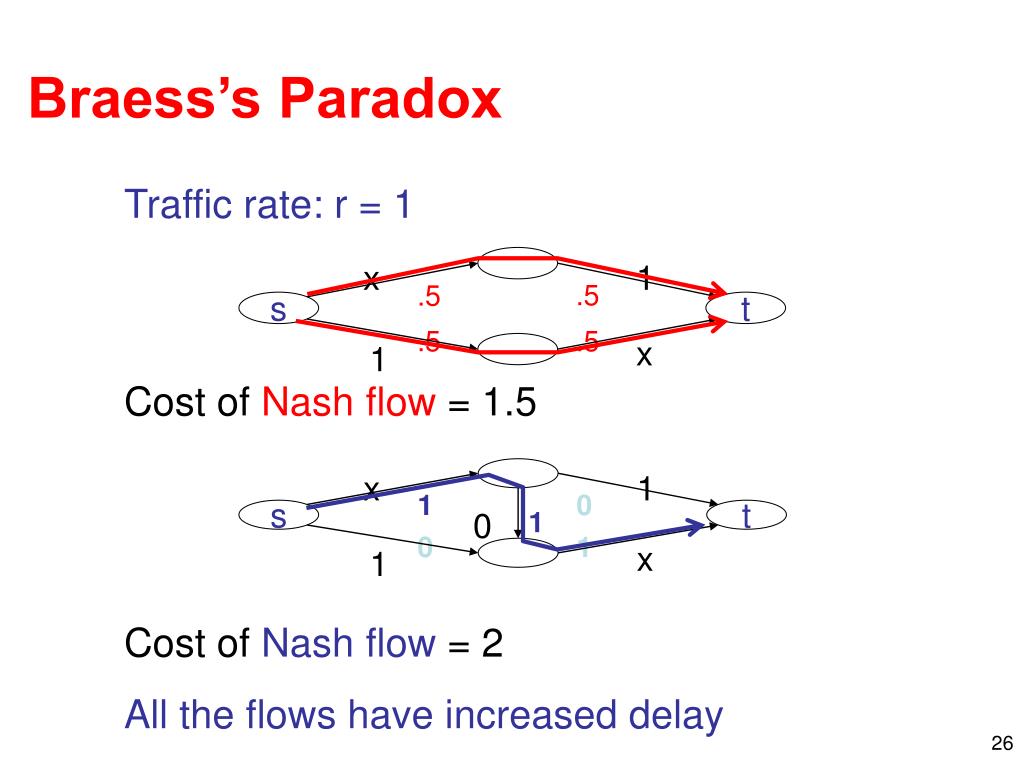
It's theoretically possible this describes a Braess paradox, whereby everybody loses: https://image.slideserve.com/280060/braess-s-paradox-l.jpg
Also in the big picture with covid not being as deadly as it could have been, could serve as a nice dress rehearsal for a captain trips.
1. How did they decide that the benefits would continue over the course of 4 years?
2. How did they determine what "time lost" was? I imagine it's greater than just extra time waiting at the station. People probably also got lost trying to find a new way around, and were late to things important to them. Unexpectedly being late to a job interview is a very different kind of time lost than saving 3 minutes on your regular daily commute.
In general, temporary disruption has some long-term positive economic effects (which is directly why 'disruption' is valued in Silicon Valley).
For example, during London Tube Strikes, commuters find different and more efficient routes and 5% ended up permanently changing their route on public transport: https://www.independent.co.uk/news/business/news/tube-strike...