It's not like there is some underlying ground truth on what 'overweight' is, is there?
I'd love it if there was technology at some point accessible to everyone that would allow for more informative measurements (w/ privacy considerations).
More, for many individuals, it is more accurate than folks give credit.
https://www.cdc.gov/nchs/images/databriefs/351-400/db360-fig...
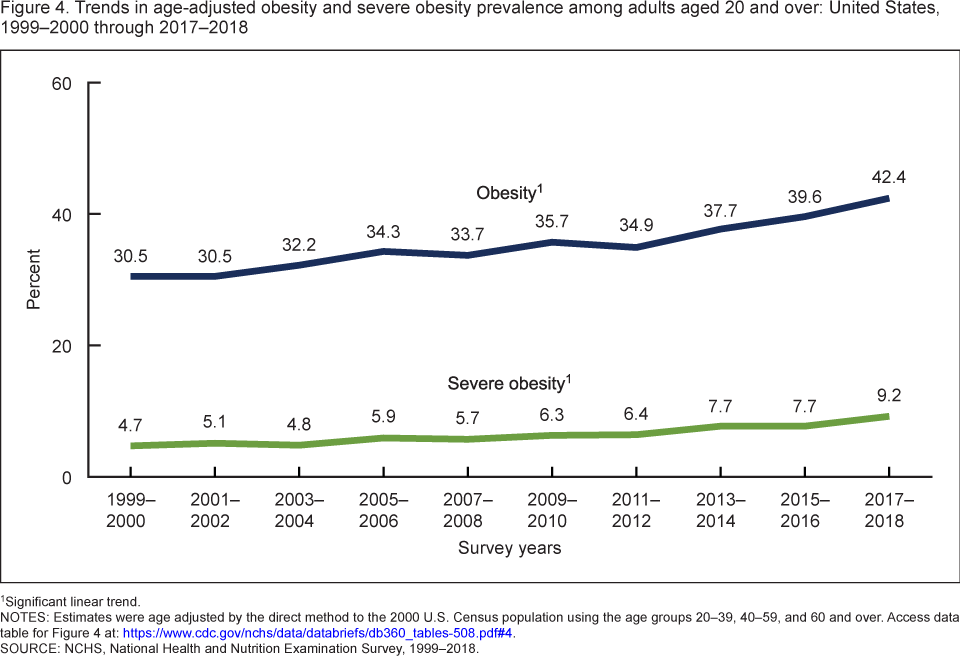
What is 'accurate' in this context? Accurate against what? What are you comparing it against to get a measure of accuracy?
It indicates against 'normal weight' - but if the population's weight changes then the 'normal weight' changes with it doesn't it?
The normal weight may change, but the ideal healthy weight doesn't. The idea of a healthy weight is misleading, as there is more of a healthy body fat percentage. Even that's is an oversimplification, as visceral fat has far more health implications that subcutaneous fat.
Is your friend built like a running back?
https://www.gssiweb.org/sports-science-exchange/article/sse-...
That isn't very much, really. Some people are far from the norm, but generally the broad-shouldered people aren't the short ones.
Edit: the change in population argument makes sense. I’ve always thought it was flawed as a good friend of mine is short, very stocky, and fit - but is technically “obese”.
Edit 2: I was curious how this trend looks going back further than the 80’s. “The evolution of BMI values of US adults: 1882-1986” https://voxeu.org/article/100-years-us-obesity