A heat pump would use some of that energy to capture some more from a heat source (outside air, or geothermal, ground temperature). It gets less efficient as the heat source becomes cooler, so it might not be such a good idea in very cold climates. Theoretically, though, it shouldn't get lower than 100%, and efficiencies can reach 300% pretty easily.
I haven't done an extensive search on the topic, here is one of the first sources I found with the kind of graph I wanted: https://www.nordicghp.com/2017/01/heat-pump-effective-temper...
I read about 270% at -4°C (25°F). 1 watt of electricity in, 2.7 watts of heat out, not bad. The same graph reads about 480% at 18°C(65°F), and 150% at -20°C (-5°F). I know that gas heat pumps exist as well, and some systems are hybrid, so it sounds like a no brainer to me. On the flip side, they can be quite expensive, so do your calculations relative to the temperature history, and hourly electricity hours. It would be more efficient to heat when the air is warmer during the day (assuming air pump), and combine that with a well-insulated house.
Solar (thermal or electric) is pretty interesting too, I wonder what kind of efficiency one can get with photovoltaic + heat pump (photovoltaic is more versatile, being more useful during summer).
Correct. Every heat pump water heater I've ever seen has the heat pump directly on top of the water tank. It's possible they make ones that tie into an external heat pump, but I've never seen one.
Heat pumps make little sense if you don't have access to a thermostatic source, or indeed any "free" heat source.
Generally utility rooms in houses have a decent amount of waste heat anyway from being near the furnace, so it probably does work out decently a lot of the time.
My in-laws have a heat pump water heater and it makes their basement noticeably colder in the summer, which is pretty nice.
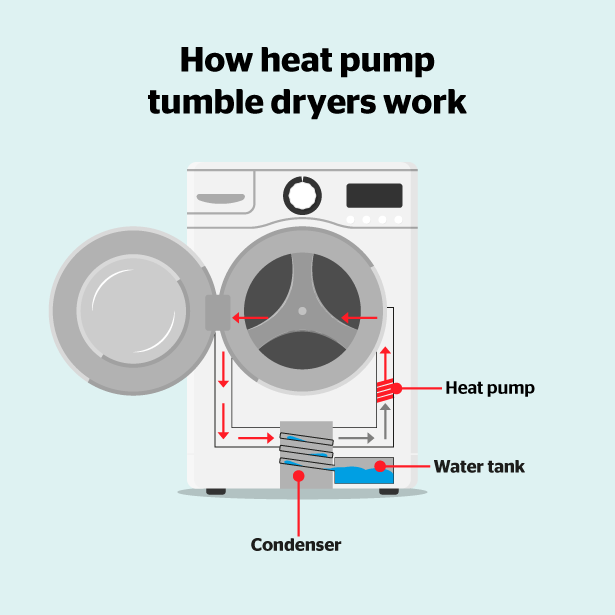
It's because they are cooling air to dehumidify it (the drying part), then they pump the heat back into the same air to circulate back into the wet clothes.
Units that have the radiator/compressor outside are 3-5x the price, and are hard to find.
[0] https://www.rheem.com/products/residential/water-heating/hyb...
I guess in warm climates / seasons that is probably a net benefit, but I've noticed our electric co-op also promotes highly-insulated electric water heaters instead of heat pump water heaters.
Not sure what I think of it all. We have an electric water heater and at first I was grumpy about the relative cost to run relative to natural gas, but I've come to terms with it. It's about the simplest device possible, and that has some value I think.