At my previous job, a large payment app serving millions of users, I ran the logs through some analyzers and compared that to GA. There was a noticable difference: Firefox did have a noticable larger amount of users if read from the logs than from GA. If you think about it, it is not that strange either.
Similar: according to GA we had 0 people using Brave, Opera Mini or Icecat, yet the logs did show a (statistically insignificant) handfull of users using that.
So, while there is no technical reason why firefox might be underrepresented, there is a practical and explainable difference in some cases.
Edit: when I say "noticable", I mean that it could be percieved, not that it orders of magnitude or even significan enough to matter for the business or our choices.
Looking at the console I see Firefox blocking ga.js from loading, not just the cookies.
Stock Firefox, with default settings? That's not what I see: http://www.jefftk.com/stock-firefox-google-analytics-big.png
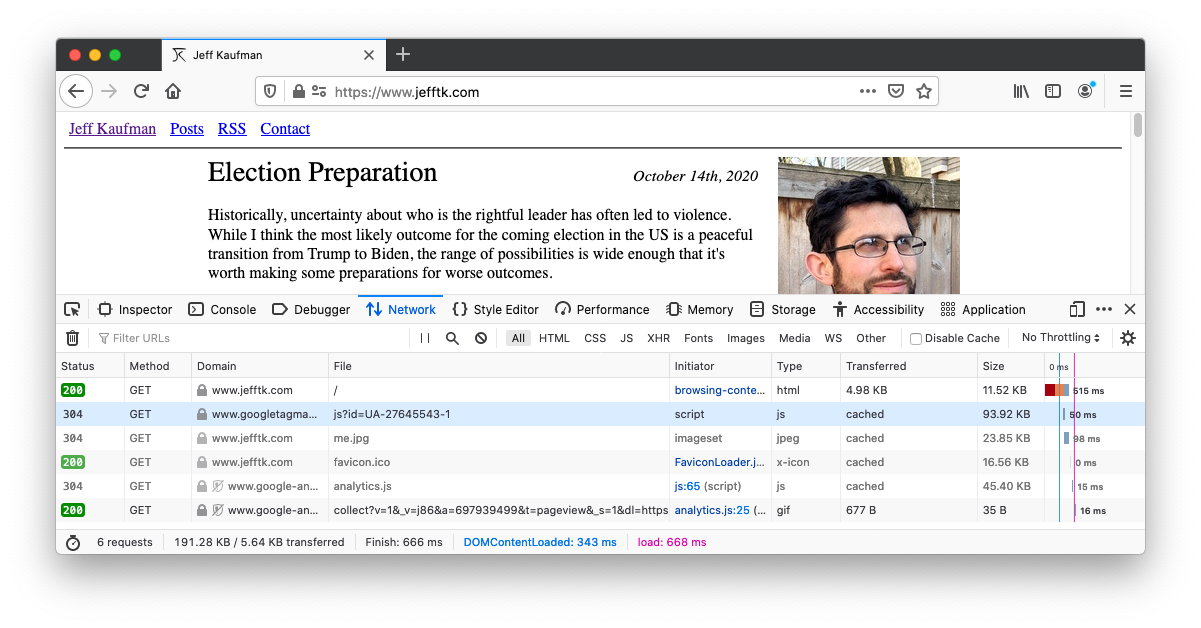
Stock Firefox but I selected strict mode when it prompted me on the initial release. I'm aware that it's not the default setting but some fraction of people are going to choose it since the UI prompts you to choose between standard and strict mode and it's a couple of clicks away on every page.
I suspect a high proportion of firefox users also have ublock or something similar installed
Firefox blocks third-party cookies used for tracking, not first-party, which is what GA uses. [1] The story that spread last year that Firefox blocks GA turned out to be a myth.
I don't know why you're trying to promote a narrative that Firefox is far more popular than analytics show, but that's simply not true. Heck, just dump user agent headers on your own websites and measure those -- nobody's blocking that.
[1] https://www.upbuild.io/blog/firefox-google-analytics-data/