NMC chemistry (as used in Hornsdale) is good for 3000-4000 cycles, although it's about 50% more expensive than LFP, at least if you buy them from CATL.
This isn't going to be cheap. But it is feasible, and if you care about carbon I'm not sure how else you do it.
How about we use the carbon free method of generating electricity that France has used to generate most of it's electricity for close to half a century?
We don't have to wait for a miracle that makes batteries cheaper, we don't have to scale up battery production by several orders of magnitude. If we built ten nuclear plants for every one that exists in the US today, that's enough for 100% carbon free electricity generation. It'd also provide enormous amounts of water if we use the waste heat for desalination. It also wouldn't involves consuming massive areas of land for solar panels. It would only involve technologies that currently exist and that we have decades of experience working with.
If you need to store half your generation on a diurnal cycle, add it on to the LCOE of ~$50/MWh for utility scale solar, and you are cost competitive with the LCOE of nuclear today.
Lithium battery production is going to skyrocket regardless of whether it's used for grid storage; we're going to need enough for a billion cars over the next decades, even if the world converted to nuclear. Prices will continue to fall just as they have.
I am a strong believer that we should have embraced nuclear, given what we know now about climate change. But starting in 2020 with next to nothing, we're just now passing parity where renewables are starting to win, and the gap is going to get larger.
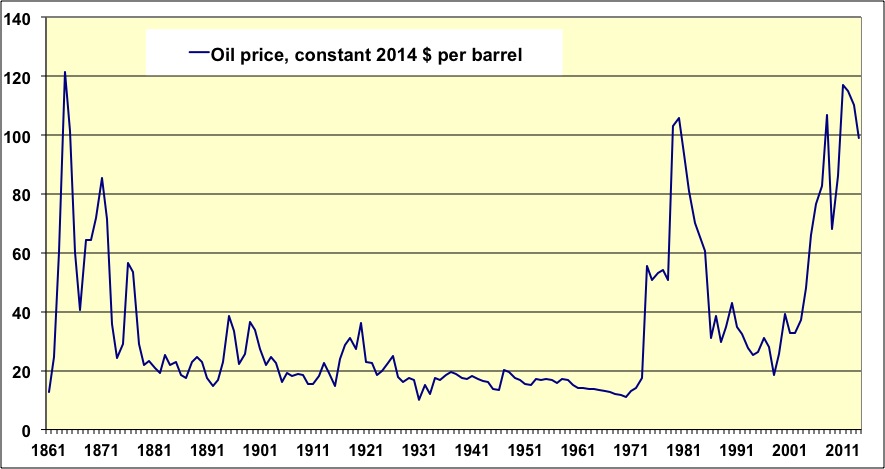
Now imagine what is going to happen if the demand for batteries increases one thousand fold (which is what is necessary to make grid storage possible) over the course of a decade or two.
So why will scaling up battery demand a thousand fold over the course of a decade or two make it explode in price, but scaling up nuclear plant construction five hundred fold (from two to a thousand) not do the same?
You are putting your thumb on the scales. I think we're done here.
Understand that even just 1 hour of energy storage for the US exceeds global battery production. If we try to use batteries for gird storage we're going to experience a battery shock in the same vein as the oil shock. That'll be terrible, because it will stunt electric vehicle adoption. There are much better uses for batteries than grid storage.
We're both putting our thumb on the scale: You're claiming that we're going to see a 10x decrease in battery cost, despite surging demand for batteries. I'm explaining that nuclear built at scale will likely cost 4-5x less than current nuclear projects.
The difference is I have historical precedence to justify this statement. We did build nuclear at a much larger scale during the 1970s, and it did cost 4-5x less on average.
Will battery production scale up like oil production did over the course of 1900 to 1970? Maybe, but that's an entirely speculative claim. The reality is that if countries start attempting to purchase grid scale batteries, we're going to experience a battery shock in the same vein as the oil shock following the Arab oil embargo. If the US tries the purchase 1 hour worth of battery storage the price for that amount of batteries is infinite. Or undefined. Because 1 hour of battery storage for the US is greater the the total amount of battery production in the entire world. The mismatch between supply and demand is that large.
Increase in demand, leads to an increase in cost, which in turn incentivizes increased production. The production of batteries is forecasted to increase substantially, but it's still well below what's required for grid storage.
1. https://www.researchgate.net/figure/World-crude-oil-producti...
I'm still leaning towards renewables for various reasons, but could be swayed - could you share any more details about where the 12 hour capacity requirement and costs mentioned come from?
note how this assumes that every joule you consume must have come from the storage system as if there were zero overlap between consumption and demand such that all energy had to pass indirectly through the battery system
also note how he typically treats reminders by others as claims of silver bullet panaceas: even if governments had devoted to fully switching to renewables and had solid plans distributed over multiple sources (solar, wind, tidal, geothermal, ...) and over multiple storage systems (synthetic fuel, batteries, flywheels, ...) in a way it sufficed our needs, it's not surprising that pointing at just one energy source or just one storage type, you'd arrive to the conclusion batteries, or solar won't suffice... even though in combination they might.
Excellent point: The power that's going to be displaced is during the evening and night, which is when peak energy consumption occurs. The power that's going to be displaced is even greater!
> note how this assumes that every joule you consume must have come from the storage system as if there were zero overlap between consumption and demand such that all energy had to pass indirectly through the battery system
I do no such thing, not all energy needs to pass through the battery system. Of course daytime energy use can draw on solar panels directly.
> also note how he typically treats reminders by others as claims of silver bullet panaceas: even if governments had devoted to fully switching to renewables and had solid plans distributed over multiple sources (solar, wind, tidal, geothermal, ...) and over multiple storage systems (synthetic fuel, batteries, flywheels, ...) in a way it sufficed our needs, it's not surprising that pointing at just one energy source or just one storage type, you'd arrive to the conclusion batteries, or solar won't suffice... even though in combination they might.
In combination they might suffice. Do we want to bet averting climate catastrophe on a solution that might work? Or on a solution that does work? We know that nuclear power can power all of a nation's energy demands. We have firsthand examples of this happening. It's not contingent on unproven technologies like synthetic fuels, grid-scale batteries, or massive farms of flywheels.
This point is largely moot because we don't even have the manufacturing capacity to deliver the amount of batteries required. We only build 300 GWh of batteries globally each year. To reach 12 hours of storage, the US would need 6 TWh - 20 years of global production at current production rates.