This is something a lot of people just don't understand. Our entire monetary system isn't predicated on exchange or store of value like they teach you in school, it's a system of coercion. That sounds ugly, but it's observably true. Taxes, in particular property and income taxes, impose a requirement on everyone to participate in the state's ledger game. The question becomes is that coercion eucivic or not? A society without coercion isn't an option. Nature abhors a vacuum, and human societies abhor a power vacuum. Given our present level of technology, the alternative to monetary coercion is closer to gulags and plantations than it is to Star Trek.
The coercive aspect of monetization is perhaps most clearly seen in the example of imperial British Kenya. When the Brits rolled in they wanted the local to work in the mines. Local Kenyans, quite reasonably, said screw that we'd rather not. The Brits then imposed a head tax on every Kenyan adult payable in Pounds Sterling. And, in that economy, the only way to get Pounds Sterling was working for the British government. So maybe you could get a job as some kind of functionary, but the vast majority of jobs were, you guessed it, working in the mines. In this way the sovereign currency issuer was able to coerce the behavior it wanted, namely the dirty, dangerous and unpleasant work of mining, without any overt violence.
UBI proposals typically set the value at just enough to live on, or what someone who successfully claims unemployment + housing benefit would be given. At that level, the extra cost of UBI is because it's paid to non-claiming dependants, but there are savings from dismantling the bureaucracy which decides who is entitled to unemployment benefit and investigates fraudulent benefit claims, so it would be close to revenue neutral, so net tax rates shouldn't change much.
Assuming the revenue source is income tax, those already working would, on average, have their higher gross tax rates offset by receipt of UBI. There are other sources of taxation, e.g. corporation tax and a tax on land so a proportion could be taken from those.
To fund it, you’d probably have to tax the top 50% at a much higher rate.
Total US income is about 9,200T. Top 5% represent about 30% of all income or 3,000T.
Pay every household $24,000 per year is about 3,000T total.
So yeah, you could tax the top 5% at 100% and just barely pay for it.
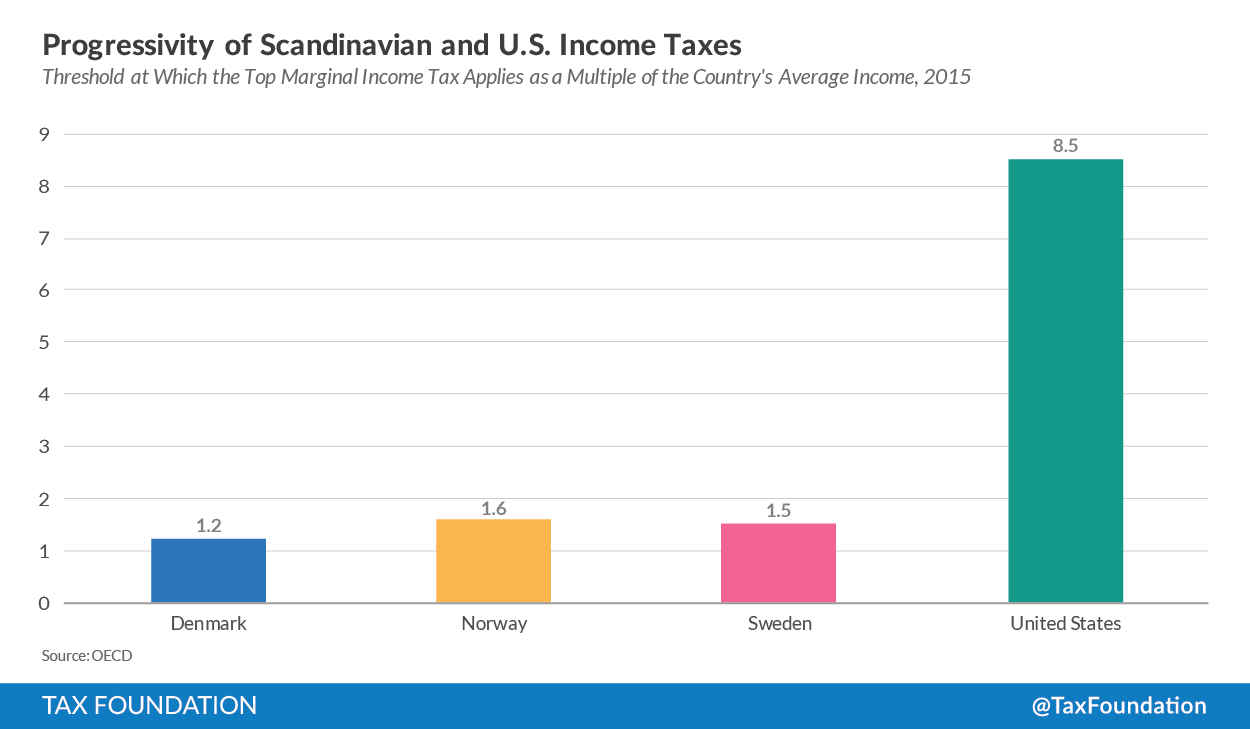
The 40% bracket in the UK starts at ~$60k USD (50k GBP). In the US you’d be in a 22% bracket up to $84k.
Not picking on the UK, just an example.
I don’t think there’s enough people in the top 5% to get the amount needed without literally taxing them into oblivion. We’d need corporate taxes to pull this off, and those bastards cleverly hang out in tax havens, and I wonder how much more clever they’d be willing to get once we tax them more.
I’d love for it work.