Because apparently recently "words are violence" and now we even hear "silence is violence".
This is so 1789 French Revolution style.
I honestly don't care about most of the political dramas of the day, but by not caring, I'm now somehow guilty of supporting the status quo! This is bonkers.
"His students beat him to death during the Cultural Revolution. The school called it a suicide:
https://www.latimes.com/world/asia/la-fg-china-cultural-revo...
See any similarities?
[1]https://youtu.be/c8N0TDsjpkE
You may be disinclined to watch this short video, but perhaps you would be surprised to see that it actually gives strong credence to the problems which you are seemingly arguing against, and which I too care deeply about.
This bit from that clip was especially poignant, thanks for sharing.
The conclusion his argument leads to is: In a tolerant society, attacking people because of their beliefs is not permitted (requisite intolerance).
You don't fight against speech, you speak against its ideas.
You seem to be repeating yourself.
> the same as losing your head for being on the wrong side of the committee of public safety.
Your pattern recognition engine must have some problems. In 1789 and the following years people were vilified and arrested (and eventually killed by truckloads, but that's not the point) because they were too moderate or not extreme enough compared to the radicals leading the "new culture".
Here's what St just said in the good old 90's (1790s):
> "We must not only punish traitors, but all people who are not enthusiastic. There are only two kinds of citizens: the good and the bad. The Republic owes to the good its protection. To the bad it owes only death."
And Robespierre:
> "There are only two parties in France: the people and its enemies. We must exterminate those miserable villains who are eternally conspiring against the rights of man... We must exterminate all our enemies.” "
If you don't see any parallel with what's happening right now (the insidious dichotomy between good and bad), minus the guillotine, I am not sure what else I can tell you.
If you change your statement to "All people of color are terrible, lazy people and they can go to hell", you will rightly receive serious backlash due to the historical context, in which fundamental human rights have absolutely been denied.
Now rephrase that again to target people of Jewish descent, and it it becomes even more horrifying and closer to "denying the fundamental right to exist".
Context matters.
Are people taking some things too far? Possibly. But it's far from being a simple issue to navigate.
Edit: Please use your words, not the downvote button. I'm an open minded person and would like to understand your position if you disagree.
I think the difference is that laws aren't proposed or created based on programmers being lazy (to follow your analogy). However, there /are/ laws denying fundamental rights of, say, LGBT people (marriage, etc.).
That might be boiled down to "denies their fundamental right to exist" in a heated debate.
The basic position is crazy nonsense. It is so stupid that I doubt the trans people actually came up with it. They likely have a more nuanced view of their own existence - potentially even defined by their accomplishments rather than their gender. Perish the thought.
Let's say you are LGBT in a place that denies you certain medical care, marriage (and associated tax/estate benefits), denial from many stores, etc. Alongside other discrimination. Yes, you still /literally/ exist. But you also have an argument to say that your existence is not valued as much as others, and many parts of existing (see above examples) are denied to you.
It's a bit more pithy to say that your right to exist is being challenged, than having to dance around your extremely literal definition of existing.
I'm a man. I didn't make any special choice to be a man. I got labelled from birth, same as most of the other men. Someone may not like me enforcing the same standards on them as I do myself, or may think the standard unreasonable, but they aren't being valued any less if I apply a standard to them that I do to myself.
And it isn't an argument or slogan I've heard any actual trans people making; they tend to have non-metaphorical complaints.
The same standards are not being applied to different groups, that's the whole point as I understand it.
If I influence people consistently by saying that Programmers are terrible people; convince a bunch of people that it's true; then policies that target programmers are much easier to make into law.
Slavery existed in part because people thought black people were subhuman and plenty of people argued that quite publicly.
Or consider a gay child whose teachers say that gay people are going to hell? Do you think that wouldn't have an impact?
I really don't understand this idea that speech doesn't have consequences that cause disparate impact.
You said that hateful speech "denies [a person their] fundamental right to exist". You have not provided any evidence that this is true.
What you _have_ done is argued that speech has consequences and that people can influence others. (Which nobody would disagree with.)
You've also painted a theoretical picture where people go on a campaign to grow hate for a people group by spreading terrible propaganda, many buy into it, and the masses are turned against the people group. I never said this isn't possible, but it's certainly not an automatic outcome of hateful speech, and it doesn't support your assertion in question. At that point, their life is threatened because of the evil of these theoretical masses.
I hate that I have to break it to you, but the masses of civilized society are not out to kill any people group, regardless of anyone's hateful speech.
The speech is not the problem. The hearts of evil men and women are. You can't suppress speech enough to get rid of evil in the hearts of people.
Have a look through history, and you'll find many examples where this statement is absolutely not true. Is it true today? Maybe not, but it's reasonable to be worried about the direction we're going, considering where we came from.
> The speech is not the problem. The hearts of evil men and women are. You can't suppress speech enough to get rid of evil in the hearts of people.
If the heart is evil, but that evil is not expressed or carried out, is that really an issue? If speech is the manifestation of that evil, is it really meaningful to draw a distinction between the two?
You might be technically correct, but you're really just arguing semantics. And to what end?
Granted, but this is in response to a side comment of mine that was not part of my main argument.
> you're really just arguing semantics
False. I'm arguing the difference between direct, automatic outcomes of speech, and outcomes that only happen because of the evil that was already in someone's heart.
I'm really not sure what you're trying to argue any more. Where did the evil come from? Maybe it was learned by upbringing. Maybe it was born out of traumatic experiences. Nature vs. nurture and all of that.
So can you expand on what you see as the material difference between speech, the source of that speech (evil heart), the source of that evil heart (upbringing?). And how any of that makes a difference to the end result?
What do you say about someone who unintentionally and with good meaning aligns themselves with hate (e.g. the All Lives Matter folks)? The things said may not be born of evil, but the end result is just the same.
You haven't successfully clarified what exactly you're trying to argue.
Edit: I should clarify - I think it's useful to examine the evil heart, and the source of that, as it helps us understand where the speech comes from, but ultimately, none of that changes the direct or indirect result of the speech itself.
Of course not. But that's the same argument that's being made here. And it's obviously nonsense.
There's a reason that there is a legal (U.S.) precedent that allows for speech, but not directly telling people to commit violent acts. Of course I am culpable if I tell you to go kill programmers. If I didn't say that and you decide to do it, it's ridiculous to hold me responsible.
I hope that clarifies my perspective sufficiently.
Slavery has existed in every human society, everywhere in the world.
You are correct that this was the pathological, disgusting justification for keeping it, at least in the United States in the 19th century, but that isn't why it existed, not even in part.
Slavery still exists. There are more people living in slavery now than ever before in history.
https://upload.wikimedia.org/wikipedia/commons/0/0f/Meccan_m...
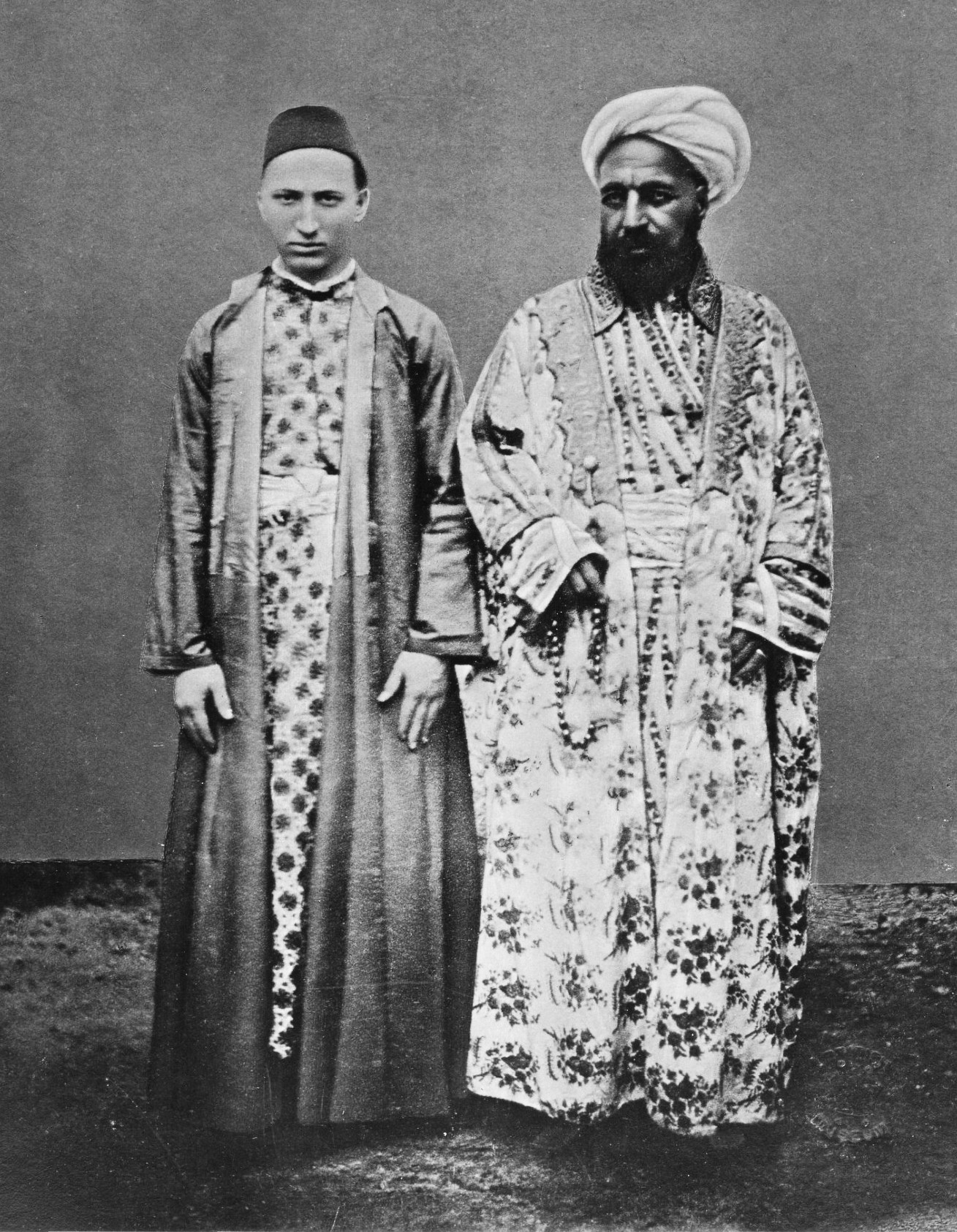
https://en.wikipedia.org/wiki/Slavery_in_the_Ottoman_Empire#...
But there is a cost to allowing speech to be offensive to certain races, groups, or lifestyles.
There is also a cost to restricting speech such that no one feels offended.
Which cost is higher? Which cost are you willing to pay? And furthermore, what is actually an effective plan. Is it realistic to think you can shut people up from being offensive? Is that even a workable plan?
Many people feel that the cost of restricting speech so that we can protect groups is vastly higher than the cost of allowing offensive speech.
It seems you are tilting at windmills. Where in this discussion has anyone claimed that words do not have effects?
But can you explain why you think someone saying hateful things to someone else "denies their fundamental right to exist"?
This is a core argument that keeps getting spouted, and it's irrational nonsense.
If I said, "all programmers are terrible, lazy people and they can all go to hell", that's a terrible thing to say. But it in no way affects your right to _exist_, let alone any other right.
The burden is on you to give evidence, because it's total nonsense.