Edit: Turns out I wasn't remembering correctly, the digital gadget department is big enough.
For example, Dongil is another big industrial, and engineering group coexisting completely in parallel to Samsung, but they been buying and selling businesses from Lee's family as far as record goes.
CJ is the largest producer of sugar and flour in Korea, and they also sell every kind of processed and frozen foods. They also own the largest courier service in Korea, the largest cinema chain and film studio, several restaurant and coffee brands, a chain of cosmetics stores, biomedical services, and a dozen cable channels. They literally supply the whole country with both panem and circenses, and they deliver to your doorstep. It's vertical integration at its finest.
Shinsegae is a retail giant. They own a chain of department stores as well as the e-mart shopping mall. The latter has sprouted its own chain of Costco-like discount stores and convenience stores.
If you ever wondered who owns the "CU" brand of convenience stores that are ubiquitous in Korea, they are in-laws of the founder of Samsung. The same family owns the JoongAng Ilbo newspaper, which together with the JTBC news channel comprise the second largest media conglomerate after CJ. Oh, and they also own the third largest cinema chain in Korea.
The Lee family is also into furniture, paper, you name it. They used to make cars and planes, too.
All these companies aren't always on friendly terms with one another, as some of them have split from Samsung decades ago and compete with one another. But together they control such a huge portion of the country's commerce, news, and entertainment that the phrase "Republic of Samsung" comes up whenever a member of the Lee family is accused of wrongdoing.
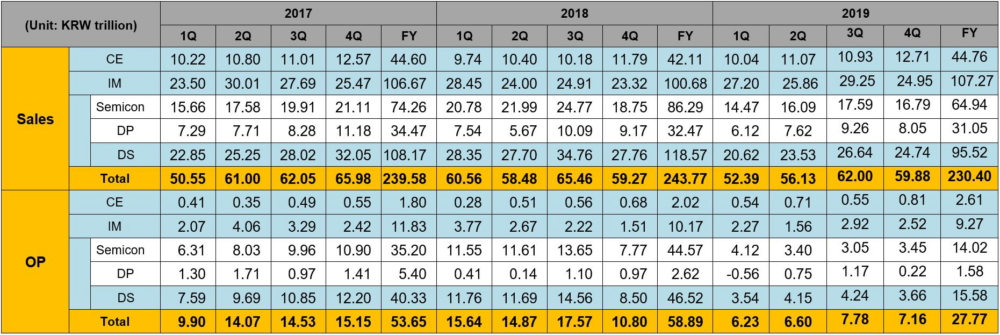
It's interesting to note that Samsung's yearly revenue is about 10% of the South Korean GDP. I'm not sure I can think of an American example that's even close.
While there are these mega-companies in RoK and Japan that have especially "close" relationships with governments, I don't think it's that dissimilar from the revolving door of lobbyists/board members/politicians in the US. Citizens in the US are similarly critical of corruption at this level in pharma, tobacco, military, etc.
At the same time, these companies are all responsible to varying degrees for the success of the economy and first-world lifestyle in the US, Japan, RoK. So you can't just want them not to exist either.
In Japan the relative lack of independent software companies have been attributed to Keiretsu structure. Software development was just in-house activity to serve established product divisions. It was not seen as business to be sold independently. For example, Toyota made whole integrated CAD/CAM/CAE system called 'TOGO' in the late 90s.
As a result Japan has been mostly no-show in software business outside console games. Software they develop is sold inside hardware.
Oddly enough, Korea and Japan have even higher percentage of SMBs than in the US (can't remember the link but the OECD published such stats). However historically they served only as subcontractors to the chaebols and keiretsu groups.
I think that's changing in Korea and Japan as of recently. In the last 20 years, there has been a rise in startups serving massive audiences in online gaming, social media, and e-commerce. Think Nexon, Daum, Naver/LINE, Rakuten, SoftBank, etc.
It not only produces displays and semiconductors, it also makes home appliances, it builds apartments, it runs hotels, it runs hospitals, it issues credit cards and runs insurance, etc... which means that the Galaxy Note 7 crisis is pretty much nothing to that gigantic company.
Also, keep in mind that a lot of Koreans (including myself) doesn’t think Samsung positive — it’s hard to get unbiased opinions about Samsung (whether it’s positive or not). So if you’re reading this, please take it with a grain of salt.