1) The wet market is full of live animals in close proximity and very unsanitary conditions. So pathogens are more likely to still be alive, and can jump between diverse hosts, not just to humans.
2) The wet market is full of non-domesticated, exotic animals which carry pathogens humans are not acquainted to.
And yet, nobody gets sick from that. Food poisoning in your sushi or your raw oysters, every time it’s been followed up, has turned out to be from the source (farming in bad conditions) or from transport (shipping hundreds of miles in non-refrigerated trucks), not from cross-contamination at a market.
Thus my point: clearly, some markets keep generating diseases; but if they’re doing the same thing as the markets that don’t generate diseases, then it’s likely not wet markets as a process for distributing food that are the problem here. Because some of them—almost all of them, in fact—work just fine. (Analogy: are “restaurants” a vector for disease? Not in general, no. Specific ones, certainly. But not as a concept. Something additional has to be going on.)
So, if you eliminate the process itself, what’s left? The inventory and its sourcing; the people and their own personal hygiene; and a few other things. In any case much less tasteful topics to argue about. Which is why people would prefer that this not be about those things, and instead be some endemic issue to meat markets.
A reasonable restriction would be on wet markets for mammals, excepting a few where the safety properties are well known like cows.
No it's not.
You're off by two orders of magnitude of number of different and wild species. That's THE key. The variation and combinations of vicera and species.
"...live wolf pups, golden cicadas, scorpions, bamboo rats, squirrels, foxes, civets, hedgehogs (probably porcupines), salamanders, turtles and crocodiles. In addition, it offered assorted parts of some animals, such as crocodile tail, belly, tongue and intestines...."
from
https://www.theguardian.com/science/2020/jan/24/calls-for-gl...
Vox has a video explaining "Why new diseases keep appearing in China" [1]. They include footage of Chinese wet markets around the 2:00 mark. I think they make an excellent case for strictly regulating, or even outright banning wet markets.
Long ago, Europe had the same problem. The cities were full of wet markets, and were basically the perfect conditions for creating new plagues. There's a nice CGP Grey video on this, "Americapox: The Missing Plague" [2].
[1]: https://youtu.be/TPpoJGYlW54 [2]: https://youtu.be/JEYh5WACqEk
As human beings, when we make a mistake that leads to diseases that kill people, we do what we can to avoid making that same mistake twice. I'm not sure why this is an objectionable or questionable notion.
https://www.youtube.com/watch?time_continue=98&v=TPpoJGYlW54...
Wet markets should be banned because they contain endangered species and the vendors are committing horrible animal rights abuses, oh and they are responsible for multiple corona viruses too.
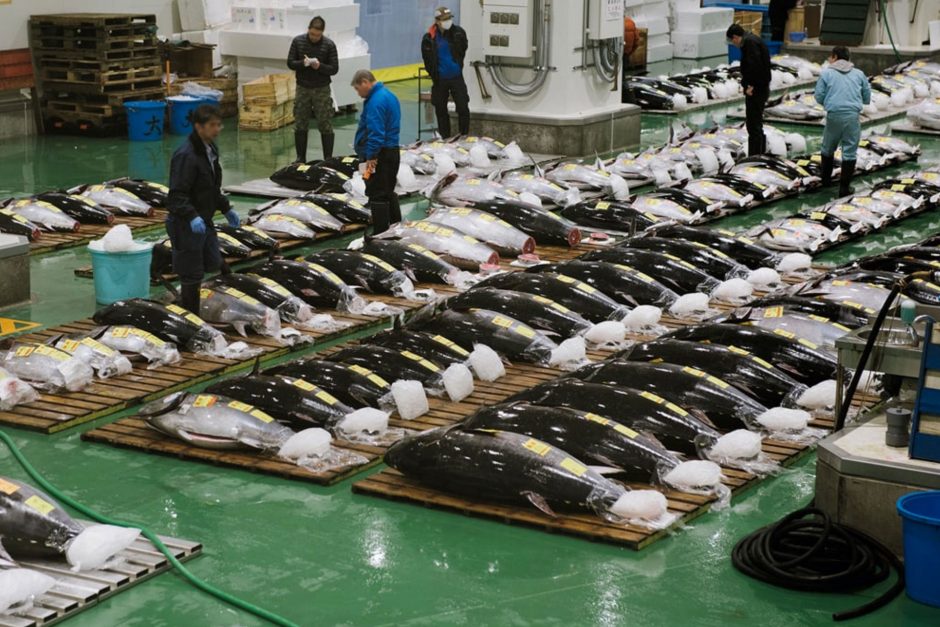
That's exactly the question I have. How are these Chinese markets fundamentally different from, say, the Japanese Tsukiji fish market? Taking a look at pictures like https://commons.m.wikimedia.org/wiki/File:Vendors_begin_sell... it doesn't strike me as very much different from the Chinese wet markets.

You are probably refering to Making Wrong Code Look Wrong by Joel Spolsky: https://www.joelonsoftware.com/2005/05/11/making-wrong-code-...
This article seems to be doing a motte-and-bailey of grossing you out with things that are just “regular meat wholesaler things” (e.g. fresh meat sitting out on ice without refrigeration) and then moralizing about the specific kinds of meats available in certain markets in China.
As far as I can tell, the author really just wants to tell Chinese people to stop eating certain meats (pragmatically, bush meats; but also, less pragmatically, whatever a Westerner would find gauche, like endangered species or things we’d consider pets), but doesn’t want to come out and say what they really mean; and so instead tries to seem like they’re making a point about sanitation. In so doing, they end up arguing against the existence of wholesale meat markets in general, which is clearly silly: meat wholesaling happens all over the world every day and is perfectly sanitary, despite seeming to a layman like it’d be unsanitary. (It is unsanitary in some ways, but in general principle—which can certainly be violated, like any other standard can—it’s always exactly as sanitary as it needs to be for any given use-case. Meats that are cooked get treated with less care; meats that are served raw are treated with more.)
This sort of reminds me of the parable of the new owner who came into a bakery and demanded it be cleaned because everything was greasy. The bakers kindly informed them that the grease was intentionally put on every surface, right after cleaning; and that, in fact, grease is used to clean some surfaces. Some systems function perfectly well in ways that seem disturbing to outsiders. If the bakers have been greasing the bakery for thousands of years, and you’ve never gotten sick from a loaf of bread, then maybe think a moment before telling the bakers to stop greasing the bakery.
Certainly, if you buy a loaf of bread and it turns out to have a bunch of thumbtacks in it, there’s a problem. But not one, I would suspect, endemic to the concept of bakeries.