Re:The Pacific Ocean is so acidic that it's dissolving Dunge...
by lukastr0 on Tuesday January 28, 2020 @01:10PM
(#22172215)
> Given crabs in general have been around adapting for 145m years, I do not think the current levels will be detrimental.
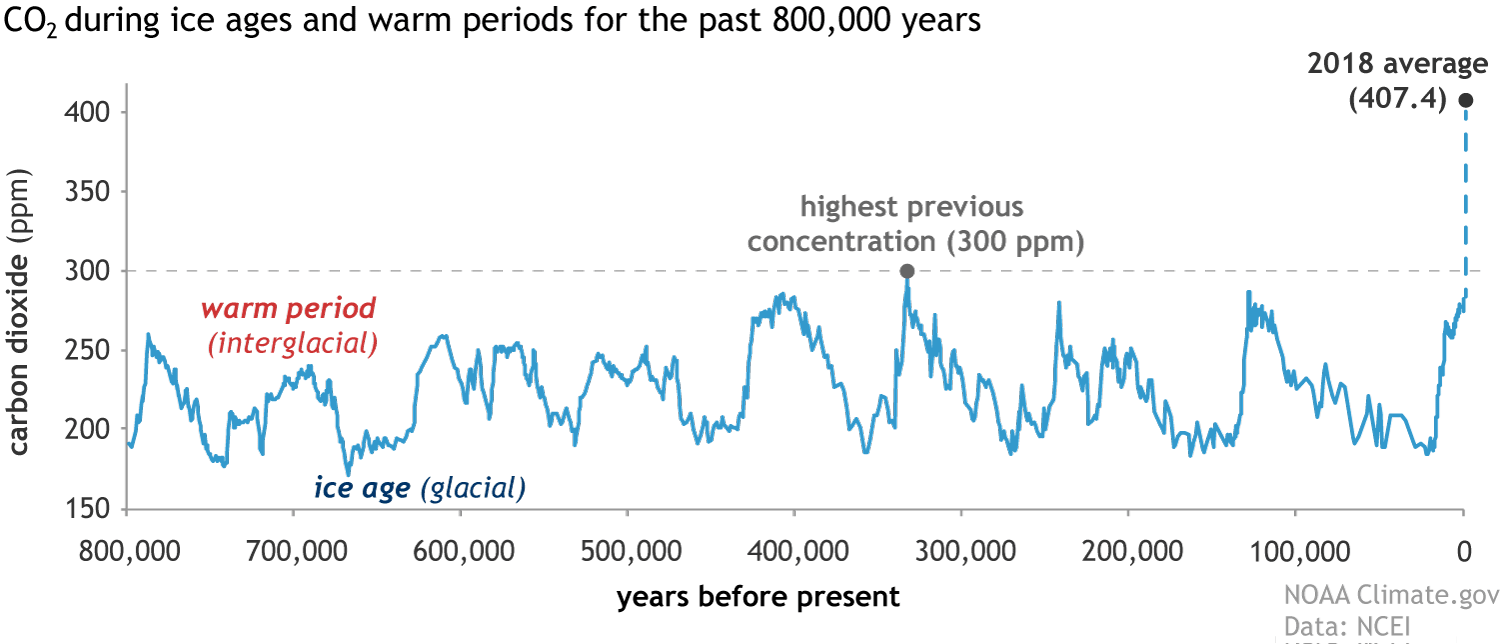
That argument often comes up when discussing wildlife impacts of global warming. The problem is, the rate of CO2 increase vastly exceeds anything that happened naturally. The rate of change is the problem here.
Re:The Pacific Ocean is so acidic that it's dissolving Dunge...
by ghastmaster on Tuesday January 28, 2020 @01:43PM
(#22172656)
This is not true. Given that temperature and co2 rise sync with each other(still debated) and OA are fairly synchronous, the steep decline and subsequent rise in temperature from appx. 8400ya - 8000ya(Vinther, B., et al., 2009) exceeds what we are seeing now. Notably that fall and rise was at a much higher temperature as well. I can only assume this has happened many many times previously.
Re:The Pacific Ocean is so acidic that it's dissolving Dunge...
by omgwtfbyobbq on Tuesday January 28, 2020 @02:02PM
(#22172865)
I don't believe the temperature changes 8400-8000ya were associated with the same change in CO2 levels we're seeing now. CO2 has been a lagging indicator of temperature in the past, but I don't believe it's been a driver like it is today.
Re:The Pacific Ocean is so acidic that it's dissolving Dunge...
by javajosh on Tuesday January 28, 2020 @01:11PM
(#22172243)
>The present concentration of co2 in the atmosphere according to Zhang, Yi Ge; et al. is the highest in 14m years. Given crabs in general have been around adapting for 145m years, I do not think the current levels will be detrimental.
It's not my field, but doesn't the rate-of-change matter even more than absolute value in time? Life can and does adjust, but it takes generations; if things change too fast, then only the quickest (smallest) life-forms can adapt.
Re:The Pacific Ocean is so acidic that it's dissolving Dunge...
by ghastmaster on Tuesday January 28, 2020 @01:49PM
(#22172722)
Species that have more offspring faster would be better able to adapt. This current rate of change is not unusual(see my reply to lukastr0).
Re:The Pacific Ocean is so acidic that it's dissolving Dunge...
by tezzer on Tuesday January 28, 2020 @02:16PM
(#22173026)
"not unusual" is a little facetious, don't you think? Vinther was studying a drastic loss of polar ice in reaction to a historical (unexplained?) sudden rise in temperature, and raising an alarm in light of our current warming.
Re:The Pacific Ocean is so acidic that it's dissolving Dunge...
by ghastmaster on Tuesday January 28, 2020 @03:23PM
(#22173670)
I was not trying to be facetious. I think that since we have seen two similar rises in temperature in the last 10,000 years, it is very likely they have occurred relatively frequently in the past 145m years. I do not see how what he is studying is relevant here.
Re:The Pacific Ocean is so acidic that it's dissolving Dunge...
by tezzer on Tuesday January 28, 2020 @06:31PM
(#22175368)
I'm reminded of an old mentor's saying: One is an anomaly, two is a coincidence, three is a pattern. I'd be interested to know the causes and the effects of the temperature rise that makes you think this one is no big deal. There is a lot of evidence to indicate it's a very big deal.
Re:The Pacific Ocean is so acidic that it's dissolving Dunge...
by ghastmaster on Wednesday January 29, 2020 @11:34AM
(#22182405)
I would love to know the causes and effects as well. Given evidence is still lacking, and this article is regarding a study that has only been done once, I would like to see follow up studies to see a pattern arise in OA effects on this species.
Re:The Pacific Ocean is so acidic that it's dissolving Dunge...
by Ensorceled on Tuesday January 28, 2020 @01:09PM
(#22172206)
People always say this as if evolution often works on the scale of generations. They had 14M years to adjust to the reduction, why do you think they can adapt to the increase in a decade or two?
From sciencedirect.com:
> To our knowledge this is the first time that OA-related dissolution of calcite structures in situ has been demonstrated for crustaceans
> Using a retrospective prediction from a regression models, we estimate an 8.3% increase in external carapace dissolution over the last two decades
Given that not all larva show signs of OA-dissolution and this is the first study, it would be wise to wait for the next studies, to see actual trends.
The present concentration of co2 in the atmosphere according to Zhang, Yi Ge; et al. is the highest in 14m years. Given crabs in general have been around adapting for 145m years, I do not think the current levels will be detrimental.