As an outsider to the American tax system: is this a strong selection that could impact results? Here in Germany for example filing is optional for a lot of people (not just legally, but also in terms of expected returns) which would have quite unpredictable results on a study like this.
Excludes recent immigrants or orphans then, both of which groups could be particularly acute case-studies of upward mobility.
Big picture though, walkability and public transport definitely imply at least the potential for interaction and empathy, and cars the opposite.
The Highway and Automobile culture are symbols of totalitarian cultures which deny people more sustainable and equitable alternatives for mobility and transport. - Vandana Shiva, February 19, 2004.
Has anyone on HN paid US taxes living abroad?
You will have to pay some tax if you work in a country whose tax rates (for your bracket) are lower than US federal tax rates. That can be the case for Americans working in places like Hong Kong or the Bahamas.
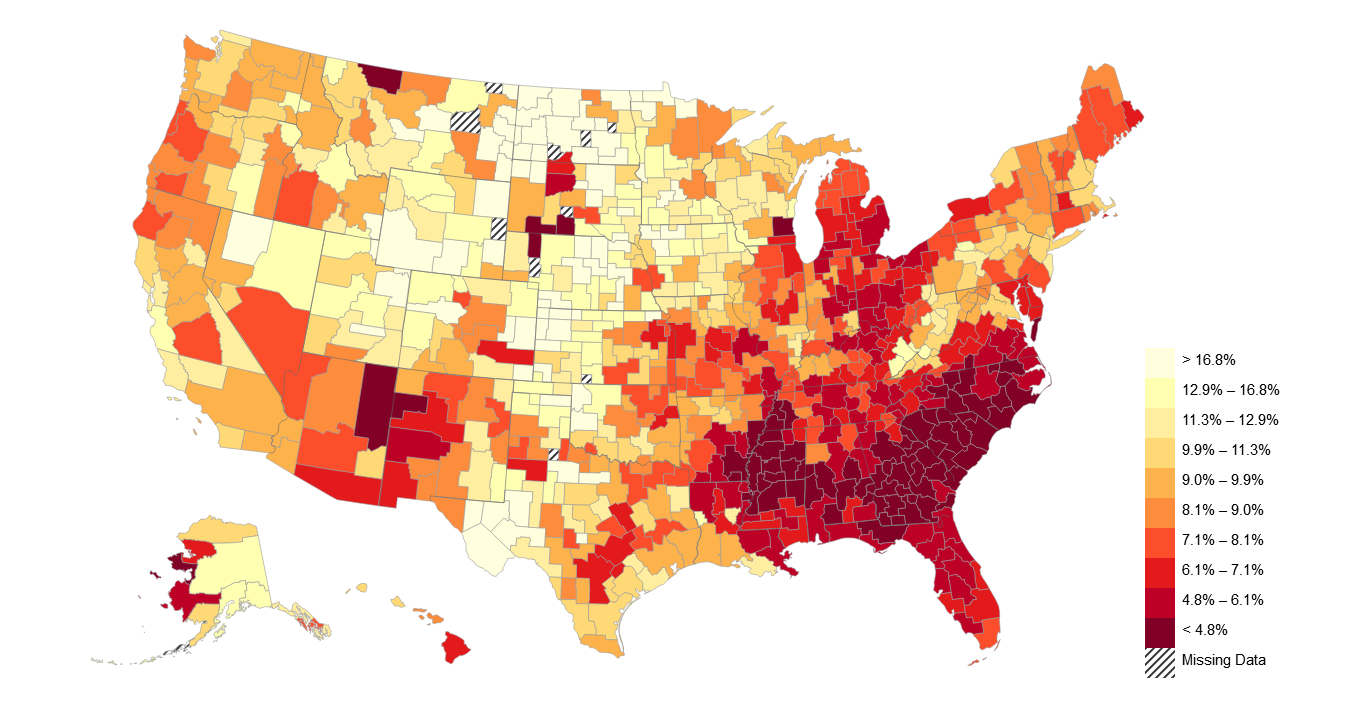
So they buy/beg data for 382 "community zones" from walkscore.com, do linear regression, and find a correlation. Then they get funding to do an individual-level survey and there's no correlation. And it doesn't appear in South Korea either.
Their explanation is some statistical magic to pull out a "sense of belonging" as a mediating factor and a statement in the conclusion that "It may be that walkability is an emergent property most clearly visible at the level of aggregate, not at the level of each individual."
No discussion of data accuracy besides noting that even perceived walkability and actual amount of walking are barely correlated in their surveys (i.e., their data sucks).
Interesting paper idea, but the implementation seems like more statistical garbage.