"the Bankruptcy Reform Act of 1978". https://info.legalzoom.com/did-laws-effect-preventing-bankru....
Price of college since then: http://blog.unibulmerchantservices.com/wp-content/uploads/20...
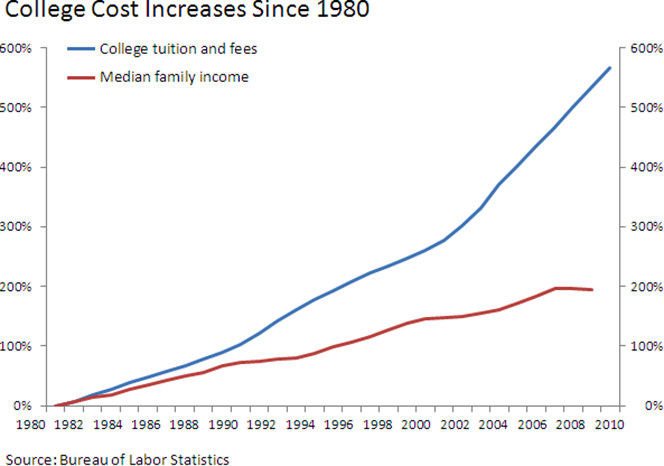
It doesn't seem to follow that an inability to discharge debt will lead a college to continually increase tuition costs. By the time the discharging of debt comes into play, the college is mostly out of the picture. Help me understand how that incentivizes a school to increase tuition. If anything, it seems like it would drive the cost down as it increases the risk to the borrower, incentivizing the borrower against taking excessive loans.
It does however seem to make better sense that an over supply of loans will allow colleges to increase tuition.
If you can recover then you have gained nothing from the bankruptcy but you have lost from the inflation of your debt.
Students could take out massive debt still backed by the government and declare bankruptcy shortly after graduation. There's still plenty of time to recover from that and still be in your 20s. Meanwhile, the taxpayer just got hosed in the process. That may even mean non-college graduates subsidized a fellow citizens degree with nothing to gain from it. The school still got paid, so I don't see that incentivizing lowing tuition.
I know some people claim the easy access to government backed student loans makes it too easy for college to increase costs by essentially inflating the supply of students. It's a very libertarian argument and the fix is to stop letting the government distort the marketplace for tuition. But something about reducing access to student loans doesn't sit well with me and feels like you'll still shut out large segments of the population.