If you're not comfortable with your name being publicly attached, at least give news orgs the information and request confidentiality.
Part of the reason congress people can punt is that the cost of inaction < cost of action before it penetrates media.
A big part of shifting that equation is starting to publicize "You had all the information available now on X date and did nothing" as loudly as possible. Naming and shaming has been healthy for vulnerability disclosure.
  I'm in the space as well. I've tried telling my
  congressmen but they ignore me.
Maybe you can find a journalist you respect for their reporting on Cambridge Analytica, the Paradise Papers, Edward Snowden and so on?
It goes like this: https://pbs.twimg.com/media/DczGQICUQAA9ljF.jpg
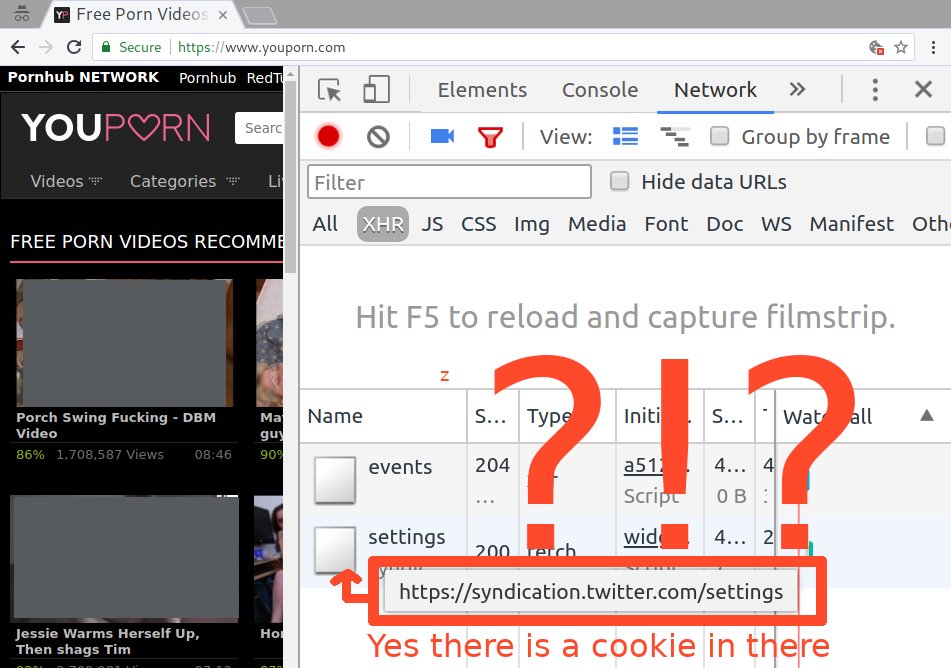
The domain "syndication.twitter.com" tracks everyone but the page says: "Sorry, that page doesn’t exist!". The point is I haven't been able to run the story so far
the article discusses when the ISP/telco sells the data that you have zero visibility on. there's no way to get around this.
btw, apple and google ad spyware process (google play service) will collect gps and wifi data without any user visible UI, not to mention download ads in the background.
Would be nice to see actual proof of this. I am very familiar with all network traffic an iOS device may emit and do not know what you are referring to here.
Or can you make a tip to one of the newspapers? Given the facebook privacy news saga this might get picked up.
Just because the less-technically adept parts of the infosec community & even more hapless government workers wanted to sound cool doesn't suddenly make it right.
But then I also just enjoy responding with "Cyber what?" whenever someone uses it as a noun. The correlation between people who are asked and can then provide a relevant noun has not been high.
The advice I always give when this topic comes up us to be very careful with what you install on your phone. The least expensive mobile location data tends to come from random apps collecting the data to sell it, and ad networks. Permission to use your GPS is permission to track you until you uninstall the app.