I found this out the hard way when encoding time lapses, even if the delta between frames is identical, the final choice of frame rate greatly affects output file size.
Speaking from experience with recording 120fps, which inevitably stutters on playback unless shown at half speed, I suppose also that it is a matter of "if the CPU can't keep up decoding, there is no point"
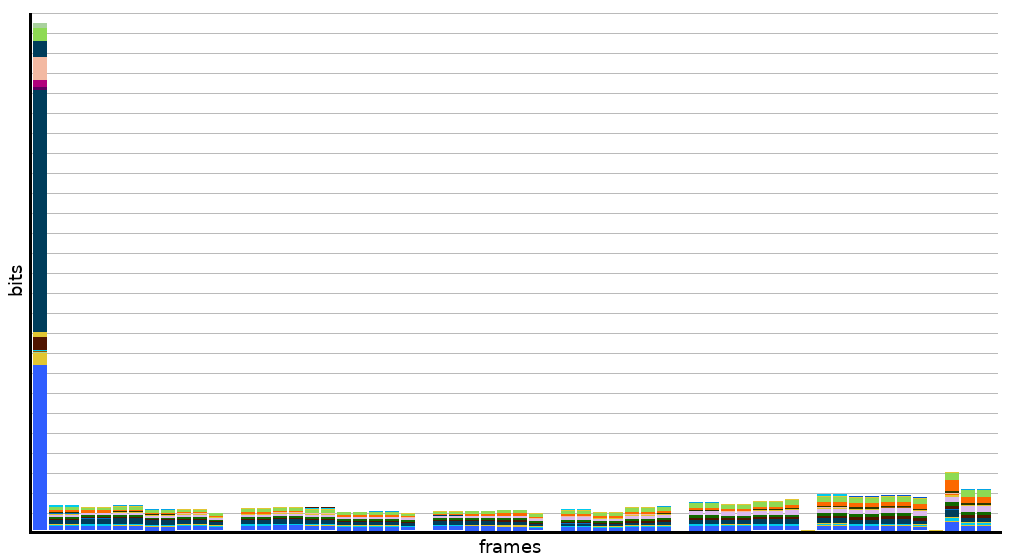
If you look at this chart[1] (that I stole on this[2] article), you can see that the first frame (a keyframe) is way bigger than the others.
[1]: https://people.xiph.org/~xiphmont/demo/av1/framebits.png
As colde points out in the other reply, the type of content matters so: what kind of content do you stream? Games? If so, which genre(s) (as in: a 2D platformer might compress much better, given the simpler motion, not to mention minimalistic graphics that are more common there)
This remark about higher resolution reminded me of something I've been wondering about frame rates, which are essentially also a higher resolution, except across the dimension of time.
Assuming low to negligible noise from the camera (or a CGI, which avoids the problem altogether, shouldn't doubling from 30FPS to 60FPS have less than double the size increase? The reasoning being that changes per frame are lower, leading to better predictions.
Is there any rule-of-thumb formula for expected size increase as frame rate increases?